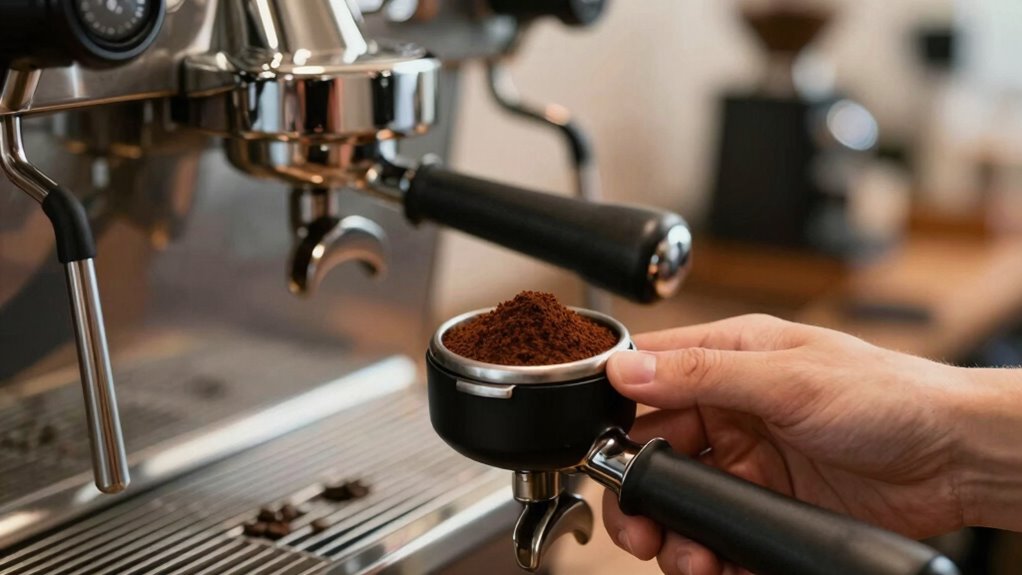
Choosing between single dosing and hopper grinding depends on your workflow priorities like consistency, speed, and freshness. Single dosing offers precise measurements, reduces stale flavor, and makes cleaning easier, perfect for maintaining quality. Hopper grinding, on the other hand, speeds up prep and suits high-volume settings but risks flavor degradation over time. Understanding how each method fits your routine can help you optimize your coffee experience—if you want to explore these options further, keep going.

Get coffee and tea gear delivered free with Prime
- Fast, free delivery on millions of items
- Prime Video, Amazon Music and more included
- Member-only deals all year
Key Takeaways
- Single dosing offers consistent flavor control and minimal stale grounds, ideal for precise, quality-focused workflows.
- Hopper grinding allows faster, continuous brewing, suitable for high-volume or time-sensitive settings.
- Storage conditions and bean freshness influence the choice; airtight containers help preserve flavor in both methods.
- Regular grinder maintenance and cleanliness are crucial for consistent grind quality regardless of method.
- Workflow priorities—precision versus speed—determine whether single dosing or hopper grinding is more appropriate.
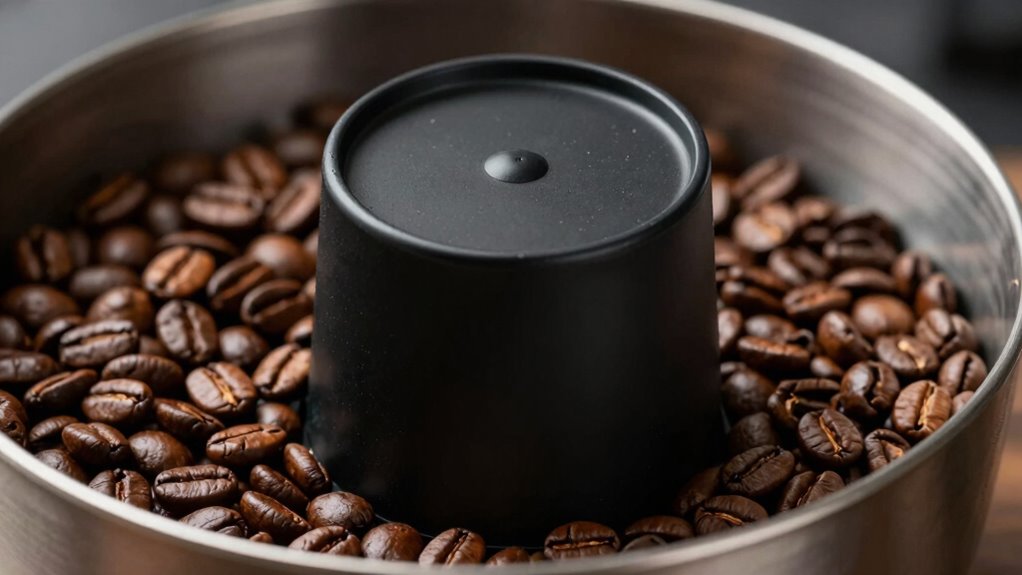
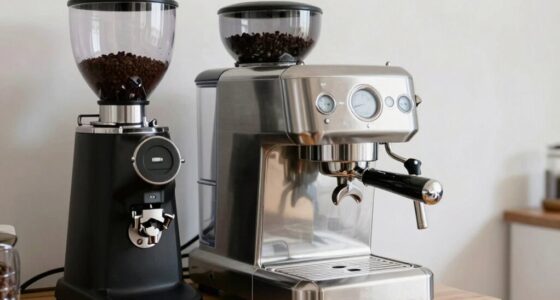
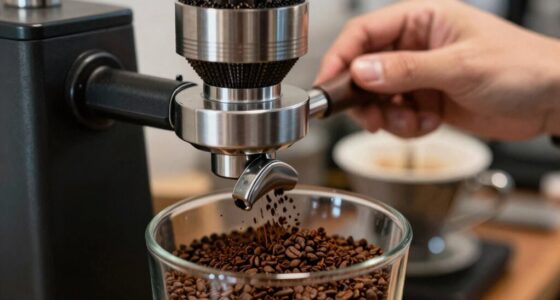
When it comes to grinding coffee, choosing between single dosing and hopper grinding can considerably impact your brewing experience. Your decision influences not just how quickly you prepare each brew, but also the flavor consistency you can achieve over time. Single dosing involves measuring and grinding a precise amount of coffee for each shot, while hopper grinding keeps a large quantity of beans ready to be ground continuously. Both methods suit different workflows and preferences, so understanding their strengths helps you tailor your setup.
Choosing between single dosing and hopper grinding impacts flavor consistency and convenience in your brewing routine.
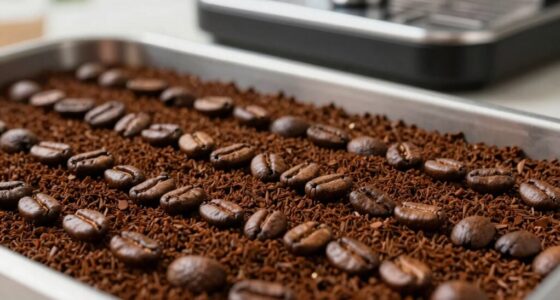
If you prioritize flavor consistency, single dosing often gives you an edge. Because you grind only what you need for each brew, there’s less chance of stale or oxidized coffee affecting your cup. Beans stored in hoppers are exposed to air, which can lead to flavor degradation over time. With single dosing, you’re reducing the risk of uneven extraction caused by stale grounds, ensuring each cup maintains a fresh, vibrant profile. However, achieving this consistency depends heavily on grinder maintenance. Regular cleaning prevents old grounds from mixing with fresh beans, which can cause inconsistent grind sizes and flavor fluctuations. Proper maintenance keeps your grinder performing at its best, helping you extract the full potential of each bean and preserving the quality of your coffee over multiple sessions.
On the other hand, hopper grinding offers convenience and speed, especially if you brew multiple cups in quick succession. You can keep a hopper filled and grind continuously without measuring each dose, which suits busy mornings or commercial settings. However, this method can sometimes compromise flavor consistency if the hopper isn’t cleaned regularly or if the beans sit too long. Beans left in the hopper may become stale or develop uneven moisture levels, affecting grind quality. Plus, a hopper’s large volume means you might grind more than needed, leading to waste or the need to store open beans longer, which can impact flavor. Grinder maintenance becomes critical here as well: cleaning the hopper regularly and ensuring your burrs or blades are in top condition helps maintain a uniform grind and prevents flavor inconsistencies. Additionally, understanding the impact of exposure to air on stored beans can help you make better decisions about storage and grinding practices. Incorporating proper storage techniques can further extend bean freshness and improve grind quality, especially when using hopper methods. Regularly rotating your beans and using airtight containers can also help minimize flavor loss due to air exposure. It’s also beneficial to be aware of the climate and humidity in your storage environment, as these factors can significantly influence bean freshness and grind consistency. Being mindful of these storage conditions can help maintain optimal flavor and grind quality over time.
Products Worth Considering

KitchenAid 38 oz Cold Brew Coffee Maker, KCM5912

Philips 2200 Series Fully Automatic Espresso Machine with Classic Milk Frother, Ceramic Grinder, and AquaClean Filter

Ninja French Door Premier 10-in-1 Air Fry Oven, 20.3 Qt, Stainless Steel, FO101
As an affiliate, we earn on qualifying purchases.
Frequently Asked Questions
How Does Grinder Size Affect Dosing Consistency?
Grinder size directly impacts dosing consistency because smaller grinders usually provide more uniform grind size, leading to better calibration. When your grinder produces consistent grind size, you’ll find it easier to dose accurately each time. Larger grinders can cause variability, making calibration more challenging and potentially leading to uneven extraction. Regularly checking your grinder calibration and adjusting grind size ensures you maintain consistent dosing and ideal coffee quality.
Can Single Dosing Improve Espresso Flavor Profiles?
Imagine your espresso shot as a delicate dance—single dosing is like perfectly timed steps, offering precise control. Yes, it can enhance flavor extraction by reducing stale coffee exposure and ensuring fresh grounds. This meticulous approach leads to more consistent brews, allowing you to fine-tune every variable. By focusing on exact doses, you uncover nuanced flavor profiles and achieve a harmonious, balanced shot every time, elevating your espresso experience.
What Maintenance Is Required for High-Frequency Dosing?
For high-frequency dosing, you need to regularly calibrate your grinder to guarantee consistent grind size and dose accuracy. Keep your grinder clean to prevent bean residue buildup, which can affect performance. Use fresh beans, as old beans can clog the grinder or cause inconsistent extraction. Check and replace burrs as needed, and monitor motor performance. Consistent maintenance helps you achieve peak flavor while reducing downtime.
Is Hopper Grinding Suitable for Commercial Cafes?
Hopper grinding is suitable for commercial cafes if you have a large hopper size and prioritize coffee freshness. Larger hoppers allow you to grind bigger quantities efficiently, reducing the need for constant refilling. This method helps maintain consistent grind size, ensuring fresh coffee for your customers. However, if you prefer precise dosing and minimal waste, consider single dosing. Choose based on your cafe’s volume and quality standards.
How Do Dosing Methods Impact Overall Workflow Efficiency?
Your dosing method directly impacts workflow efficiency by affecting grind size consistency and dosing precision. With single dosing, you gain more control and accuracy, reducing waste and ensuring ideal extraction, but it may slow your process. Hopper grinding offers faster throughput, ideal for high-volume settings, though it may sacrifice some consistency. Choose based on your needs—prioritizing speed or accuracy to streamline your workflow effectively.
Conclusion
Choosing between single dosing and hopper grinding is like selecting the right brush for your masterpiece—each has its own rhythm and charm. Think of single dosing as a delicate dance, precise and intimate, while hopper grinding is a steady storm, powerful and relentless. Your workflow shapes the choice, so tune into your needs and let your coffee process flow like a well-composed symphony. Whichever path you take, make it a journey worth savoring.