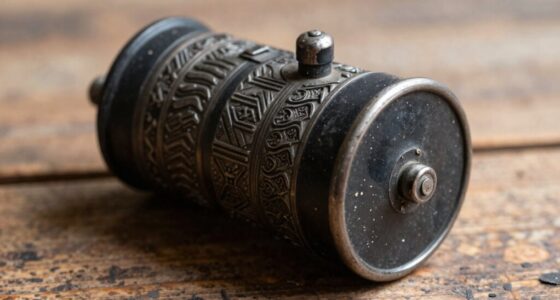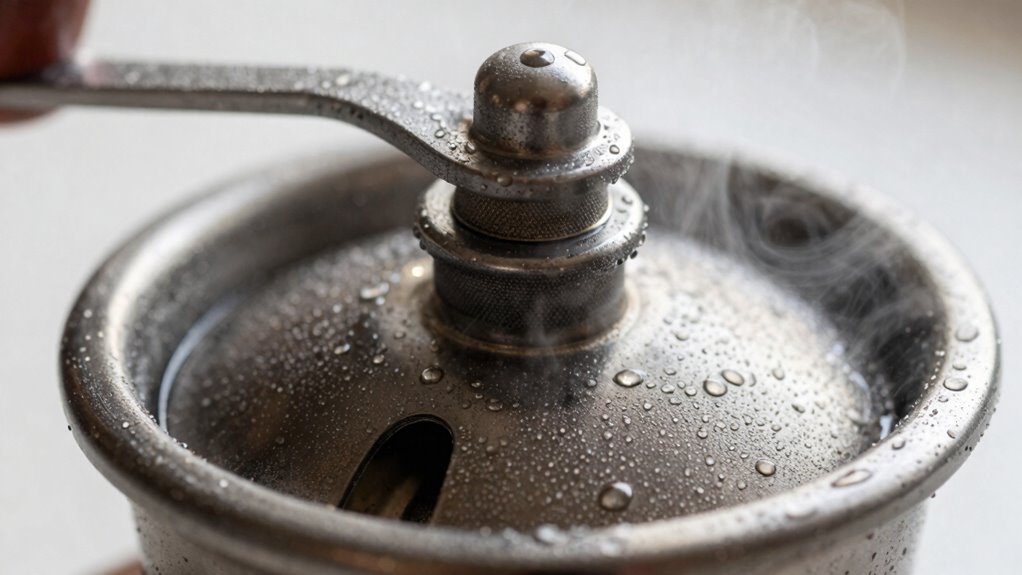

Humidity causes moisture to build up in your grinder’s components and coffee beans, which can make the beans softer, stickier, and harder to grind consistently. This moisture also clogs internal parts like burrs or blades, increasing resistance, heat, and wear. As a result, your grinder may become less efficient, produce uneven grounds, and even develop rust or corrosion over time. Keep going to discover effective ways to manage humidity’s impact and keep your grinder performing its best.

Get coffee and tea gear delivered free with Prime
- Fast, free delivery on millions of items
- Prime Video, Amazon Music and more included
- Member-only deals all year
Key Takeaways
- Humidity causes moisture buildup inside grinder components, leading to clogging and increased resistance during operation.
- Absorbed moisture softens coffee beans and internal parts, resulting in inconsistent grind size and quality.
- Elevated humidity accelerates wear, rust, and corrosion of burrs or blades, reducing grinder lifespan.
- Moisture-induced changes in internal temperature and resistance can alter grinder sound and efficiency.
- Proper environmental control and regular cleaning are essential to prevent humidity-related performance issues.
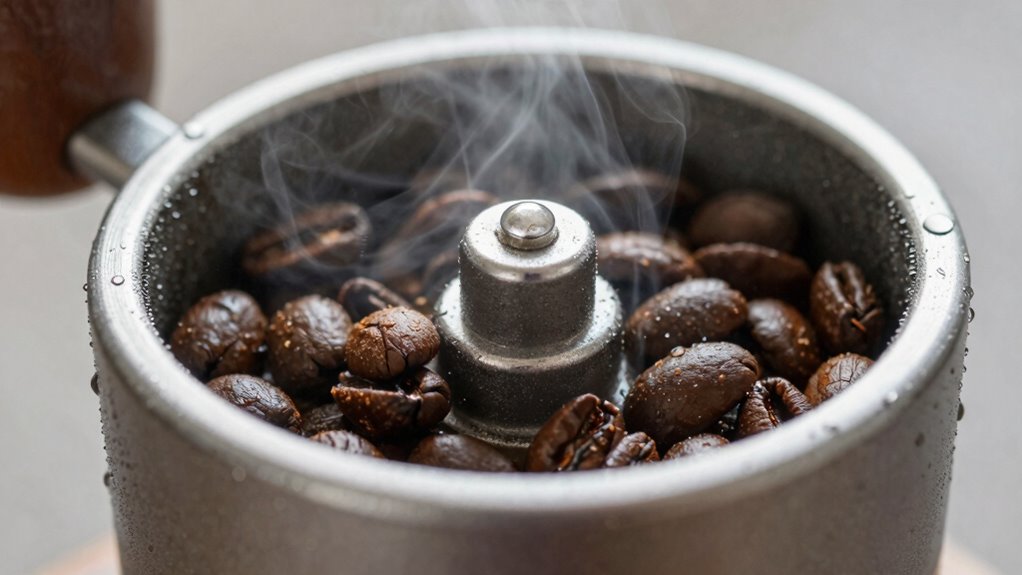
Humidity can dramatically impact how your coffee grinder performs, often in ways you might not immediately notice. One of the main issues is moisture absorption. When the air around you is humid, your grinder’s internal components and the coffee beans themselves can draw in moisture from the environment. This moisture absorption affects the beans’ texture and how they break apart during grinding. Instead of a clean, consistent grind, you might find your beans sticking together or becoming unevenly ground. This inconsistency can lead to unpredictable brew results, making it harder to dial in your perfect cup.
Humidity can cause moisture absorption, leading to uneven grinds and unpredictable brew results.
As moisture builds up inside the grinder, it can also cause parts like burrs or blades to clog or become less efficient. When the grinder’s mechanism gets damp, it may produce more heat or resistance, which affects how well it grinds. Over time, this moisture can lead to rust or corrosion if the grinder isn’t properly cared for, further reducing performance. If you notice your grinder sounding different or struggling to produce a uniform grind, humidity might be be the culprit. Additionally, moisture buildup can accelerate wear and tear on your equipment, necessitating more frequent maintenance. Being aware of humidity’s impact on electronics can help you take preventative steps to protect your grinder. Proper environmental control is key to maintaining the longevity and performance of your coffee gear.
The impact of humidity extends beyond just the grinder itself. The moisture absorbed by the coffee beans before grinding can greatly alter the grind’s consistency. Beans that have absorbed moisture tend to become softer or stickier, making them harder to grind evenly. This results in a brew that’s either over-extracted or under-extracted, depending on how the grind size varies. If you’re in a particularly humid environment, you might need to adjust your grind size or process to compensate for the moisture content. Proper storage practices and humidity control measures are crucial for maintaining optimal coffee quality.
To combat these effects, it’s essential to store your beans in airtight containers, especially in humid conditions. This prevents moisture absorption before grinding, helping you maintain a more stable grind consistency. Also, consider using a dehumidifier or air conditioning to lower ambient humidity levels in your coffee area. Regularly cleaning your grinder helps remove any residual moisture that might have accumulated, keeping it running smoothly. Understanding the moisture absorption process and how it influences your equipment can help you better manage your coffee setup. Additionally, being mindful of seasonal changes and adjusting your routine accordingly can further help mitigate humidity-related issues.
Ultimately, understanding how humidity influences your grinder’s behavior can help you make smarter adjustments and preserve the quality of your coffee. By controlling moisture absorption and paying attention to the grind consistency, you’ll ensure every brew is as flavorful and balanced as possible.
As an affiliate, we earn on qualifying purchases.
Frequently Asked Questions
Does Humidity Affect Different Types of Coffee Grinders Equally?
Humidity affects different types of coffee grinders differently. For example, burr grinders are more sensitive to changes in coffee bean moisture, which can cause clogging or inconsistent grind size. Blade grinders are less affected but may still experience uneven grinding if humidity alters bean moisture. You’ll need to regularly calibrate your grinder to maintain consistent results, especially in humid environments, to prevent issues like clogged burrs or uneven extraction.
How Can I Prevent Humidity From Damaging My Grinder?
To protect your grinder from humidity, keep it in a dry place and regularly wipe down its exterior. Use silica gel packs or moisture-absorbing sachets inside the grinder’s storage area to minimize moisture absorption. Make certain the grinder’s components are made of corrosion-resistant materials, and avoid leaving it in humid environments for extended periods. This gentle approach helps prevent material corrosion and preserves your grinder’s performance.
What Are Signs My Grinder Is Affected by Humidity?
You’ll notice signs like clumping or sticky coffee grounds, indicating moisture absorption. Your grind consistency may become uneven, with some particles coarser or finer than usual. You might also see rust or mold if humidity is high enough. These issues suggest your grinder is affected by moisture, which can compromise flavor and performance. To prevent this, keep your grinder dry and store it in a cool, low-humidity environment.
Can Humidity Cause Safety Issues With Grinders?
Humidity effects can indeed cause safety hazards with grinders, especially in high humidity areas where metal parts may rust or become slippery. Studies show that up to 30% of workplace accidents involve equipment malfunction due to environmental factors. You should regularly inspect your grinder for rust or moisture buildup, as these can lead to slips, misfires, or mechanical failures. Staying aware of humidity levels helps prevent potential safety issues and keeps your equipment functioning smoothly.
Is There a Way to Measure Humidity’s Impact on Grind Quality?
Yes, you can measure humidity’s impact on grind quality by monitoring moisture absorption in your beans or grounds. Using a hygrometer, you can track ambient humidity levels and observe how they influence grind consistency. Regularly testing your grounds for moisture content helps you adjust your process accordingly, ensuring a stable grind quality despite humidity fluctuations. This proactive approach keeps your coffee consistent and flavorful.
coffee bean storage airtight container
As an affiliate, we earn on qualifying purchases.
As an affiliate, we earn on qualifying purchases.
Conclusion
So, don’t let humidity catch you off guard. By understanding how moisture affects your grinder, you can adjust your technique or storage to maintain consistency. It might seem like a small detail, but it makes a big difference in your brew’s flavor. If you think it’s too complicated, remember it’s all about paying attention and adapting. With a little awareness, you’ll keep your grind just right, no matter the weather outside.
As an affiliate, we earn on qualifying purchases.
As an affiliate, we earn on qualifying purchases.
Fall Picks
fall essentials
As an affiliate, we earn on qualifying purchases.