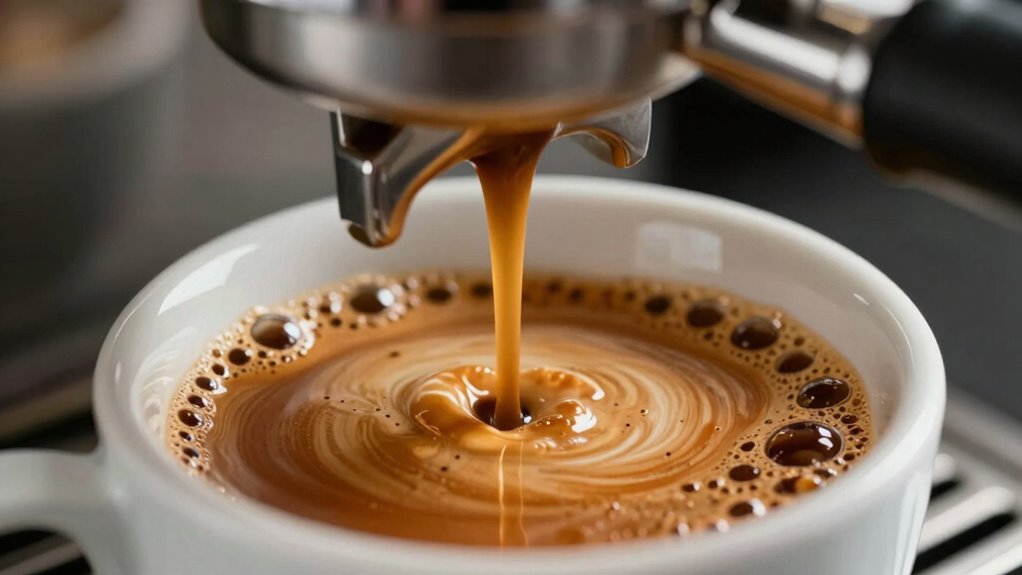

Crema gives you visual clues about your espresso’s freshness and how well it was extracted, but it doesn’t tell the full story. A rich, golden-brown crema suggests good freshness and proper technique, but it can be deceiving—thick foam doesn’t guarantee great flavor. To truly judge quality, you need to explore aroma, taste, and texture. If you’re curious about what else crema reveals and what it conceals, there’s more to learn ahead.
Listen free for 30 days with Audible
Thousands of audiobooks and originals — cancel anytime.
As an affiliate, we earn on qualifying purchases.
Key Takeaways
- Crema indicates freshness, proper extraction, and some bean qualities but doesn’t reveal detailed flavor nuances or aroma complexity.
- Appearance alone can be misleading; thick or persistent crema doesn’t always equate to high-quality espresso.
- Crema’s color, texture, and stability provide clues about brewing technique but can’t assess overall taste or balance.
- External factors like humidity, temperature, and equipment can affect crema, making it an unreliable sole quality indicator.
- Evaluating espresso requires sensory assessment beyond crema, including aroma, taste, and mouthfeel for a comprehensive quality judgment.
As an affiliate, we earn on qualifying purchases.
Understanding Crema and Its Role in Espresso
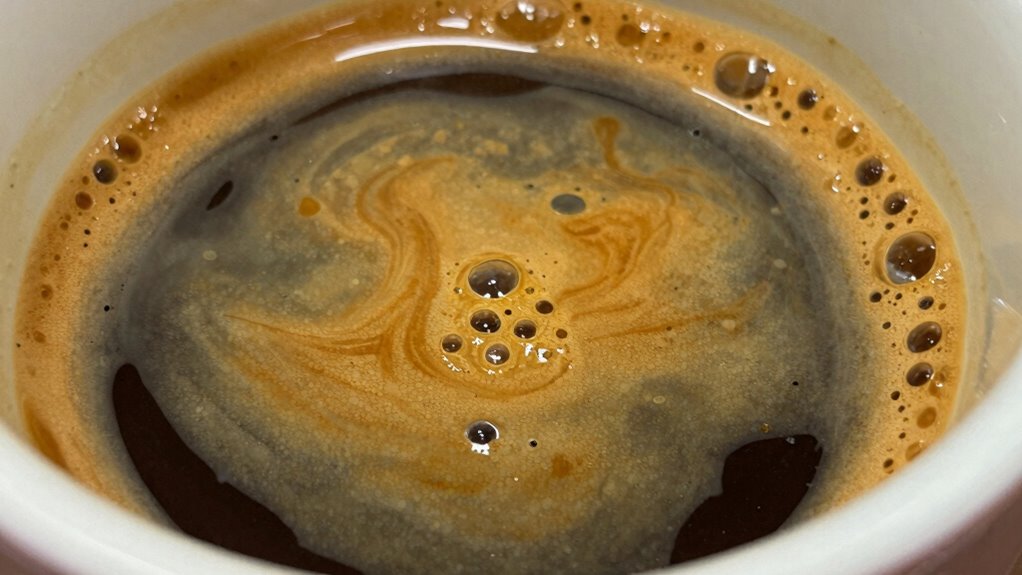
Crema is the rich, golden-brown foam that forms on top of a well-made espresso, and it plays a crucial role in the drink’s overall flavor and aroma. Its appearance, known as crema aesthetics, captures your attention and signals a properly brewed shot. Crema isn’t just for looks—it enhances the espresso’s aroma and helps lock in essential oils, boosting flavor. When you observe a thick, velvety crema, you’re witnessing espresso artistry at work, reflecting skill and technique. This layer acts as a barrier that preserves the drink’s richness while adding a subtle bitterness and sweetness. Understanding crema’s role enables you to appreciate the craftsmanship behind each shot, emphasizing the importance of precision and passion in espresso preparation. Additionally, the quality of crema can be influenced by factors like coffee bean origin and biodiversity, which impact the overall sustainability and flavor profile of your coffee. The freshness of the beans also significantly affects the crema’s development, as fresher beans tend to produce a more vibrant crema. Proper extraction methods and grind size can also significantly influence the formation and quality of crema.
coffee aroma and flavor evaluation kit
As an affiliate, we earn on qualifying purchases.
As an affiliate, we earn on qualifying purchases.
What Crema Reveals About Your Espresso’s Quality
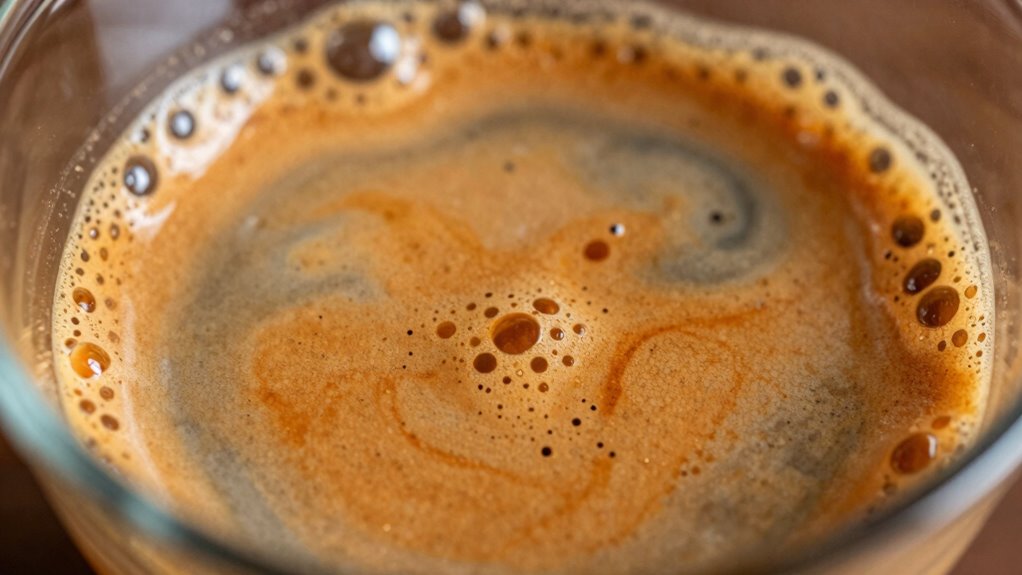
The color of your crema can tell you how fresh your espresso is, with a rich, golden hue indicating recent roasting. Thicker crema often boosts aroma, making your coffee more inviting, while a thin layer might suggest over-extraction or older beans. The consistency of the crema reveals your brewing skill—steady and even shows you’ve mastered the technique.
Color Indicates Freshness Level
When inspecting your espresso shot, the color of the crema can tell you a lot about its freshness and quality. A vibrant, golden-brown crema usually indicates a fresh shot with a rich flavor profile, often linked to high-quality beans. If the crema is pale or uneven, it might suggest the coffee isn’t as fresh, which can dull the flavor and diminish aroma. The color also hints at the bean origin—darker hues can come from beans roasted longer or from specific regions known for bold profiles, while lighter crema might come from beans with a more delicate, nuanced flavor. Overall, observing the crema’s color helps you gauge the freshness and understand the flavor characteristics rooted in the bean’s origin. Additionally, the consistency of the crema can provide insight into the extraction process and whether the coffee was brewed properly. Proper extraction techniques, such as adjusting grind size or tamping pressure, can influence the crema formation and overall espresso quality, since factors like brew parameters directly impact the crema’s development. A good understanding of bean freshness can further enhance your ability to assess espresso quality at a glance.
Crema Thickness Affects Aroma
Thicker crema often signals a more aromatic and flavorful espresso, as it traps volatile compounds that carry aroma. The crema texture influences how well these compounds stay suspended, enhancing aroma release with each sip. A stable, dense crema helps preserve the delicate scents, making the aroma more pronounced. Additionally, crema temperature plays a role; if it’s too hot, the aroma can dissipate quickly, but when it’s just right, it allows the aroma to develop fully. When you notice a thick, velvety crema, you can expect a richer aroma profile. Conversely, thin or patchy crema suggests fewer captured volatile compounds, resulting in a less aromatic experience. Fundamentally, crema thickness and temperature work together to reveal your espresso’s aromatic potential. Crema stability also impacts how long the aroma lingers after brewing. Properly understanding these factors can help you optimize your espresso brewing process for maximum flavor.
Consistency Shows Brewing Skill
Consistency shows brewing skill (What Crema Reveals About Your Espresso’s Quality). Consistent crema production indicates a skilled barista who understands how to fine-tune variables like grind size, tamping pressure, and brewing time. When your crema is reliably uniform, it shows you’ve mastered these techniques, which are essential for extracting balanced flavors. This uniformity also influences the quality of the espresso and the overall drinking experience. This consistency also affects your ability to create latte art, as a steady crema provides a smooth canvas for design. Additionally, the bean origin plays a role; high-quality beans from specific regions tend to produce more stable crema, reflecting careful selection and roasting. Proper espresso technique and attentive adjustments can further improve crema stability over time. Recognizing the importance of chemical stability in the brewing process can help you better understand and control crema production, leading to more consistent results. Maintaining temperature control throughout the brewing process is also crucial for achieving a stable crema and consistent extraction. If your crema varies from shot to shot, it suggests uneven extraction or inconsistent technique. Paying attention to brew consistency is essential for refining your skills and ensuring each espresso showcases your brewing expertise and the unique characteristics of your beans.
professional espresso shot glass
As an affiliate, we earn on qualifying purchases.
As an affiliate, we earn on qualifying purchases.
Limitations of Crema in Assessing Flavor and Overall Excellence
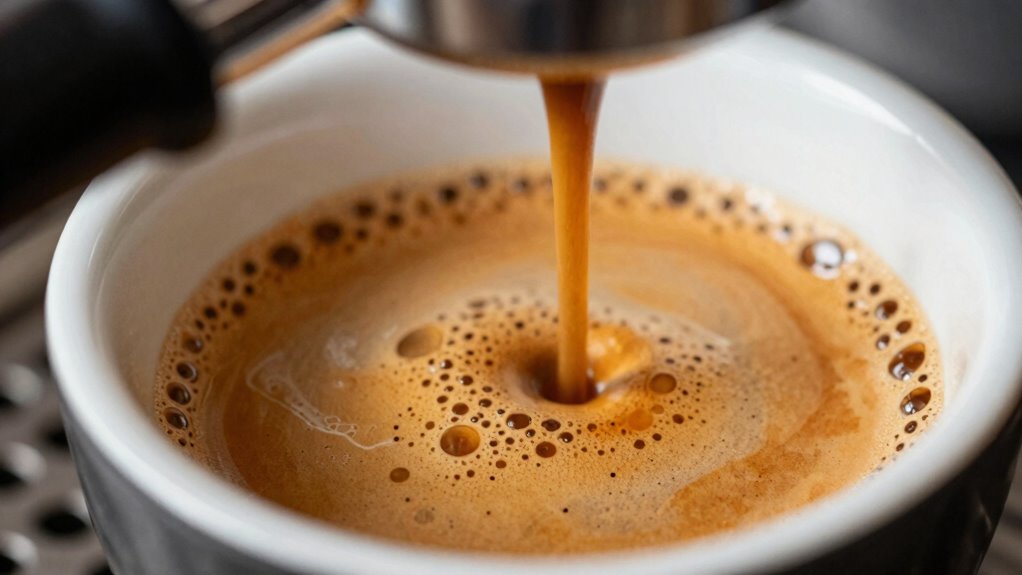
Crema’s appearance can be misleading, as it doesn’t always reflect the coffee’s true flavor or quality. You might notice inconsistent crema from shot to shot, making it hard to judge overall excellence. Plus, crema offers limited insights into the complex flavors beneath the surface, so relying solely on it can be deceptive. Additionally, the visual assessment of crema doesn’t account for the nuanced aroma and taste profiles that define a truly great espresso. Understanding the layered flavor profile of coffee can help you appreciate the full experience beyond just the crema. Recognizing how regional coffee characteristics influence flavor can deepen your appreciation for different espresso styles. Being aware of brew method variations can also shed light on why crema and flavor can differ significantly between shots. Exploring how freshness and storage impact crema formation can further refine your evaluation process.
Visual Limitations of Crema
While a rich, golden crema might catch your eye, relying solely on its appearance can be misleading when judging the coffee’s overall quality. The visual texture of crema can vary greatly, making it difficult to assess freshness or extraction quality accurately. Additionally, color contrast alone doesn’t reveal the complex flavors beneath the surface. A crema with vibrant hues might look appealing but could be thin or unstable, offering little insight into the espresso’s depth. Conversely, dull or uneven crema might hide a well-balanced shot. Because crema’s visual cues are limited, it’s important not to judge the coffee solely on appearance. Instead, consider aroma, taste, and mouthfeel for a more complete evaluation of your espresso’s true quality.
Inconsistent Crema Quality
Despite its appealing appearance, crema can be highly inconsistent in quality, making it unreliable as a sole indicator of flavor or overall excellence. Variations often stem from factors like barista techniques and equipment maintenance. For example, improper tamping or inconsistent grind size can lead to uneven extraction, affecting crema quality. Additionally, stale beans or neglected machine upkeep can produce thin or patchy crema. Keep in mind:
- Freshness of beans impacts crema richness
- Proper tamping ensures even extraction
- Consistent grind size influences crema stability
- Regular equipment upkeep prevents defects
- Technique variations among baristas cause inconsistency
These factors mean crema alone can’t reliably reveal the espresso’s true flavor or quality. Relying solely on crema overlooks the importance of proper technique and equipment care in achieving a true, well-balanced espresso.
Crema’s Limited Flavor Insights
Although a rich, golden crema can be visually appealing, it doesn’t tell you much about the coffee’s true flavor or quality. Crema mainly reflects the coffee’s surface tension and extraction process, not the subtle flavor nuances or aroma complexity inside. You might see a beautiful crema but still miss the intricate layers of taste that define a high-quality espresso. Crema can mask or distort the real aroma profile, making it difficult to judge the coffee’s overall excellence. Relying solely on crema can lead you to overestimate or underestimate the coffee’s true character. To truly assess flavor, you need to focus on the aroma, taste, and mouthfeel beyond just the crema’s appearance. Crema’s limitations remind you it’s only one piece of the espresso puzzle. Additionally, understanding inspection techniques can help you better evaluate the overall quality of your espresso beyond just its surface appearance.
As an affiliate, we earn on qualifying purchases.
Factors That Affect Crema Formation in Espresso
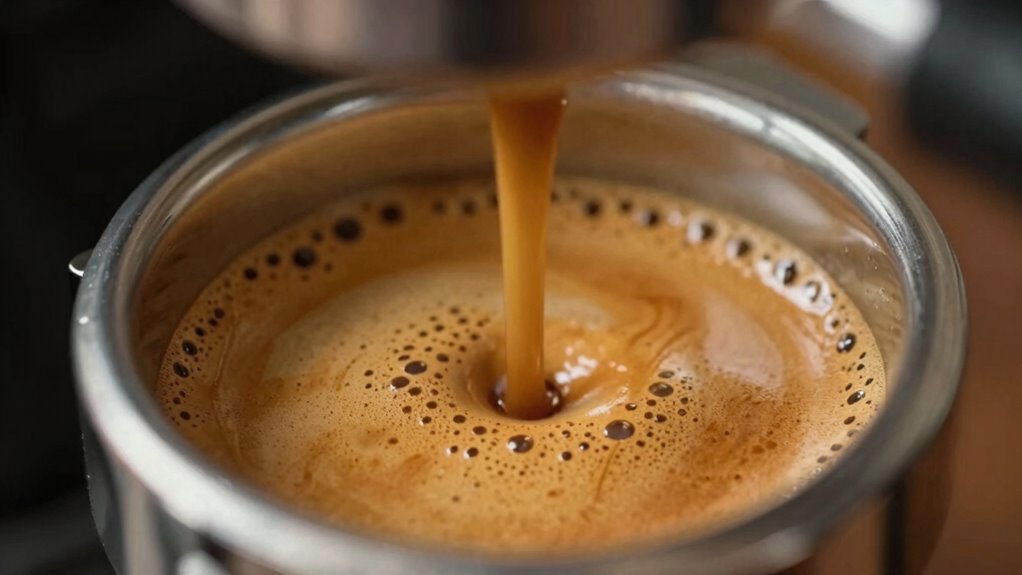
Several factors directly influence the formation and quality of crema in espresso. Extraction parameters, such as grind size, tamping pressure, and brewing temperature, play a crucial role in creating a stable, rich crema. Additionally, bean freshness considerably impacts crema; fresher beans tend to produce better crema because they contain more CO₂ and natural oils. Other influences include:
- Roast level: darker roasts often yield more crema
- Water quality: mineral content affects extraction
- Pressure: ideal extraction occurs around 9 bars
- Barista technique: consistent tamping and timing matter
- Equipment cleanliness: residues can hinder crema formation
- Coffee bean freshness is essential, as it directly affects the amount of natural oils and CO₂, both critical for crema development. Moreover, freshness preservation methods can help maintain optimal crema-producing qualities over time. A thorough understanding of extraction techniques can further enhance crema quality and consistency.
How to Judge the Quality of Your Crema and Espresso
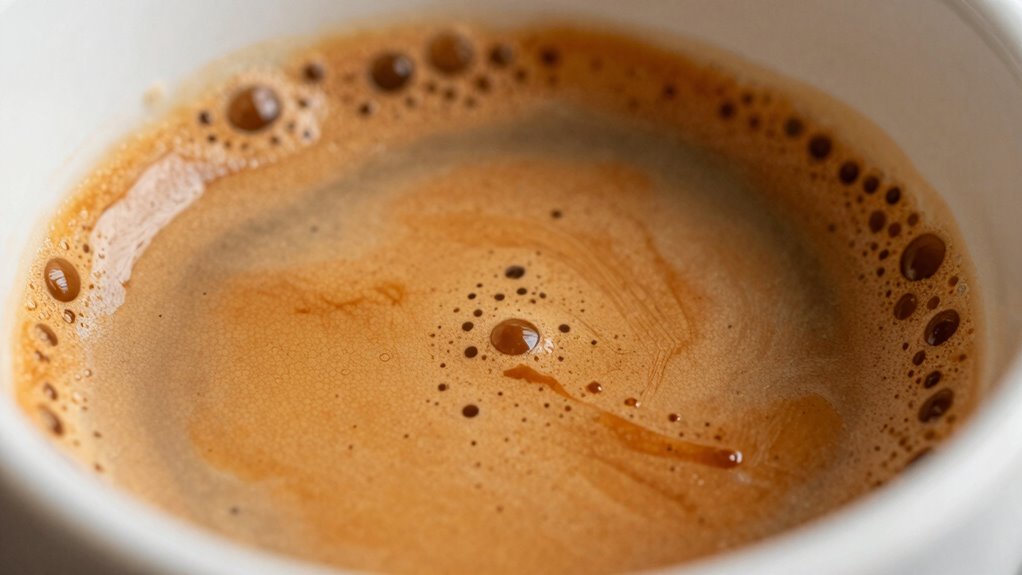
To assess the quality of your crema and espresso, focus on its appearance, aroma, and texture. A rich, golden-brown crema with a smooth, velvety surface indicates freshness and proper extraction. The aroma should be vibrant, with hints of sweetness, fruitiness, or nuttiness, signaling good bean quality. The texture matters too—crema that’s thick and persistent suggests a well-made shot. Proper coffee storage keeps beans fresh, preserving aroma and flavor, while regular equipment maintenance ensures consistent results. Stale beans or dirty equipment can diminish crema quality. Pay attention to these factors, and you’ll better judge your espresso’s overall quality. Remember, consistency in storage and maintenance helps you produce better crema and a more satisfying espresso experience.
Common Myths About Crema and Espresso Evaluation
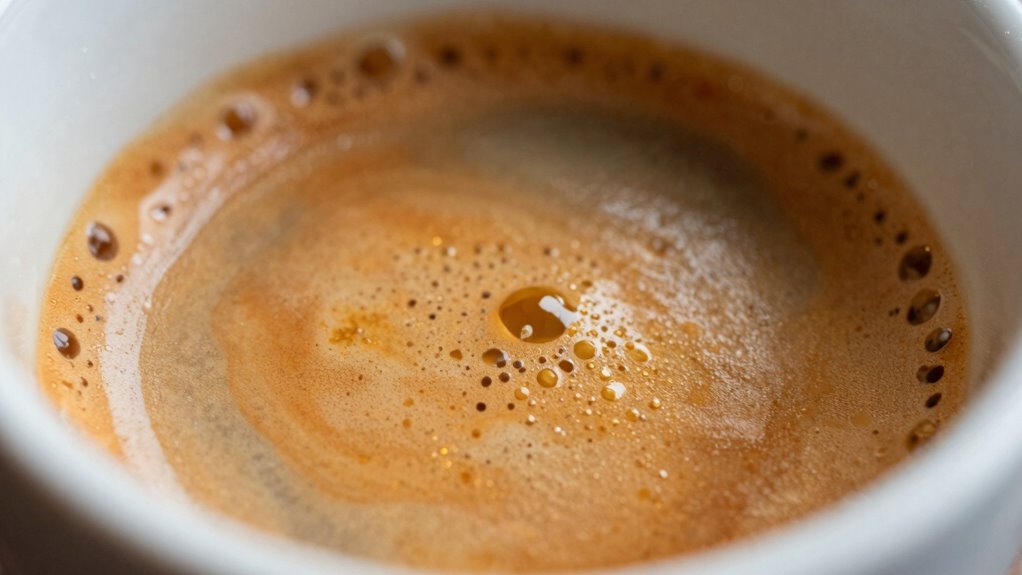
Many people believe there are strict rules for judging the quality of crema and espresso, but some of these ideas are actually myths. For example, many think that a thick, persistent crema always equals great espresso, but that’s not true—sometimes it’s just foam. Others believe that perfect milk art depends solely on crema color, ignoring how milk texture and coffee acidity play roles. Some assume that bright coffee acidity means a better shot, but it’s more about balance. Additionally, people often think that a lighter-colored crema indicates a weaker espresso, yet it might simply reflect the coffee’s roast profile. finally, many overlook that crema can be affected by factors beyond quality, like temperature and humidity, making it an unreliable sole judge of your brew.
Knowing When to Look Beyond Crema to Evaluate Your Brew
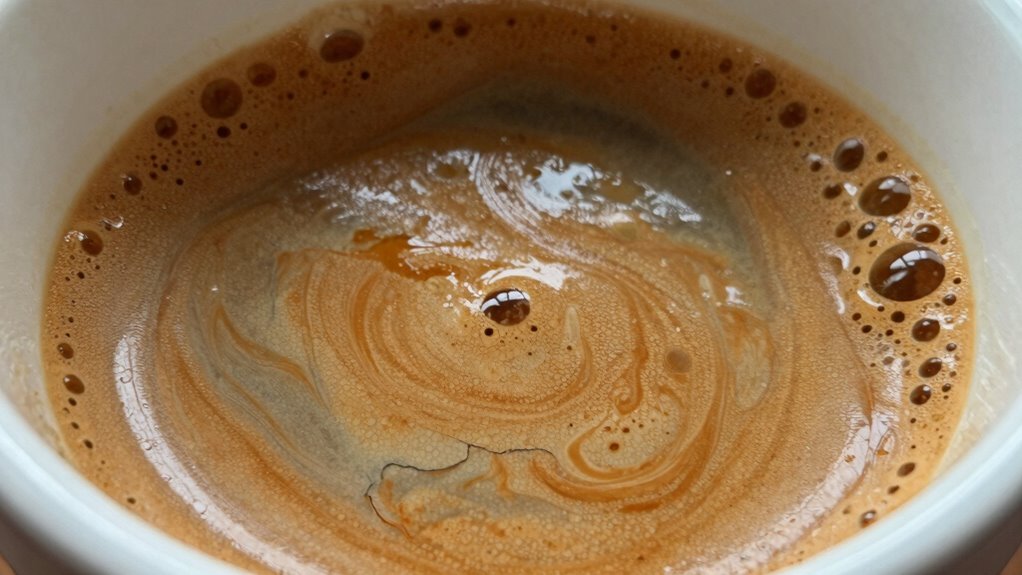
While crema offers a quick visual cue, it’s important to recognize when it’s time to look beyond this layer to truly evaluate your espresso. Crema’s appearance doesn’t reveal flavor nuances or the success of your extraction techniques. If the crema is thin, pale, or uneven, trust your senses—taste and aroma matter more. Focus on the balance, sweetness, and complexity of flavors instead of just the foam. Use this table to guide your assessment:
| Indicator | What to Check | What It Means |
|---|---|---|
| Thin or short crema | Aroma and taste | Poor extraction, underdeveloped flavors |
| Pale or uneven color | Flavor nuances | Over- or under-extraction |
| Lack of sweetness | Mouthfeel and aftertaste | Inconsistent brewing process |
Look beyond crema to refine your skills and truly enjoy your espresso.
Frequently Asked Questions
Can Crema Indicate the Freshness of the Coffee Beans Used?
Yes, crema can suggest freshness, but it’s not a definitive indicator. Fresh coffee beans release more coffee oil, which helps produce a rich, stable crema. However, crema’s appearance can also be affected by bean oxidation and brewing techniques. So, while a thick, golden crema hints at fresh beans, it’s best to take into account other factors like aroma and flavor for a true freshness assessment.
Does a Thicker Crema Always Mean a Stronger Espresso?
Think of espresso as a symphony, where crema is the lively percussion. A thicker crema doesn’t always mean a stronger espresso; it’s more about coffee texture and bean freshness. Sometimes, a rich, thick crema masks a mild flavor, while a thinner one reveals bold notes. So, don’t judge strength solely by crema thickness—consider aroma, taste, and bean quality for a true espresso experience.
How Does the Type of Espresso Machine Influence Crema Quality?
The type of espresso machine markedly influences crema quality. Machines with better temperature stability and pressure control produce richer crema. You should focus on machine maintenance to keep components clean and functioning properly, ensuring ideal pressure. Additionally, maintaining bean grind consistency helps prevent over or under-extraction, which impacts crema thickness and texture. Investing in a quality machine and staying consistent with your grind and maintenance routines will give you better, more durable crema for your espresso.
Can Environmental Factors Affect the Appearance of Crema?
Ironically, the environment seems to whisper secrets through crema’s appearance. You might think farm altitude or water mineralization are mundane details, yet they dramatically influence crema’s look. Higher altitudes often produce beans with nuanced oils, affecting crema’s texture. Mineral-rich water can either enhance or diminish crema’s vibrancy. So, yes, environmental factors subtly shape that delicate, tempting layer, revealing more than you might expect about your espresso’s journey.
Is Crema a Reliable Indicator of Overall Espresso Flavor?
Crema isn’t a fully reliable indicator of espresso flavor because flavor nuances depend on factors beyond its appearance. While a rich, golden crema can suggest freshness, it doesn’t guarantee quality. Your perception is influenced by barista techniques, grind size, and brewing time. Focus on tasting the espresso itself, as crema provides visual appeal but doesn’t reveal the complex flavors inside. Trust your palate more than crema alone to judge quality.
Conclusion
While crema can add a tempting visual appeal, don’t rely on it alone to judge your espresso. It’s like judging a book by its cover—pretty, but not the whole story. The true quality lies in the aroma, taste, and balance you experience with each sip. So, enjoy that luscious crema, but remember, the real story of your espresso unfolds beyond the surface—where flavor and craftsmanship reside.
Flea & tick season Picks
flea and tick prevention
As an affiliate, we earn on qualifying purchases.