
The shape of your espresso extraction curve directly impacts its flavor. A smooth, steady curve indicates balanced extraction, offering a rich and complex taste. Rapid rises or sharp drops can cause over- or under-extraction, leading to bitter or sour flavors. Early stopping or over-extraction affects brightness and sweetness. By understanding how these curves develop, you’ll learn to control your brew for the perfect taste; keep exploring to master this essential skill.
Key Takeaways
- Smooth, balanced extraction curves tend to produce well-rounded, flavorful espresso with optimal sweetness and minimal bitterness.
- Rapidly rising curves may cause over-extraction, leading to bitter and harsh flavors.
- Sharp declines in the curve indicate under-extraction, resulting in sour, flat tastes.
- Early extraction emphasizes bright, acidic notes, while prolonged extraction can introduce bitterness.
- Adjusting parameters based on curve analysis helps optimize flavor harmony and overall taste.

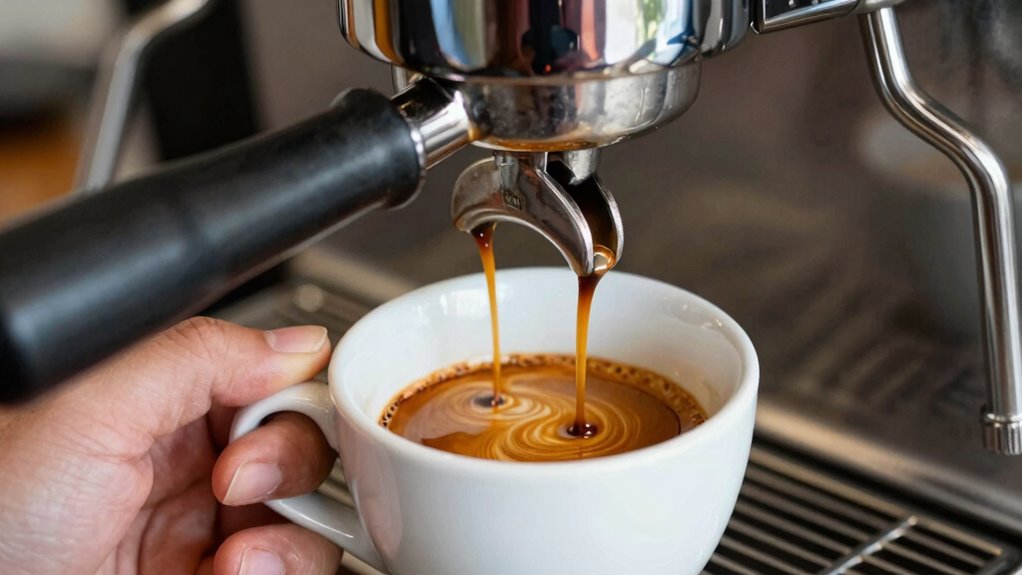
Understanding espresso extraction curves is vital for dialing in your perfect shot, as they reveal how flavors develop over time during extraction. These curves visually map the flow of soluble compounds from coffee grounds into your cup, showing how extraction progresses from the initial pour to the final drips. These patterns can also indicate the quality of extraction, helping you identify areas for adjustment. By analyzing these curves, you gain insight into how different stages influence flavor balance, enabling you to fine-tune your process for a more harmonious and enjoyable espresso.
When you pay attention to the shape of the extraction curve, you notice that a well-balanced shot typically has a steady, smooth curve, indicating consistent extraction. In contrast, a curve that rises too quickly or falls off sharply suggests over- or under-extraction, which can lead to flavors that are overly bitter or sour. Achieving extraction consistency means controlling variables like grind size, dose, tamp pressure, and water temperature to produce a curve that reflects a balanced extraction. This consistency is vital because it guarantees each shot maintains the same flavor profile, allowing you to reliably reproduce your ideal espresso.
As extraction progresses, different compounds are released at varying rates, affecting taste. Early in the extraction, you extract more acidic and fruity notes, which can make the espresso lively and bright. If you stop too early, your shot might taste flat or sour. Conversely, if the curve indicates that extraction continues too long, you risk pulling out bitter, astringent flavors that dominate the overall profile. By understanding the extraction curves, you can better judge when to stop or adjust your process, guaranteeing the flavor balance aligns with your preferences. Additionally, precise control over extraction parameters helps you achieve more consistent results over time.
Moreover, the curves help you see how your adjustments influence flavor development. For example, a slightly longer extraction might bring out more sweetness and complexity, but only if the curve remains smooth and controlled. If it becomes erratic, you might be over-extracting or under-extracting, which disrupts flavor harmony. Analyzing these curves can also serve as a useful feedback tool, guiding you to improve your brewing technique with each shot. Consistently analyzing these curves allows you to refine your technique, leading to more predictable and refined results. Recognizing the visual patterns in extraction curves enhances your ability to troubleshoot and optimize your espresso brewing process. Understanding extraction curves is essential for mastering the art of espresso brewing.
espresso extraction curve monitor
As an affiliate, we earn on qualifying purchases.
As an affiliate, we earn on qualifying purchases.
Frequently Asked Questions
How Do Extraction Curves Differ Between Various Coffee Beans?
You’ll notice extraction curves vary depending on the bean origin and roast level, affecting the flavor profile. For example, beans from different regions, like Ethiopia or Colombia, show distinct extraction rates, influencing acidity, brightness, and body. Lighter roasts often have a slower extraction curve, highlighting complex flavors, while darker roasts extract more quickly, emphasizing bitterness. Understanding these differences helps you fine-tune your espresso for a balanced, flavorful shot.
Can Extraction Curves Indicate Potential Over-Extraction?
Yes, extraction curves can indicate potential over-extraction. If the curve shows a steep rise followed by a prolonged plateau, it suggests you’re extracting too much, which can harm flavor consistency. By analyzing these curves, you can optimize extraction, ensuring balanced flavors without overdoing it. Monitoring the curve helps you fine-tune your process, leading to more consistent espresso shots and better overall taste.
How Does Grind Size Influence Extraction Curves?
Your grind size influences extraction curves by shaping grind consistency and particle distribution. Finer grinds create more uniform, smaller particles, leading to a quicker, more linear extraction curve with balanced flavors. Coarser grinds produce larger, uneven particles, causing inconsistent extraction and a flatter curve with potential under-extraction. Adjusting your grind size helps you control the flow rate and extraction profile, ensuring your espresso develops ideal flavor and body.
Are Extraction Curves Affected by Brewing Temperature?
Yes, brew temperature impacts extraction curves because higher temperatures generally boost extraction efficiency, making more soluble compounds dissolve faster. When you increase the brew temperature, you might notice a steeper extraction curve, leading to a richer flavor, but if it’s too hot, it can cause over-extraction and bitterness. Conversely, lower temperatures slow down extraction, resulting in a lighter, more delicate taste. Adjusting brew temperature helps you control the overall profile.
What Equipment Is Best for Analyzing Extraction Curves?
You should use a refractometer or a specialized espresso analysis tool to analyze extraction curves. These devices help you monitor flavor consistency by providing precise measurements of soluble solids during extraction. Regular equipment calibration guarantees accuracy, allowing you to make data-driven adjustments. By choosing the right equipment, you can optimize your brewing process, maintain consistent flavor profiles, and refine your extraction curves for better espresso quality every time.

PACT Club Timer III – Shot Timer Guaranteed to Help You Improve
Ultra Loud Buzzer
As an affiliate, we earn on qualifying purchases.
As an affiliate, we earn on qualifying purchases.
Conclusion
As you master the art of espresso extraction curves, remember that every pour echoes the dance of the barista’s brush strokes—each phase revealing a new layer of flavor. Like a symphony reaching its crescendo, your understanding guides the taste, balancing bitterness and sweetness. Embrace these curves as your compass, leading you through a landscape of rich complexity. In this pursuit, you become both artist and alchemist, transforming simple beans into a masterpiece with each shot you craft.

Reoszeank 51mm Espresso Accessories Kit, Espresso Distribution Tool, Spring Loaded Calibrated Tamper and Dosing Funnel Set, Coffee Distributor Leveler Fits Delonghi CASABREWS and atatix 51 mm Machines
Fits 51mm Delonghi and CASABREWS Portafilters: Designed to fit Delonghi, CASABREWS CM5418 / 3700, atatix and other 51mm…
As an affiliate, we earn on qualifying purchases.
As an affiliate, we earn on qualifying purchases.

7 PCS Espresso Accessories,51mm Espresso Tamper Tools,WDT Tool Espresso Machine Accessories Kit,Coffee Tamper with Wood Espresso Tamping Station,Distributor,Stirrer,Dosing Funnel,Brush,Puck Screen
1. 【All-In-One Espresso Accessories Kit】Elevate your coffee ritual with this 7-piece professional barista kit, designed for precision and…
As an affiliate, we earn on qualifying purchases.
As an affiliate, we earn on qualifying purchases.