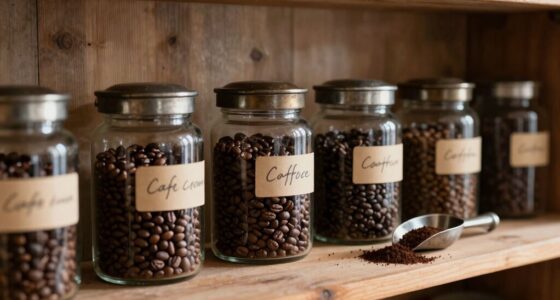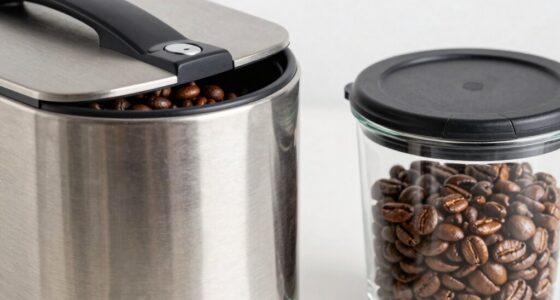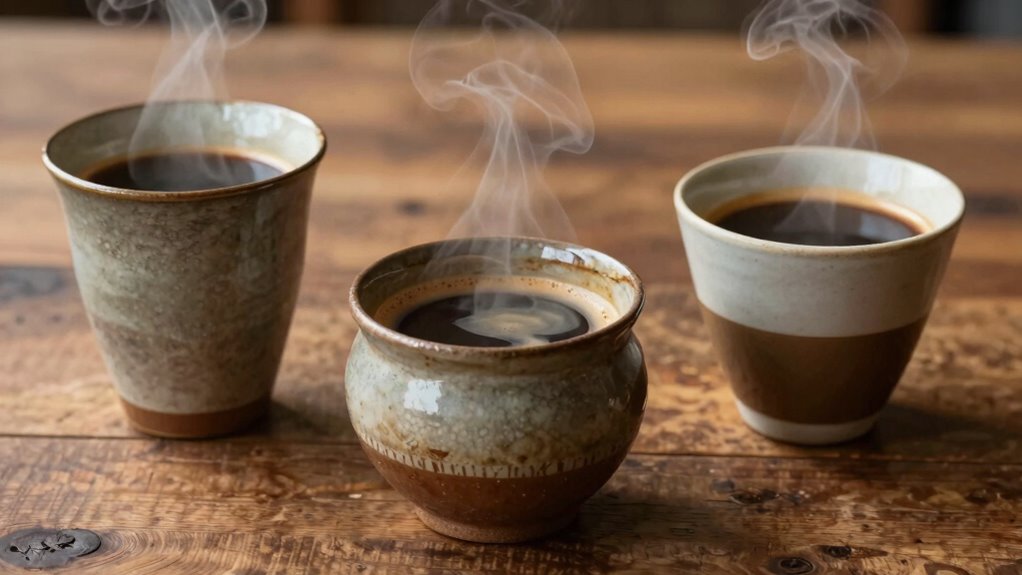

You’ll notice that coffee cup shapes change more than their styles because they respond to material properties, cultural meanings, and technological advances. As new materials and innovations emerge, designs adapt to improve insulation, durability, or user comfort, often altering the shape. Cultural influences also shape how cups look based on tradition or social status. If you keep exploring, you’ll discover how these factors work together to transform what a coffee cup can be.

Get coffee and tea gear delivered free with Prime
- Fast, free delivery on millions of items
- Prime Video, Amazon Music and more included
- Member-only deals all year
Key Takeaways
- Material properties like insulation, durability, and handling influence functional shape changes more than superficial style.
- Technological advancements enable innovative shapes that enhance usability and performance beyond aesthetic trends.
- Cultural symbolism and social significance drive shape adaptations to reflect societal values and traditions.
- Functional needs, such as heat retention or ease of use, lead to shape evolution independent of stylistic preferences.
- The interplay of cultural meaning and material technology results in shape shifts that prioritize purpose over style.
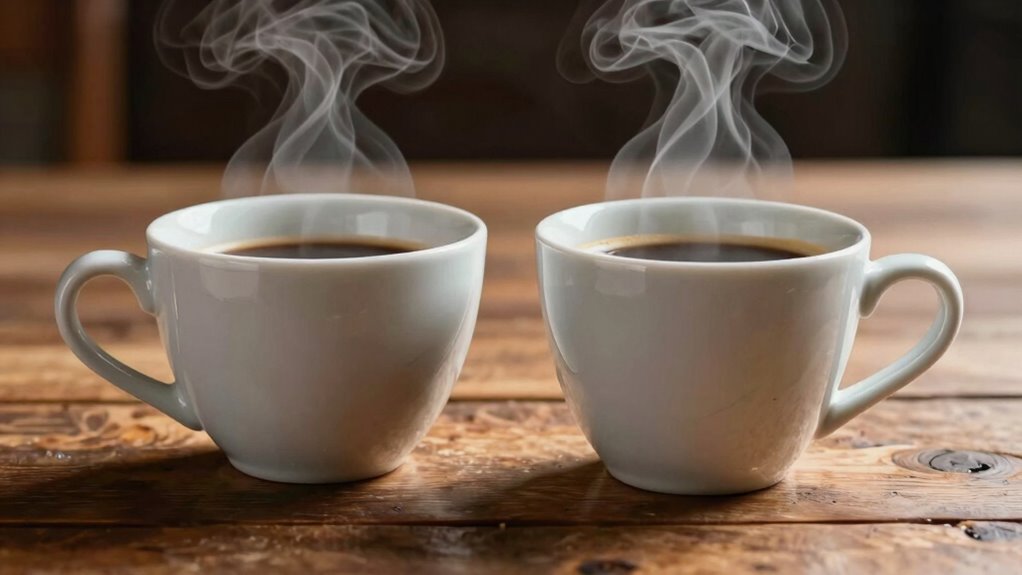
Have you ever stopped to contemplate how much a simple coffee cup can reveal about your daily routine? It’s more than just a vessel to hold your morning brew; it’s a reflection of your habits, preferences, and even cultural background. When you pick up a cup, you’re engaging with a piece of design that has evolved not just in appearance but also in material and meaning. The shape of your coffee cup isn’t arbitrary—it’s shaped by practical needs, cultural symbolism, and the durability of the materials used. These factors influence why certain styles dominate, but more importantly, why the shape itself changes over time.
Material durability plays a significant role in how coffee cups are designed and reshaped. You may notice that your favorite mug is made from ceramic, which balances insulation with strength, or from porcelain, which feels delicate yet is surprisingly resilient. Some cups are crafted from glass, offering elegance but requiring careful handling, while others are made from sturdy plastics that withstand drops and rough use. The choice of material dictates the shape’s evolution—thicker walls for durability, narrower rims for heat retention, or ergonomic handles for comfort. These considerations often lead to a change in shape to better suit the material’s properties or the user’s needs. Over time, innovations in materials, like heat-resistant composites or eco-friendly biodegradable options, continue to influence the contours and form of coffee cups, making them more durable and functional. Additionally, the development of material technology has allowed for more innovative and adaptable cup shapes that enhance user experience and sustainability.
Material choices shape coffee cup design, balancing durability, insulation, and comfort through innovative, eco-friendly solutions.
Beyond practicality, the shape and design of coffee cups carry deep cultural symbolism. In many societies, cups are more than containers—they’re symbols of hospitality, tradition, or social status. For example, a delicate, ornate cup might be reserved for special occasions or ceremonial use, while a sturdy, utilitarian mug signals everyday comfort. The cultural context often dictates shape, size, and ornamentation—think of the small espresso cups in Italy versus the large mugs common in the United States. As cultures evolve or blend, so do their coffee cups, leading to new shapes that reflect changing values or global influences. The shape adapts not just for function but to communicate identity, status, or belonging. That’s why, even as styles shift with trends, the underlying cultural meanings remain embedded in the form of the cup itself. Furthermore, cultural symbolism plays a crucial role in shaping the design choices that resonate with societal identities.
In essence, the shape of a coffee cup is a dynamic interplay between material durability and cultural symbolism. It’s a story of how function and tradition shape form, constantly adapting to new materials and societal values. When you cradle your cup, you’re holding not just a beverage but a piece of history—an object that has changed shape more than style, molded by necessity and meaning over time.
As an affiliate, we earn on qualifying purchases.
Frequently Asked Questions
How Do Cup Shapes Affect Coffee Temperature Retention?
You’ll notice that cup shapes considerably impact coffee temperature retention because of their thermal insulation properties and how they influence heat transfer. Taller, thinner cups tend to lose heat faster due to increased surface area exposure, while wider, thicker cups provide better insulation, slowing down heat transfer. Choosing a cup with a design that minimizes heat transfer helps keep your coffee warm longer, enhancing your drinking experience.
What Materials Influence the Flexibility of Coffee Cup Shapes?
You’ll find that materials like flexible plastics and silicone influence how easily coffee cup shapes can bend and adapt, offering durability and malleability. These materials are often eco-friendly options, helping reduce waste while maintaining durability. When choosing cups, consider silicone for flexibility and sustainability, or lightweight plastics for durability. Your choice impacts how well the shape can change without breaking, ensuring both functionality and eco-consciousness in your daily coffee routine.
Are Custom-Shaped Cups Better for Branding Purposes?
They’re definitely better for branding purposes because custom-shaped cups boost visual recognition and create a unique branding impact. When you choose a shape that stands out, people remember your brand more easily—like the saying, “A picture is worth a thousand words.” Custom shapes make your coffee cups memorable, helping your brand leave a lasting impression and differentiate itself from competitors in a crowded market.
How Do Ergonomic Designs Improve User Experience?
Ergonomic designs improve your user experience by prioritizing ergonomic comfort and grip stability. When a cup fits well in your hand, it reduces strain and makes sipping more comfortable. You’ll notice a better grip that prevents slipping, even when your hands are wet. Overall, ergonomic features make your coffee experience smoother, more enjoyable, and safer, especially during busy mornings or for those with limited hand strength.
Can Shape Changes Impact Coffee Flavor Perception?
Did you know that shape changes in coffee cups can considerably impact flavor perception? When your cup’s design influences aroma enhancement, it creates a flavor illusion, making your coffee taste richer or smoother. By optimizing the shape, you can direct aromas better to your nose, enhancing your overall experience. So, subtle design tweaks can truly elevate how you perceive and enjoy your coffee, beyond just style or appearance.
eco-friendly biodegradable coffee cup
As an affiliate, we earn on qualifying purchases.
As an affiliate, we earn on qualifying purchases.
Conclusion
So, next time you hold your coffee cup, remember it’s more than just a vessel—it’s a reflection of comfort, culture, and innovation. Shapes evolve, whispering stories of tradition and modernity, reminding us that design is always in motion, like a dance that never quite ends. Embrace the change, for within those curves and contours lies the soul of our daily ritual—ever shifting, yet forever comforting, like a warm hug in a world of constant transformation.
As an affiliate, we earn on qualifying purchases.
As an affiliate, we earn on qualifying purchases.
Halloween Picks
halloween
As an affiliate, we earn on qualifying purchases.