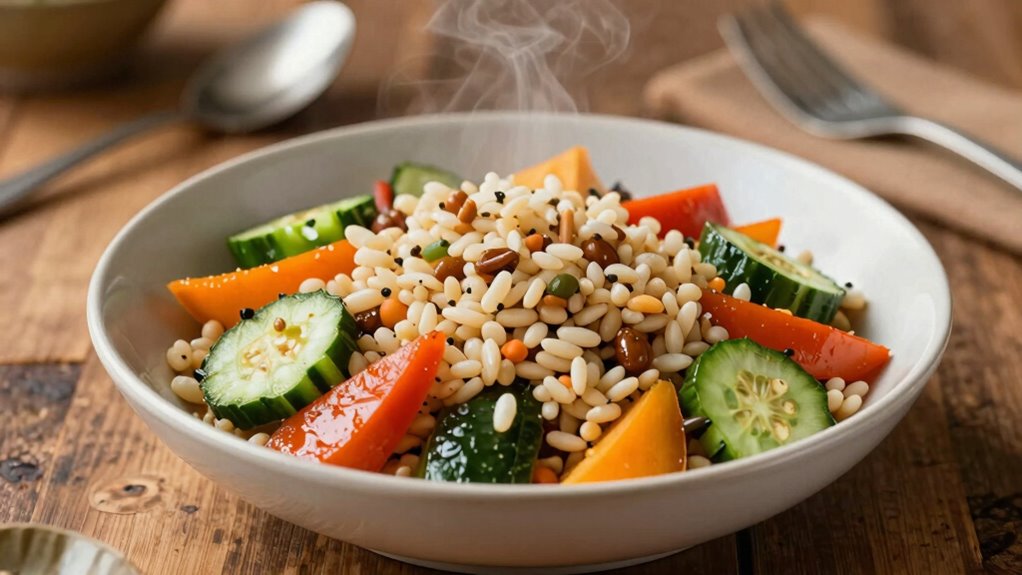

When you follow a routine with your foods, your sensory system and neural pathways get better at recognizing subtle flavors. Repeated exposure causes sensory adaptation, sharpening your ability to identify specific tastes and nuances. This consistency helps your brain become more attuned to the key elements of flavors, enhancing your overall perception. Over time, your palate becomes more refined, making eating more enjoyable. If you keep exploring, you’ll discover even deeper connections between routine and flavor appreciation.

Get coffee and tea gear delivered free with Prime
- Fast, free delivery on millions of items
- Prime Video, Amazon Music and more included
- Member-only deals all year
Key Takeaways
- Routine leads to sensory adaptation, making the brain more sensitive to subtle flavor nuances.
- Consistent exposure fine-tunes taste perception through neural plasticity.
- Repetition strengthens recognition of core flavor elements, enhancing overall appreciation.
- Routine helps develop a refined palate, enabling better identification of balanced flavors.
- Familiarity with foods reduces cognitive effort, allowing for deeper sensory focus and enjoyment.

Have you ever wondered why your taste preferences seem so predictable? The answer lies in your brain’s remarkable ability to adapt and find comfort in routine. When you repeatedly consume the same foods, your senses undergo sensory adaptation, a process where your taste buds and sensory pathways become less responsive to familiar flavors. This isn’t a flaw; it’s a natural mechanism that helps you focus on new or more intense stimuli. In the context of culinary consistency, routine plays a vital role in sharpening your perception of flavor because your palate becomes finely tuned to specific tastes, allowing you to appreciate subtle nuances that might otherwise go unnoticed. When you stick to familiar dishes, your brain expects certain flavors, and your sensory system becomes attuned, enhancing your overall enjoyment and perception of those flavors.
Routine can also help create a stable foundation for flavor perception. When you consistently eat the same foods, your taste buds learn to recognize and appreciate specific flavor profiles. This predictability reduces the cognitive load of constantly adjusting to new tastes, freeing your mind to savor the familiar. Over time, this consistency fosters a deeper appreciation for the intricacies of your favorite dishes, encouraging you to notice subtle saltiness, acidity, or umami notes that might be drowned out when trying new foods. Because your senses have adapted to the routine, each bite becomes a more precise experience, deepening your understanding of what makes certain flavors appealing. This process is further supported by the brain’s neuroplasticity, which allows your sensory system to adapt and optimize perception based on repeated exposure. Additionally, understanding the neural basis of sensory adaptation can help you appreciate how your brain actively shapes your flavor experience.
Moreover, routine enhances culinary consistency, which can boost your confidence in your culinary choices and elevate your overall eating experience. When you repeatedly prepare or consume certain dishes, you develop a refined palate that recognizes and values the specific qualities of those flavors. This consistency allows you to identify when a dish is perfectly balanced or slightly off, making your eating experience more satisfying and intentional. It also encourages experimentation within the comfort zone, as you become familiar with the core elements that define your favorite flavors, leading to creative variations without losing the essence of what you enjoy.
In essence, establishing a routine isn’t about limiting your palate; it’s about sharpening it. Sensory adaptation, driven by consistent exposure, helps you perceive and appreciate flavors more deeply. By embracing culinary consistency, you turn ordinary meals into rich, nuanced experiences, making your taste perception more precise and rewarding. This process is supported by the brain’s ability to adapt and find comfort in sensory adaptation, which enhances your appreciation of familiar tastes within your routine. So, sticking to familiar foods can actually help you discover new depths of flavor within the comfort of routine.
As an affiliate, we earn on qualifying purchases.
Frequently Asked Questions
Can Changing Routines Enhance Overall Taste Sensitivity Quickly?
Yes, changing routines can enhance your taste sensitivity quickly. When you alter what you eat and how often you use your taste buds, you prevent sensory adaptation, which dulls your perception over time. Fresh routines stimulate your taste buds, making flavors more vivid. This quick change helps your taste buds stay responsive, improving overall taste sensitivity and allowing you to enjoy flavors more intensely and frequently.
Does Routine Affect the Long-Term Health Benefits of Flavor Appreciation?
Yes, routine can positively influence the long-term health benefits of flavor appreciation by strengthening your flavor memory and reducing sensory adaptation. When you regularly enjoy diverse, healthy foods, your palate becomes more sensitive and appreciative over time. This consistency encourages healthier choices, enhances your enjoyment of nutritious options, and sustains your motivation. As a result, routine not only refines your taste but also promotes lasting health benefits through better dietary habits.
Are There Specific Routines That Work Better for Certain Flavors?
Yes, specific routines can enhance your perception of certain flavors. For example, maintaining regular taste consistency by eating similar foods at consistent times helps your palate recognize subtle differences, boosting flavor familiarity. When you repeatedly experience a flavor in a routine, your brain becomes more attuned, making the taste more enjoyable and complex over time. So, tailoring routines to focus on particular flavors can deepen your appreciation and perception.
How Does Stress Influence the Relationship Between Routine and Flavor Perception?
Stress impact can subtly influence how your routine modulates flavor perception, often dulling your senses when you’re overwhelmed. When stress is high, your brain may prioritize survival signals over savoring subtle tastes, making routine adjustments more essential to maintain flavor awareness. By establishing calming routines, you help buffer stress impact, allowing consistent flavor perception. This steady approach keeps your sensory experience rich, even amidst life’s inevitable pressures.
Can Routine Help Individuals Recover Lost Taste Functions?
Yes, routine can help you recover lost taste functions through taste training and sensory adaptation. By consistently practicing specific flavors and smells, you stimulate your taste buds and neural pathways, encouraging recovery. Regular exposure helps your senses adapt and regain sensitivity, making flavors more recognizable. Over time, this structured routine supports your journey to restore taste, especially when guided by taste training exercises tailored to your needs.
As an affiliate, we earn on qualifying purchases.
Conclusion
By embracing routine, you paint your palate with familiar strokes, sharpening your sensory palette like a seasoned artist refining every hue. Each day’s repetition acts as a gentle symphony, tuning your taste buds to recognize subtle notes previously lost in the noise. Over time, this disciplined dance awakens your flavor perception, turning ordinary bites into exquisite symphonies of taste. In the end, routine transforms your everyday dining into a masterpiece of sensory delight.
As an affiliate, we earn on qualifying purchases.
As an affiliate, we earn on qualifying purchases.
Halloween Picks
halloween
As an affiliate, we earn on qualifying purchases.