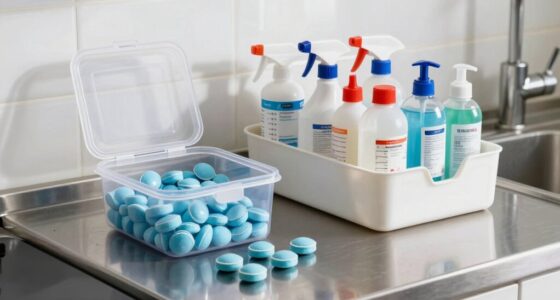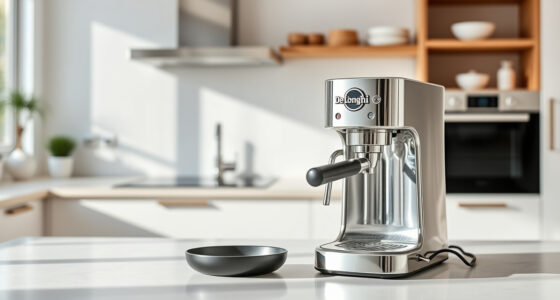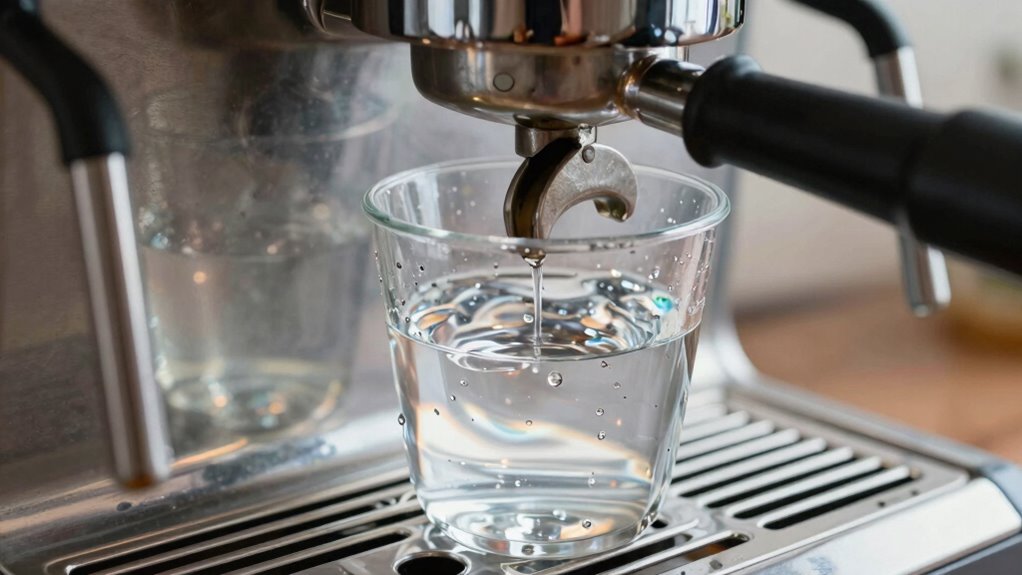

Your espresso machine’s maintenance costs largely depend on the water you use. Hard water with minerals causes faster limescale buildup, leading to more frequent descaling and repairs. Soft water reduces deposits but needs proper filtration to avoid damage. Managing water quality, along with keeping beans fresh and calibrating your machine, helps cut costs and extend its lifespan. Keep these factors in mind to save money over time—and there’s more to discover that can help you optimize your setup.

Get coffee and tea gear delivered free — and shop member deals
- Fast, free delivery on millions of items
- Access to Prime Big Deal Days deals on October 6–7
- Prime Video, Amazon Music and more included
Key Takeaways
- Using high-quality, filtered water reduces mineral buildup and decreases descaling and repair costs.
- Soft water minimizes limescale but requires proper filtration to prevent internal damage.
- Proper water chemistry and calibration improve machine efficiency and extend lifespan, lowering maintenance expenses.
- Maintaining optimal water quality decreases residue buildup, reducing cleaning frequency and associated costs.
- Sustainable water management practices support long-term machine performance and cost savings.
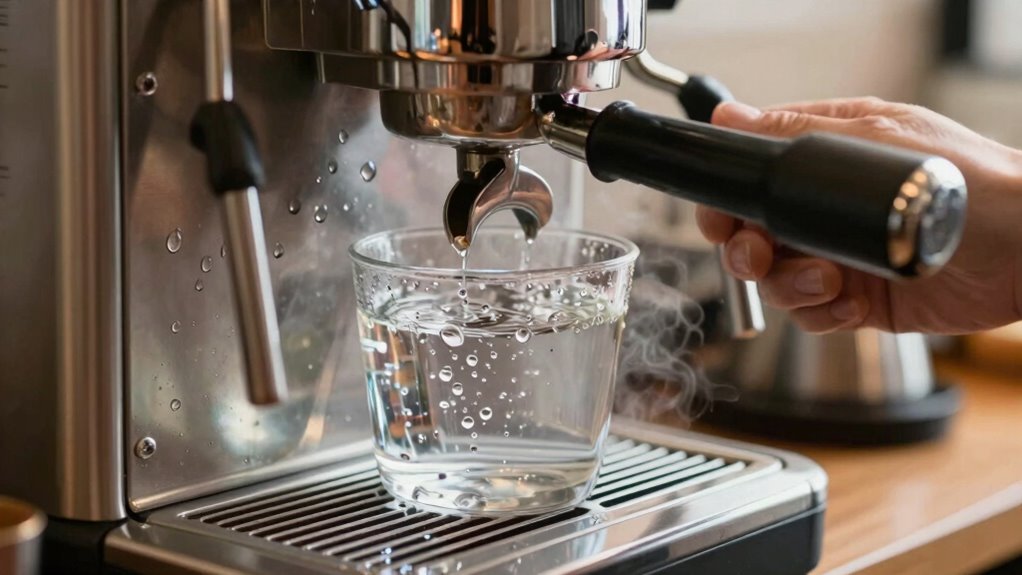
Have you ever wondered how much it really costs to keep your espresso machine running smoothly? It all starts with the water you use. The quality of your water directly impacts not just the taste of your coffee but also the maintenance costs over time. Using hard water, rich in minerals, can lead to quicker buildup of limescale, which demands more frequent descaling and potentially expensive repairs. Conversely, soft water reduces mineral deposits but may require additional filtration to prevent impurities from affecting your coffee’s flavor. Investing in a good water filtration system can seem like an upfront expense, but it pays off by prolonging your machine’s lifespan and reducing maintenance costs. Biodiversity and water quality** also play a crucial role in environmental sustainability, which can influence the resources available for maintaining your appliances. Beyond water quality, a key factor in maintaining your espresso machine is ensuring coffee bean freshness. Fresh beans produce a richer, more nuanced shot, but they also influence how often you’ll need to clean your machine. When beans are stale, they tend to produce more residues and oils that can clog the grinder and brew pathways, increasing your cleaning frequency. Regularly using fresh coffee beans helps keep the internal components cleaner, reducing the need for deep cleaning and repairs. Proper machine calibration ensures your espresso machine operates at optimal performance and prevents unnecessary strain on internal parts. A well-calibrated machine not only produces better-tasting coffee but also extends the lifespan of its components. Additionally, understanding the impact of water chemistry on your machine’s performance can help you make more informed choices about water treatment options. Maintaining proper water chemistry is essential for preventing mineral buildup and ensuring the longevity of your equipment. In the end, controlling your water quality, using fresh coffee beans, and maintaining proper calibration are all critical to managing your espresso machine’s maintenance costs. These factors aren’t just about getting the best-tasting coffee—they also help you avoid unnecessary expenses. When you pay attention to the quality of your water, keep your beans fresh, and regularly calibrate your machine, you’re investing in its longevity. This proactive approach means fewer breakdowns, less frequent repairs, and a smoother, more cost-effective** experience every time you pull a shot of espresso.
As an affiliate, we earn on qualifying purchases.
Frequently Asked Questions
How Often Should I Replace My Espresso Machine’s Water Filter?
You should replace your espresso machine’s water filter every 2 to 3 months to guarantee ideal water filtration and prevent mineral deposits. Regular filter changes help maintain water quality, reducing mineral buildup that can damage your machine over time. If you notice a change in taste or a decrease in water flow, it’s a sign to replace the filter sooner. Consistent maintenance keeps your machine running smoothly and extends its lifespan.
What Are the Signs of Mineral Buildup in My Espresso Machine?
Did you know mineral deposits cause about 80% of espresso machine malfunctions? You’ll notice signs of mineral buildup when your machine’s water flow slows, the steam wand drips, or there’s inconsistent brewing. Water hardness leads to mineral deposits, which can clog filters and heating elements. Regular descaling helps prevent this. Keep an eye on your machine’s performance, and if you see these signs, it’s time to descale and reduce mineral buildup.
Can Using Bottled Water Reduce Maintenance Costs?
Using bottled water can reduce your maintenance costs because it typically contains fewer minerals than tap water, preventing buildup in your espresso machine. While bottled water might be more expensive upfront, a cost comparison shows it can save you money in the long run by minimizing descaling and repairs. You’ll spend less time and money on cleaning and fixing, keeping your machine running smoothly and producing better-tasting espresso.
How Does Water Quality Impact the Longevity of My Espresso Machine?
Water quality directly impacts your espresso machine’s longevity. High mineralization causes scale buildup, leading to frequent repairs and increased maintenance costs. Using proper water filtration reduces mineral content, protecting internal components. Opt for water with balanced mineralization, and consider filtered or bottled water to extend your machine’s lifespan. Regularly maintaining and monitoring your water quality guarantees consistent performance and minimizes costly repairs over time.
What Are the Best Practices for Descaling My Espresso Machine?
To descale your espresso machine, start by stopping the brew cycle and removing the water reservoir. Use a descaling solution or vinegar, running it through the machine to dissolve mineral buildup. Afterward, run clean water to rinse out any residue. Keep your coffee grind consistent, and regularly calibrate your machine to guarantee peak performance. These practices help prevent scale buildup, extending your machine’s lifespan and maintaining great-tasting espresso.
descaling solution for espresso machine
As an affiliate, we earn on qualifying purchases.
As an affiliate, we earn on qualifying purchases.
Conclusion
Remember, you are only as good as the water you use—poor quality water can turn your espresso routine into costly repairs. By paying attention to water quality and regular maintenance, you’ll save money and enjoy better-tasting coffee. Don’t wait until it’s too late; an ounce of prevention is worth a pound of cure. Keep your espresso machine in top shape, and you’ll always start your day on the right caffeine kick.
water softener for espresso machine
As an affiliate, we earn on qualifying purchases.
As an affiliate, we earn on qualifying purchases.
espresso machine calibration tools
As an affiliate, we earn on qualifying purchases.
As an affiliate, we earn on qualifying purchases.
Fall Picks
fall essentials
As an affiliate, we earn on qualifying purchases.