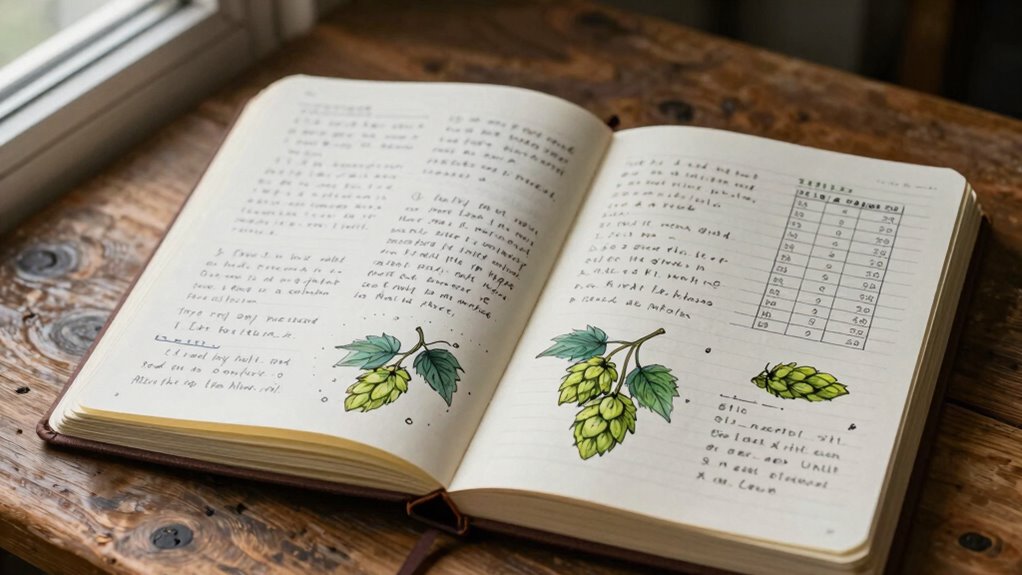

Brewing journals help you stay organized by recording ingredients, measurements, and processes each time, making it easier to replicate successful batches. They also track fermentation details and observations, allowing you to identify what influences your beer’s quality. By documenting small changes, you learn what works and avoid repeating mistakes. This systematic approach builds your confidence and skills over time. Keep exploring, and you’ll discover even more ways a journal can boost your brewing journey.
Key Takeaways
- They ensure accurate replication of successful recipes through detailed documentation.
- They enable systematic tracking and improvement of fermentation processes.
- They promote learning by recording small changes and their effects on beer quality.
- They help maintain organization, discipline, and consistency in brewing practices.
- They build confidence and skill by providing tangible progress records over time.
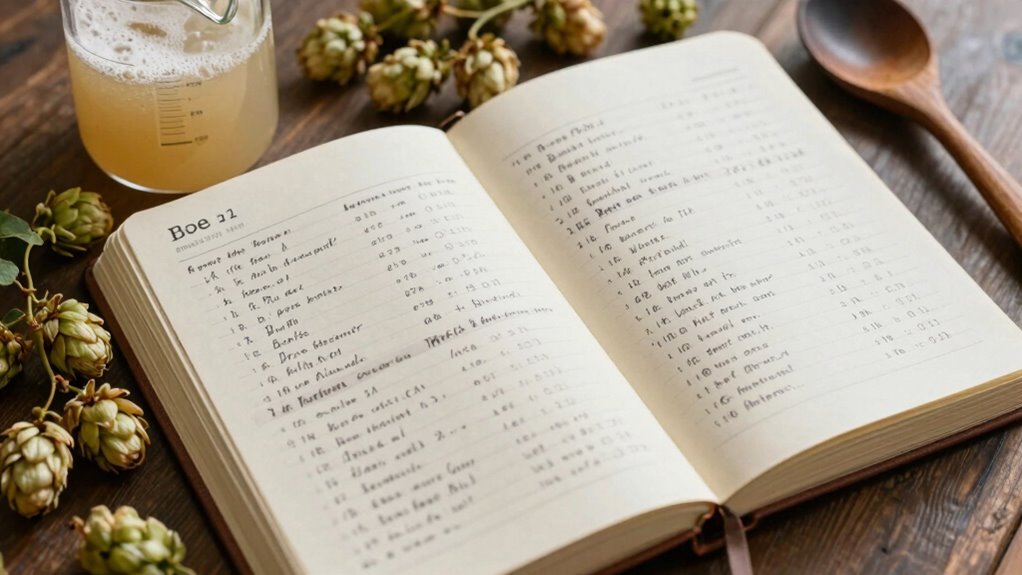
Keeping a brewing journal offers numerous benefits that can substantially improve your craft. One of the most immediate advantages is the ability to maintain recipe consistency. When you document your ingredients, measurements, and brewing process each time you brew, you develop a clear record of what works and what doesn’t. This consistency is essential if you want to replicate successful batches or refine your recipes over time. Without a journal, it’s easy to forget specific details, leading to unpredictable results. By writing everything down, you create a reliable reference that helps you reproduce your favorite beers or tweak recipes with confidence.
Keeping a brewing journal ensures recipe consistency and confident adjustments over time.
Additionally, fermentation tracking becomes much easier when you keep detailed notes. Fermentation is a complex process influenced by factors like temperature, yeast strain, and sugar content. Without proper documentation, it’s difficult to identify what caused a batch to turn out better or worse. When you track fermentation parameters meticulously, you gain insight into how different variables impact the final product. You can note the temperature at which fermentation occurred, how long it lasted, and any other observations like smell, clarity, or bubbling activity. Over time, these records help you identify patterns and optimize your process, leading to more consistent and high-quality brews. Developing a systematic approach to brewing through documentation ensures you’re making informed decisions rather than relying on guesswork. Keeping detailed records can also help you understand the importance of proper sanitation and its effect on fermentation outcomes. Recognizing the role of sanitation can prevent contamination and spoilage, saving you time and ingredients. Understanding yeast health through your records can also improve fermentation performance.
A brewing journal also encourages a more analytical mindset. As you record each batch, you become more aware of how small changes affect the outcome. This awareness helps you develop a scientific approach, where you learn from each experiment and avoid repeating mistakes. It’s also motivating because you see tangible evidence of your progress. When you look back on successful batches, you’ll understand what contributed to their excellence, and you’ll be more confident to experiment with new ingredients or techniques.
Furthermore, a well-maintained journal fosters a sense of discipline and professionalism in your brewing. It pushes you to be precise and organized, which ultimately leads to better results. You’ll develop habits like taking detailed notes during and after brewing, measuring ingredients carefully, and reviewing past entries before starting a new batch. These habits make the entire process smoother, more predictable, and more satisfying. Consistent documentation also facilitates recipe development by helping you build on previous successes and avoid repeating errors. Keeping track of your ingredient variations allows you to refine your flavor profiles and achieve your desired taste with greater precision. Proper record-keeping can also help in troubleshooting issues when batches don’t turn out as expected.
In the end, keeping a brewing journal isn’t just about record-keeping; it’s an investment in your brewing journey. It helps you achieve recipe consistency, enhances fermentation tracking, and cultivates a mindful, experimental approach. All these benefits combine to make you a more skilled and confident homebrewer, capable of producing better beer with each batch you craft.

Home brew Journal for Craft Beer Homebrewers | Homebrew Logbook w/ space for 70+ recipes | Beer Glassware Reference, Beer Color Chart, Hops and Yeast Strain Chart |
- Logbook for Brewing Process: Track each brewing step and tasting notes
- Space for 71+ Recipes: Ample space for multiple recipes
- Hops Chart: Over 100 hops references
As an affiliate, we earn on qualifying purchases.
As an affiliate, we earn on qualifying purchases.
Frequently Asked Questions
How Do I Start My First Brewing Journal?
Start your first brewing journal by choosing a dedicated notebook or digital app. Record your brewing techniques step-by-step, including temperatures, timings, and ingredient adjustments. Note equipment maintenance routines to keep everything in top shape. Consistently log each brew, noting what works and what doesn’t. Over time, this detailed record will help you refine your process, improve flavors, and troubleshoot issues, making every batch better than the last.
What Should I Include in a Brewing Journal Entry?
Think of your brewing journal as a treasure map guiding you to better brews. Include details like recipe formulation, noting ingredient qualities, quantities, and adjustments. Record your mash schedule, fermentation temperatures, and tasting notes. Document any issues or surprises, and note the results of each batch. This helps you track patterns, improve consistency, and refine your craft, making each brew a step closer to perfection.
How Often Should I Update My Brewing Journal?
You should update your brewing journal after every brew session to keep details fresh. Record the brewery location, ingredient sourcing, and process steps, noting any adjustments. This consistency helps you track what works best over time. Updating frequently allows you to refine your recipes, troubleshoot issues, and maintain quality. Whether you brew weekly or monthly, regular entries ensure you build a thorough record that improves your brewing skills.
Can a Brewing Journal Improve My Brewing Skills?
Yes, a brewing journal can improve your brewing skills by helping you track recipe customization and flavor development. When you note specific ingredients, techniques, and outcomes, you learn what works best for your taste. Over time, this helps you refine your recipes, develop your palate, and create more consistent, flavorful brews. Keeping detailed records boosts your confidence and allows you to experiment more effectively.
What Are the Best Tools for Maintaining a Brewing Journal?
You should use a dedicated brewing app or a detailed notebook to keep your journal. For example, a homebrewer might track recipe customization and fermentation progress, noting temperature changes and ingredient adjustments. These tools help you stay organized, identify what works best, and refine your process. Digital apps offer easy logging and data analysis, while notebooks give a tactile experience—choose what fits your style for consistent fermentation tracking.

The Home Fermentation Journal: Daily Tracking Log
As an affiliate, we earn on qualifying purchases.
As an affiliate, we earn on qualifying purchases.
Conclusion
So, next time you jot down your brewing experiments, remember—it’s no coincidence how these journals can uncover surprises you didn’t expect. They’re not just logs; they’re your secret weapon to better brews, helping you spot patterns and perfect your craft. As you fill each page, you might find that the tiniest detail leads to your best batch yet. Sometimes, it’s the smallest notes that make the biggest difference—proof that good things come from paying close attention.
Home brew Journal for Craft Beer Homebrewers | Homebrew Logbook w/ space for 70+ recipes | Beer Glassware Reference, Beer Color Chart, Hops and Yeast Strain Chart |
- Logbook for Brewing Process: Track each brewing step and tasting notes
- Space for 71+ Recipes: Ample space for multiple recipes
- Hops Chart: Over 100 hops references
As an affiliate, we earn on qualifying purchases.
As an affiliate, we earn on qualifying purchases.
Home brew Journal for Craft Beer Homebrewers | Homebrew Logbook w/ space for 70+ recipes | Beer Glassware Reference, Beer Color Chart, Hops and Yeast Strain Chart |
- Logbook for Brewing Process: Track each brewing step and tasting notes
- Space for 71+ Recipes: Ample space for multiple recipes
- Hops Chart: Over 100 hops references
As an affiliate, we earn on qualifying purchases.
As an affiliate, we earn on qualifying purchases.