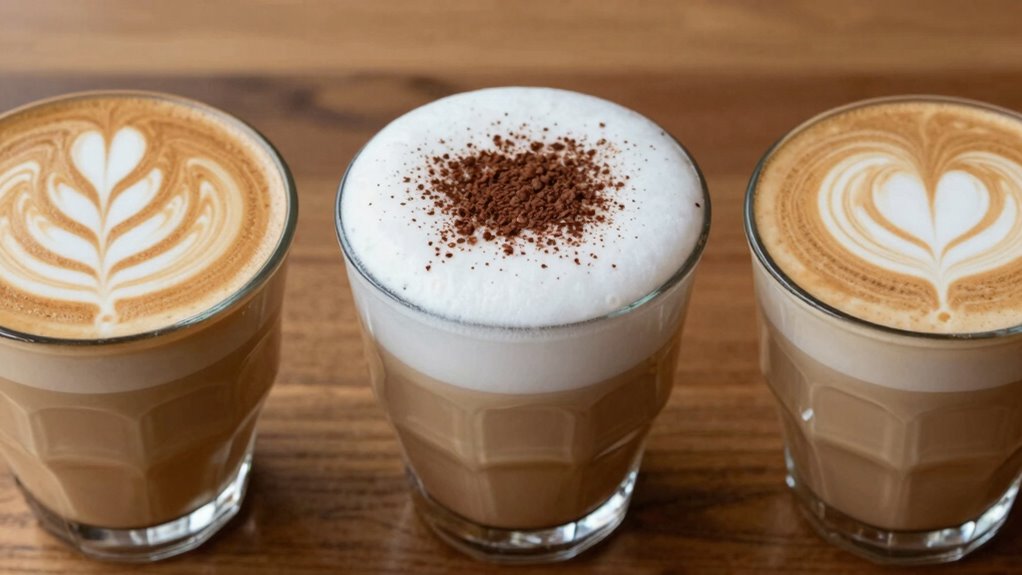

A latte, cappuccino, and flat white are all espresso drinks with steamed milk, but they differ in milk ratios and textures. A latte has more milk, making it milder and creamier, while a cappuccino features equal parts frothy milk and espresso for a bolder taste. A flat white uses microfoam for a silky, seamless feel. Keep exploring to discover how each one offers a unique flavor and experience tailored to your mood.
Key Takeaways
- A latte has more steamed milk and a mild flavor, while cappuccino balances espresso with thick froth, and flat white features smooth microfoam.
- Latte’s milk is light and velvety, cappuccino’s froth is dense and airy, and flat white’s microfoam is silky and seamless.
- Latte appears with smooth, creamy milk; cappuccino has layered froth; flat white has a glossy, microfoam finish.
- All are espresso-based, but ratios and milk textures differ, affecting flavor and visual presentation.
- Choose based on preference for milky, frothy, or velvety textures and the desired strength of coffee flavor.

Mooye Espresso Machine with Grinder,20Bar Compact Espresso Maker with Steam Milk Frother,Coffee Maker for Home – Cappuccino Latte & Cold Brew Iced Coffee Maker & Americano, Gift for Women or Men
【All-in-One Café Experience】 From classic espresso to creamy cappuccinos, velvety lattes, refreshing cold brew, and bold Americanos —…
As an affiliate, we earn on qualifying purchases.
As an affiliate, we earn on qualifying purchases.
What Are the Main Differences Between Latte, Cappuccino, and Flat White?
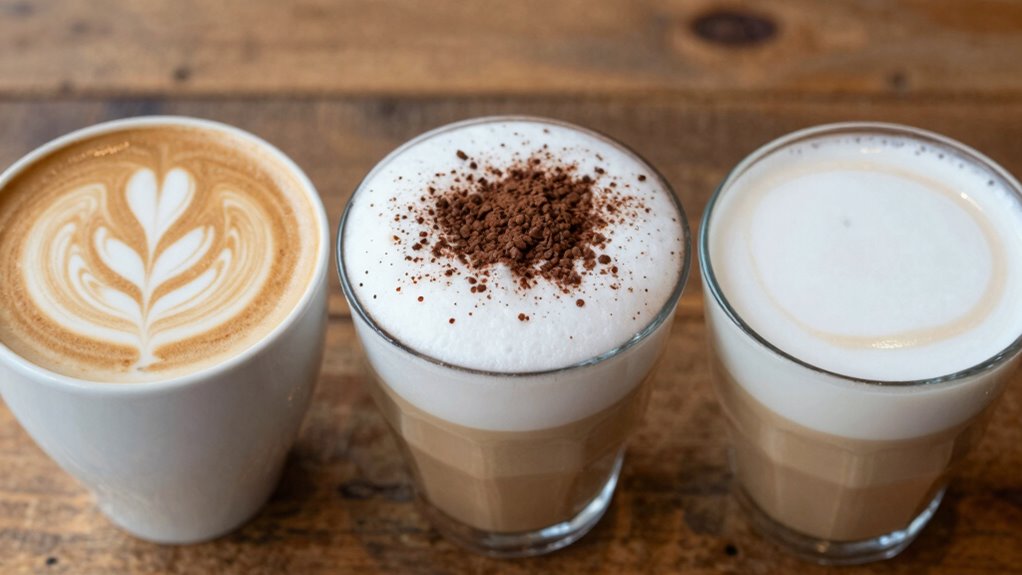
While lattes, cappuccinos, and flat whites are all espresso-based drinks with steamed milk, they differ mainly in their milk-to-espresso ratios and milk texture. Your choice can also be influenced by the coffee bean origin and brewing methods used. For instance, beans from different regions—like Ethiopia or Colombia—bring unique flavor profiles that impact each drink’s taste. Brewing methods matter too; espresso machines extract concentrated coffee quickly, highlighting these regional flavors. A latte features more steamed milk, making it milder, while a cappuccino has a balanced mix with frothier milk. The flat white uses a finer microfoam, giving it a smooth, velvety texture. All these differences shape the overall experience, depending on the coffee bean’s origin and how it’s brewed. Additionally, the brewing techniques employed can accentuate or mellow these regional flavor nuances, further shaping your coffee experience. milk texture variations also play a crucial role in defining each drink’s character and appeal. Interestingly, the regional coffee profiles can significantly influence the flavor and aroma of each beverage, making your choice even more personalized. Moreover, the processing methods of coffee beans can also subtly alter the final taste and aroma of these beverages.

Amrules Milk Frothing Pitcher, 12oz Milk Frother Cup with Clear Scale, 304 Stainless Steel Cappuccino Espresso Machine Accessories for Barista Coffee Bar with Latte Art Pen, Silver
304 STAINLESS STEEL: Amrules 12oz creamer pitcher are crafted of 18/8 food grade stainless steel. The pitcher features…
As an affiliate, we earn on qualifying purchases.
As an affiliate, we earn on qualifying purchases.
How Do Milk Froth and Texture Vary in These Coffee Drinks?
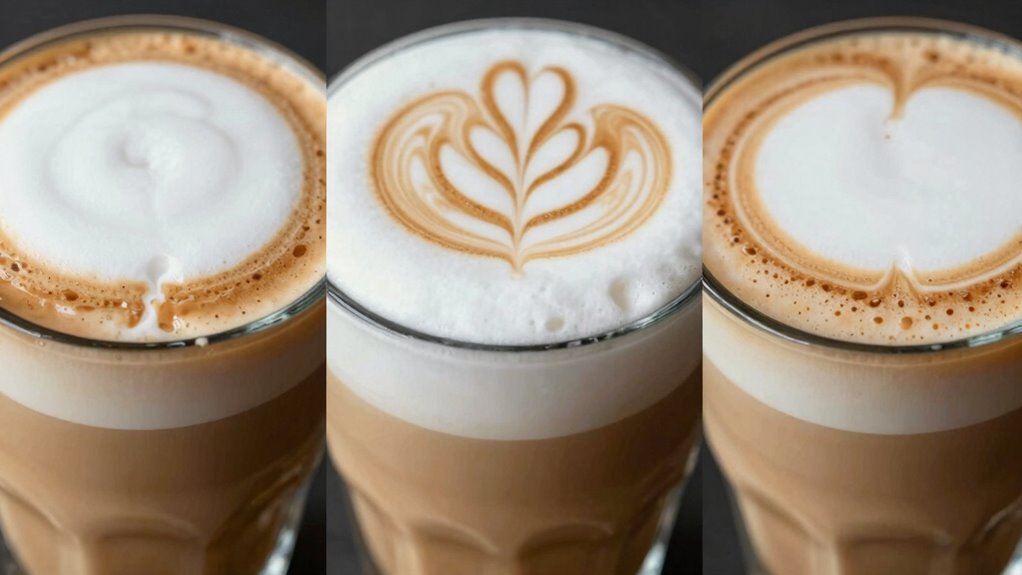
The texture of milk froth plays a key role in defining the character of each coffee drink. You’ll notice that the milk foam’s quality and texture consistency differ among them.
- A latte features light, smooth milk foam, with a thin layer that blends seamlessly with the espresso.
- A cappuccino has thick, velvety milk foam with a dense texture, creating a distinct separation between layers.
- A flat white offers microfoam—tiny bubbles with a creamy, silky texture—integrated into the espresso for a uniform mouthfeel.
- The key difference lies in how the milk foam is prepared: airy and thick for cappuccinos, fine and silky for flat whites, and light for lattes. This variation shapes their unique drinking experiences.
- The milk froth’s texture is essential in defining the overall experience and presentation of each drink. The frothed milk process plays a significant role in achieving these different textures, influencing the drink’s visual appeal and taste. Additionally, milk frothing techniques can be adjusted to enhance specific qualities of each coffee style, further customizing the drinking experience. Proper control over frothed milk’s properties allows baristas to craft consistent and aesthetically pleasing beverages. Understanding the frothed milk’s properties can help baristas refine their craft and create consistent drinks.

SIMPLETASTE Milk Frother, 4-in-1 Electric Milk Steamer, Automatic Warm and Cold Foam Maker and Milk Warmer for Latte, Cappuccinos, Macchiato, Hot Chocolate
Rich and Creamy Milk Froth: This frother quickly makes a smooth and velvety milk foam for your cappuccinos,…
As an affiliate, we earn on qualifying purchases.
As an affiliate, we earn on qualifying purchases.
What Do These Drinks Look and Feel Like? Visual and Tactile Characteristics

When you look at these drinks, their visual and tactile differences become immediately apparent, making each one unique to your senses. A latte often showcases smooth, creamy milk with subtle coffee art on top, feeling warm and velvety to the touch. A cappuccino has a thicker layer of froth, giving it a light, airy texture and a slightly cooler temperature sensation on the surface. The flat white features a thin, glossy microfoam that blends seamlessly into the espresso, creating a sleek appearance and a consistent tactile feel. Coffee art adds a decorative touch, highlighting the skill involved in each drink’s presentation. Overall, each beverage offers a distinct visual appeal and tactile experience, engaging your senses from the moment it’s served.

SHARDOR Electric Super Silent Blade Coffee Grinder, Timed Grind Control Rotary Knob, Adjustable Coarse to Fine for Coffee Beans, Spices & Herbs, with 1 Removable Stainless Steel Bowl, Black
【Adjustable Grinding Precision】There are seconds marks above the timing knob, from coarse to fine. You can choose the…
As an affiliate, we earn on qualifying purchases.
As an affiliate, we earn on qualifying purchases.
How Does Preparation Affect Flavor and Texture?
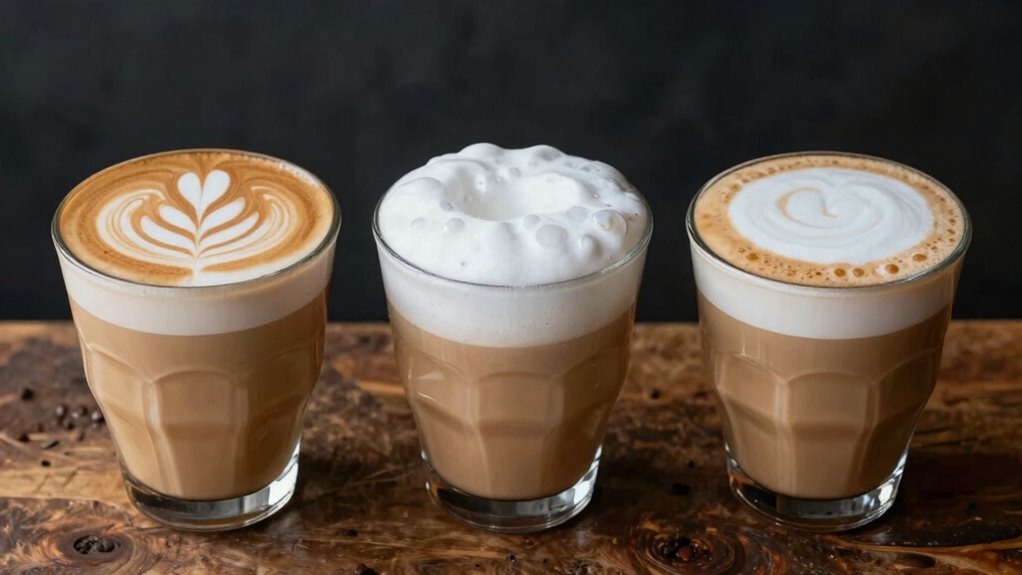
Preparation methods directly influence the flavor and texture of each coffee drink. Your choice of coffee bean origin and brewing temperature plays a vital role. Here’s how:
Preparation methods shape each coffee’s flavor and texture, highlighting the importance of bean origin and brewing temperature.
- Coffee bean origin: Beans from different regions impart distinct flavors, affecting the drink’s overall taste.
- Grinding size: Finer grounds create a richer, more intense flavor, while coarser grinds produce a lighter profile.
- Brewing temperature: Higher temperatures extract more flavors, impacting the drink’s body and aroma. Proper temperature control is essential to prevent over-extraction or under-extraction, which can alter the flavor and mouthfeel.
- Foam creation: Proper frothing techniques influence the creaminess and mouthfeel, especially in lattes and cappuccinos.
- Extraction process: The extraction process during brewing determines how well flavors are released from the coffee grounds, shaping the final taste and texture.
Adjusting these factors allows you to tailor each drink’s flavor and texture, emphasizing the unique qualities of the preparation.
How to Choose the Best Coffee for Your Taste and Occasion
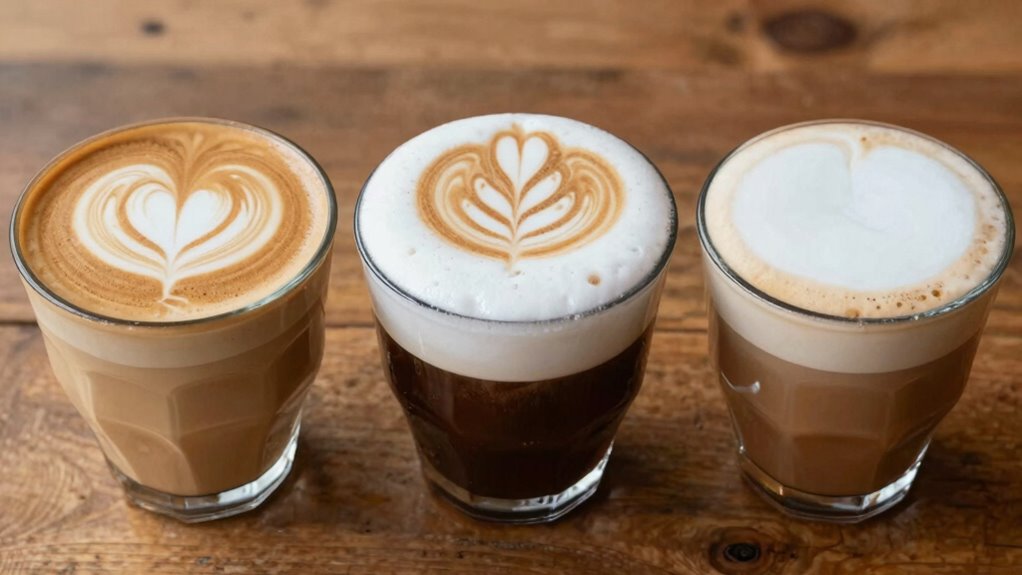
Choosing the right coffee depends on your personal taste and the occasion you’re preparing for. Understanding coffee history helps you appreciate different styles, like espresso-based drinks, or pour-over techniques that highlight unique flavors. If you prefer a rich, intense experience, an espresso shot might suit a quick morning boost. For a relaxed brunch, a flat white offers a smooth balance of milk and coffee, showcasing skilled brewing techniques. If you want something indulgent, a latte provides creaminess and comfort. Consider the flavor profile you enjoy—bold, milky, or balanced—and match it to your mood or setting. Additionally, animal welfare practices in coffee production can impact your choice of ethically sourced beans. Being aware of brewing techniques enhances your ability to select the perfect coffee and enjoy it to the fullest, whether you’re brewing at home or ordering at a café. Exploring varieties of coffee beans can also help you identify the flavor notes you prefer. Understanding sustainable coffee sourcing can further help you make environmentally conscious choices. Learning about certification labels can guide you toward more ethically produced options. Knowing your preferences and the brewing techniques involved will help you pick the perfect coffee for every occasion.
Frequently Asked Questions
Which Drink Has the Strongest Coffee Flavor?
The cappuccino has the strongest coffee flavor because it has less milk dominance compared to the latte and flat white. With equal parts espresso, steamed milk, and foam, it emphasizes the coffee’s boldness. The latte and flat white contain more milk, which dilutes the coffee flavor intensity. So, if you’re after a richer, more intense coffee taste, the cappuccino is your best choice.
Are There Traditional Regional Differences in These Drinks?
A picture is worth a thousand words, and regional origins reveal much about these drinks. You’ll find that latte, cappuccino, and flat white each have unique cultural variations based on their origins—Italy, Australia, and New Zealand. In Italy, cappuccinos are king, while Australians prefer flat whites. These regional differences shape how you enjoy your coffee, making each sip a cultural experience.
Can These Drinks Be Made Vegan or Dairy-Free?
Yes, you can definitely make these drinks vegan or dairy-free. You just need to swap regular milk for vegan milk alternatives like almond, soy, oat, or coconut milk. These options froth up into dairy-free foam, giving you that creamy texture. With a bit of practice, you can enjoy your favorite coffee drinks without dairy, and still get that rich, satisfying flavor and foam you love.
How Does the Temperature Affect the Taste and Texture?
They say “temperature is key,” and it’s true for your coffee’s taste and texture. When you control the temperature during milk frothing, you guarantee the milk’s sweetness and creaminess shine through, avoiding scorched or flat flavors. Too hot, and the texture becomes bitter; too cold, and it feels thin. Proper temperature control preserves the perfect balance, making your drink smooth, flavorful, and satisfying every time.
What Are the Best Pairings for Each Coffee Type?
You’ll enjoy your coffee more by pairing each type with complementary flavors. For a latte, opt for sweet pastries like muffins or croissants, which enhance its smooth milk frothing and mild coffee aroma. A cappuccino pairs well with biscotti or cookies, accentuating its bold aroma and frothy top. For a flat white, try airy scones or fruit tarts, highlighting its rich coffee aroma and velvety texture.
Conclusion
So, next time you pick your coffee, remember—it’s all about personal preference, not some mystical hierarchy of greatness. Whether you prefer the boldness of a flat white or the frothy charm of a cappuccino, you’re the boss. Irony’s on us: the more you learn, the more you realize how little you actually need to impress anyone. Ultimately, your perfect cup is the one that makes you smile—no fancy credentials required. Cheers to that!