Maintaining thermal stability in home brewing is vital because temperature fluctuations can stress your yeast, leading to off-flavors or stalled fermentation. When the temperature isn’t consistent, your beer can develop undesirable aromas or become overly malty, affecting its quality. By keeping the environment steady, you guarantee your yeast works efficiently, producing cleaner, more reliable batches. If you want to understand how to control temperature effectively, continue exploring the key techniques that make or break your brew.

Get coffee and tea gear delivered free — and shop member deals
- Fast, free delivery on millions of items
- Access to Prime Big Deal Days deals on October 6–7
- Prime Video, Amazon Music and more included
Key Takeaways
- Maintains consistent yeast activity for predictable fermentation and flavor development.
- Prevents off-flavors caused by temperature stress or fluctuations.
- Ensures complete fermentation and proper attenuation for desired alcohol content.
- Reduces variability in beer quality and overall taste profile.
- Enhances brewing success by minimizing risks associated with temperature instability.
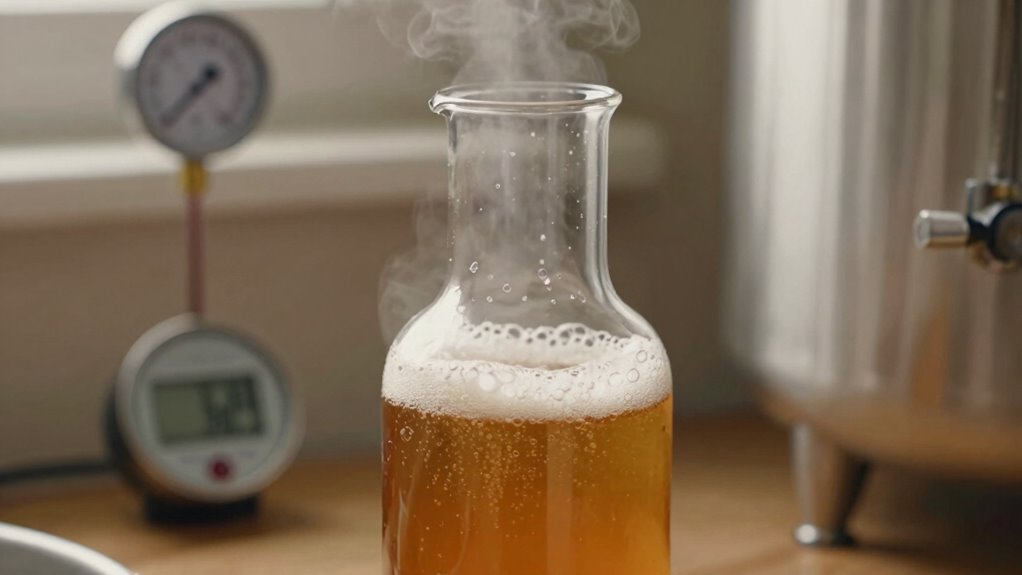
Have you ever wondered why your home-brewed beer turns out inconsistent? The answer often lies in how well you maintain thermal stability during fermentation. When your fermentation environment isn’t stable, it becomes tough to achieve the desired flavors and alcohol content. One of the biggest challenges home brewers face is maintaining fermentation consistency, which depends heavily on controlling temperature fluctuations. Even slight changes in temperature can cause your yeast to behave unpredictably, leading to off-flavors, incomplete fermentation, or overly yeasty tastes. Ensuring thermal stability helps create a steady environment where yeast can work preferably, producing a cleaner, more consistent beer batch after batch.
Maintaining thermal stability during fermentation ensures consistent, flavorful home-brewed beer.
Temperature fluctuations are a common culprit behind variability in home brewing. When temperatures swing too much, yeast can become stressed or go dormant, which hampered fermentation. If it gets too warm, yeast might produce undesirable esters or fusel alcohols, resulting in harsh or fruity flavors that aren’t part of your intended profile. Conversely, if it’s too cold, fermentation slows down or stalls altogether, leaving you with under-attenuated beer that’s sweet and overly malty. Maintaining a stable temperature not only prevents these issues but also allows the yeast to ferment efficiently, ensuring that your beer reaches its full potential. This stability is essential for achieving predictable results, especially when experimenting with new recipes or trying to replicate previous successes. Recognizing the importance of thermal stability can significantly improve your brewing outcomes.
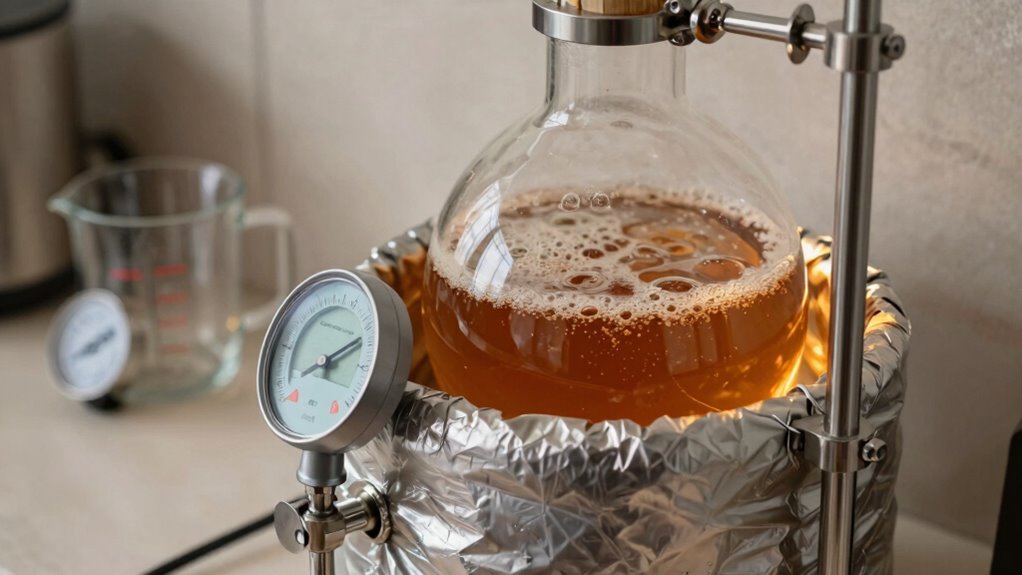
Controlling temperature fluctuations isn’t complicated, but it does require some effort. Using a fermentation chamber or a temperature-controlled fridge can make a big difference. Even simple solutions like placing your fermenter in a warm spot or wrapping it with a blanket can help buffer against external temperature swings. Additionally, using reliable monitoring tools like digital thermometers or temperature logs enables you to track conditions closely and make adjustments as needed. With consistent monitoring, you can respond promptly to any temperature deviations, ensuring a more controlled fermentation process. Remember, the goal isn’t just to keep the temperature at a specific point but to maintain a consistent environment throughout the entire fermentation process. This consistency reduces stress on the yeast, minimizes off-flavors, and improves the overall quality of your brew.
In the end, understanding why thermal stability matters in home brewing isn’t just about convenience; it’s about crafting better beer. When you control temperature fluctuations and prioritize fermentation consistency, you give your yeast the best environment to do its job. This attention to thermal stability results in beers that are more reliable, flavorful, and enjoyable—making your home brewing journey more successful and satisfying.
temperature-controlled fermentation chamber
As an affiliate, we earn on qualifying purchases.
As an affiliate, we earn on qualifying purchases.
Frequently Asked Questions
How Does Thermal Stability Affect Fermentation Speed?
Thermal stability directly influences fermentation speed by maintaining temperature consistency, which guarantees yeast activity stays ideal. When you control fermentation temperature, you prevent fluctuations that could slow down or stall the process. Consistent heat allows yeast to work efficiently, speeding up fermentation. Without proper fermentation control, temperature swings can cause unpredictable fermentation times, leading to off-flavors or incomplete fermentation. So, keeping your brewing environment thermally stable is key to faster, more reliable fermentation.
Can Thermal Fluctuations Influence Beer Flavor Profiles?
Thermal fluctuations can considerably influence your beer’s flavor profile by disrupting flavor preservation and aroma consistency. When temperatures fluctuate, it causes unwanted chemical reactions that alter the beer’s intended taste and aroma. This leads to off-flavors or muted aromas, compromising the overall quality. By maintaining thermal stability, you guarantee that your beer’s flavors stay true to your recipe, preserving its intended character and aroma for a more consistent and enjoyable brew.
What Equipment Helps Maintain Consistent Brewing Temperatures?
You can maintain consistent brewing temperatures by using equipment designed for temperature regulation, such as a fermentation chamber or a temperature-controlled water bath. Additionally, equipment insulation plays a crucial role by preventing heat loss or gain, ensuring stable conditions. Combining these tools helps you keep your brewing environment steady, which is essential for achieving desired flavors and avoiding off-flavors caused by thermal fluctuations.
Is Thermal Stability Important During Bottle Conditioning?
Yes, thermal stability is essential during bottle conditioning. Imagine your beer as a delicate dance, where temperature fluctuations can throw off the rhythm of yeast activity. If temperatures swing wildly, yeast can become dormant or produce off-flavors, ruining your brew. Maintaining a stable temperature guarantees steady yeast activity, allowing carbonation to develop perfectly and flavors to mature harmoniously. Stability turns your bottle into a tiny, controlled fermentation chamber.
How Do Seasonal Changes Impact Home Brewing Temperature Control?
Seasonal variations cause temperature fluctuations that can challenge your home brewing process. As seasons change, you might notice your brew’s fermentation slowing down or speeding up due to inconsistent temperatures. You ought to monitor and adjust your temperature control methods, like insulation or heating devices, to maintain a stable environment. This guarantees proper fermentation, prevents off-flavors, and results in a consistently high-quality beer, regardless of seasonal shifts.
digital thermometer for home brewing
As an affiliate, we earn on qualifying purchases.
As an affiliate, we earn on qualifying purchases.
Conclusion
Maintaining thermal stability is essential in home brewing because it guarantees consistent fermentation and better flavor development. Did you know that even a temperature fluctuation of just 2°F can alter the yeast activity and lead to off-flavors? By keeping your brewing environment steady, you’re more likely to produce a high-quality beer every time. So, invest in good insulation and temperature controls—your taste buds will thank you for it!
beer fermentation temperature controller
As an affiliate, we earn on qualifying purchases.
As an affiliate, we earn on qualifying purchases.
home brewing temperature monitor
As an affiliate, we earn on qualifying purchases.
As an affiliate, we earn on qualifying purchases.
Fall Picks
fall essentials
As an affiliate, we earn on qualifying purchases.