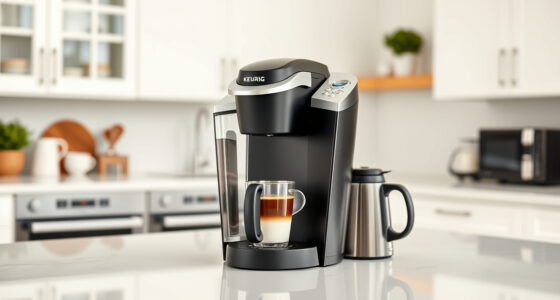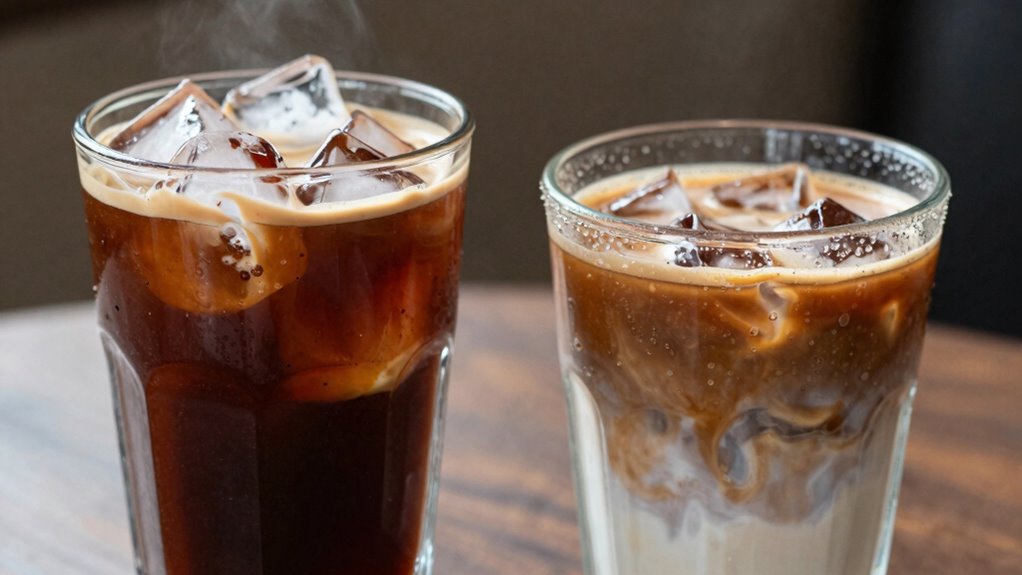

Cold brew and iced coffee differ far beyond just temperature; they use different brewing techniques, which influence flavor, aroma, and caffeine levels. Cold brew is steeped slowly for a smooth, less acidic taste and higher caffeine, while iced coffee is quickly cooled after hot brewing, offering a bolder, brighter flavor. Choosing between them depends on your taste and occasion. To discover how each can better satisfy your cravings, explore more about their unique qualities.

Get coffee and tea gear delivered free — and shop member deals
- Fast, free delivery on millions of items
- Access to Prime Big Deal Days deals on October 6–7
- Prime Video, Amazon Music and more included
Key Takeaways
- Cold brew involves cold steeping for 12-24 hours, resulting in a smoother, less acidic flavor compared to hot-brewed iced coffee.
- Iced coffee is brewed hot and then cooled, producing a brighter, bolder flavor with sharper acidity and aromatic profiles.
- Cold brew typically has higher caffeine content due to extended steeping and higher coffee-to-water ratios.
- The brewing method influences aroma, flavor, and acidity, making each suitable for different taste preferences and occasions.
- Both drinks allow for extensive customization with flavors, milk, and garnishes, impacting overall taste beyond temperature differences.
As an affiliate, we earn on qualifying purchases.
What’s the Difference Between Cold Brew and Iced Coffee?
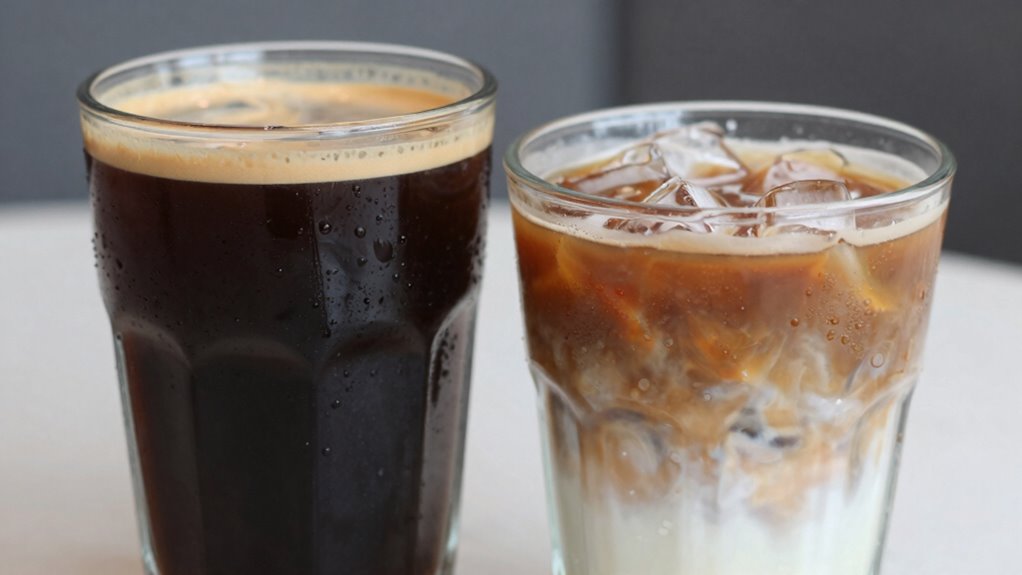
Have you ever wondered what sets cold brew apart from iced coffee? It mainly comes down to the coffee beans and brewing equipment used. Cold brew uses coarsely ground coffee beans steeped in cold water for an extended period, often 12-24 hours. This slow extraction creates a smooth, less acidic drink. In contrast, iced coffee is typically brewed hot using standard brewing equipment, like drip machines or pour-over setups, then cooled over ice. The hot water quickly extracts flavors from the coffee beans, resulting in a more traditional, bold taste. The key difference lies in the brewing process and equipment, which directly influence the flavor profile and strength of each coffee type. Both methods highlight how different equipment and techniques shape your favorite cold coffee drinks.
As an affiliate, we earn on qualifying purchases.
How Are Cold Brew and Iced Coffee Made? Brewing Techniques Explained
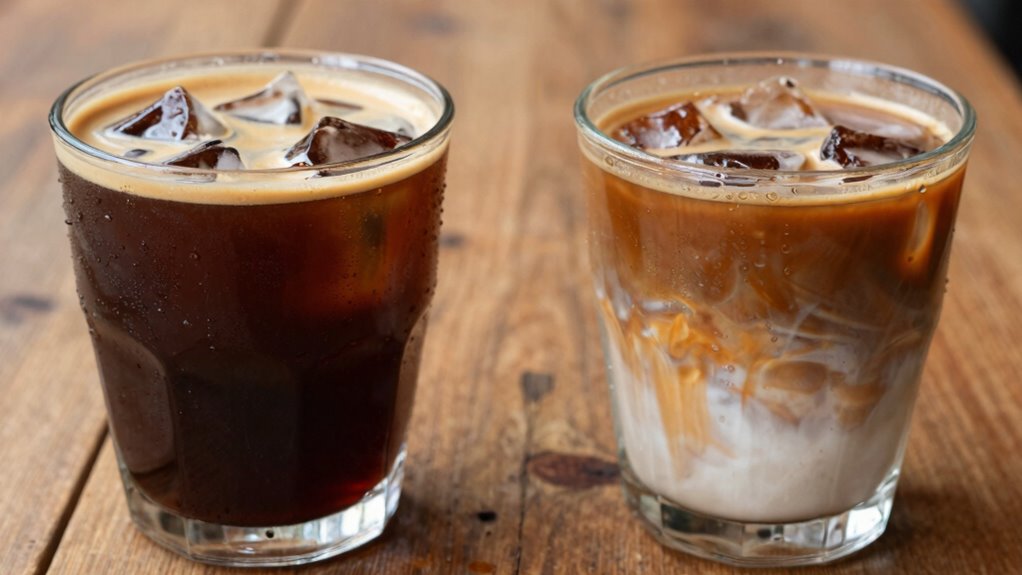
Cold brew is made by steeping coarsely ground coffee in cold water for 12 to 24 hours, resulting in a smooth, concentrated brew. Iced coffee is prepared by brewing hot coffee first, then quickly cooling or pouring it over ice. Both methods create invigorating drinks, but their brewing processes are quite different. Additionally, air quality can be affected by the brewing method, especially if equipment isn’t properly maintained. Proper cleaning and maintenance are essential to prevent any impact on coffee flavor and ensure a safe brewing environment. Using the right equipment and techniques can also influence the brewing time and overall taste of each beverage. Maintaining proper hygiene standards is crucial to avoid contamination and preserve the integrity of your drinks. Ensuring optimal water quality is equally important, as it can significantly impact the final flavor of your coffee.
Cold Brew Preparation Method
To make cold brew coffee, you’ll start by steeping coarsely ground beans in cold water for 12 to 24 hours. This slow extraction method produces a smooth, concentrated brew. You’ll need brewing equipment like a large jar, a fine mesh filter, or a dedicated cold brew maker. The coffee beans should be coarsely ground to prevent over-extraction and guarantee a balanced flavor. Understanding narcissistic behavior can help you recognize different personality traits that may influence social interactions. Additionally, the brewing process plays a crucial role in developing the coffee’s final taste profile, making it essential to follow proper techniques.
Here’s a quick overview:
| Step | Equipment Needed | Key Tip |
|---|---|---|
| 1 | Coarse coffee beans | Use fresh, quality coffee beans |
| 2 | Cold water | Use filtered water for best taste |
| 3 | Brewing container | Steep for 12-24 hours |
This method emphasizes patience and quality ingredients for a rich, chilled coffee.
Iced Coffee Brewing Process
Unlike cold brew, which involves steeping coffee grounds in cold water over an extended period, iced coffee is typically brewed hot and then cooled down. To make it, you start with your preferred coffee bean varieties, such as light, medium, or dark roast, depending on your flavor preference. You’ll need brewing equipment like a drip coffee maker or pour-over setup to extract the coffee. Brew the coffee hot, usually at a higher temperature for better extraction. Once brewed, pour the hot coffee over a glass filled with ice or let it cool before serving. This process preserves the bright, vibrant flavors of the beans and delivers a quick, invigorating drink. The choice of brewing equipment influences the final taste and clarity of your iced coffee.
As an affiliate, we earn on qualifying purchases.
How Do Cold Brew and Iced Coffee Taste? Flavor Profiles Compared
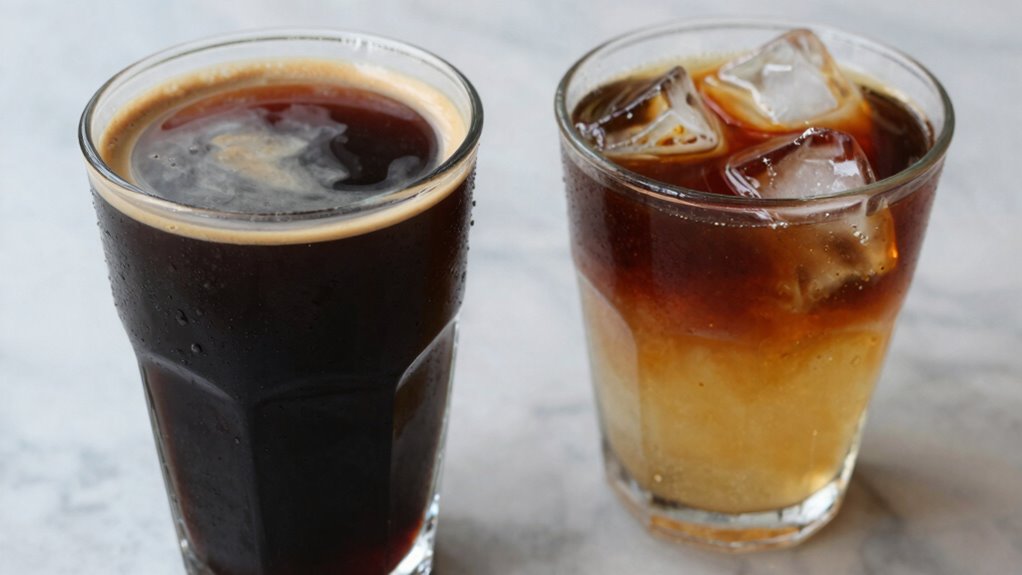
When you sip on cold brew and iced coffee, you’ll notice distinct differences in their flavors that stem from their brewing methods. Cold brew offers a smoother, less acidic taste with a mellow flavor intensity, emphasizing sweet and chocolaty notes. Iced coffee, on the other hand, tends to be brighter and more vibrant, with sharper acidity and a bolder flavor profile. The aroma profiles also differ: cold brew has a rich, deep aroma that’s more subdued, while iced coffee releases more aromatic brightness, highlighting fruity or floral scents. Imagine:
Cold brew offers smooth, chocolaty notes with a deep aroma, while iced coffee bursts with bright, fruity scents and bolder flavors.
- Cold brew’s velvety, chocolatey aroma lingering softly on your palate
- Iced coffee’s lively, citrusy scent invigorating your senses
- Both delivering invigorating, chilled coffee experiences with unique flavor nuances and aroma profiles
- The different brewing techniques, such as cold brewing, significantly influence the resulting flavor and aroma characteristics. Additionally, the brewing process itself impacts the extraction of flavors and aromatic compounds, making each method uniquely suited to different taste preferences.
As an affiliate, we earn on qualifying purchases.
When Should You Choose Cold Brew or Iced Coffee? Best Occasions and Preferences
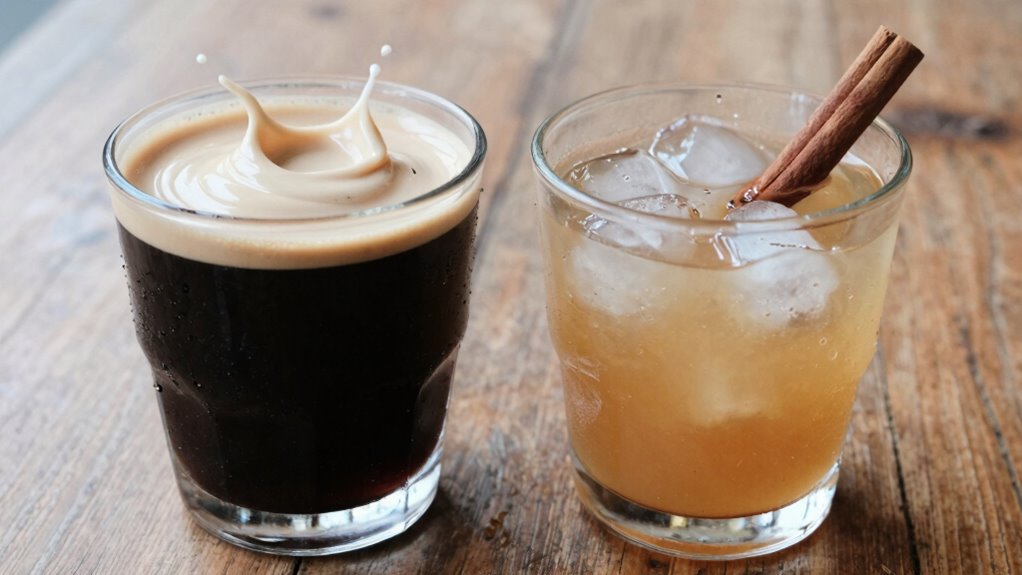
Choose cold brew when you need a strong morning boost or want a smooth, less acidic drink. Iced coffee is perfect for hot days and casual relaxation, offering quick refreshment. Your preference for flavor and texture will guide you to the best choice for each occasion. Additionally, considering the gadget reviews and tech tips can help you find the best coffee makers or brewing accessories to enhance your experience. For those interested in investment options, exploring different brewing methods can also help refine your routine and improve your overall enjoyment.
Morning Boost or Relaxation
Whether you need a quick energy boost to start your day or a soothing drink to unwind, selecting between cold brew and iced coffee depends on your mood and schedule. If you’re seeking a morning ritual that energizes you, cold brew’s smooth, concentrated flavor provides a lasting caffeine punch, perfect for a busy start. On the other hand, if relaxation benefits are your goal, an iced coffee offers a lighter, more revitalizing experience to help you unwind after a long day. Additionally, understanding the coffee brewing process can help you choose the beverage that best suits your preferences. Imagine: – Sipping a robust cold brew as you plan your morning – Enjoying a gentle iced coffee during a peaceful break – Using your drink as a comforting ritual to set the tone for your day
Perfect for Hot Days
On hot days, the invigorating chill of cold brew and iced coffee can be a real lifesaver, but knowing which to reach for depends on your preferences and the occasion. Cold brew offers a smooth, mellow flavor that’s perfect for summer refreshment, especially if you want a less acidic, more balanced taste. Iced coffee, on the other hand, can be quickly brewed hot and then cooled, allowing for quick flavor enhancement through added syrups or spices. If you’re craving a bolder, more robust coffee experience, iced coffee may be your best choice. For a longer-lasting, less bitter option, cold brew’s naturally sweet undertones make it ideal. Both drinks keep you cool and energized, making them perfect companions during the hottest days.
Preference for Smoothness
If you prioritize a smooth, mellow coffee experience, cold brew is often the better choice, especially when you want a less acidic and naturally sweet beverage. Its brewing complexity results in a creamy texture that feels rich and satisfying with every sip. Cold brew typically offers a subdued bitterness, making it ideal for those seeking a gentle, mellow flavor. Imagine a velvety drink that glides smoothly over your palate, perfect for relaxed mornings or quiet afternoons. It’s also great when you want to customize your drink with milk or sweeteners, enhancing its smoothness. Cold brew’s ease of drinking and subtle sweetness make it the go-to for moments when you crave a calm, refined coffee experience.
What Are the Nutritional and Caffeine Differences? Health Considerations
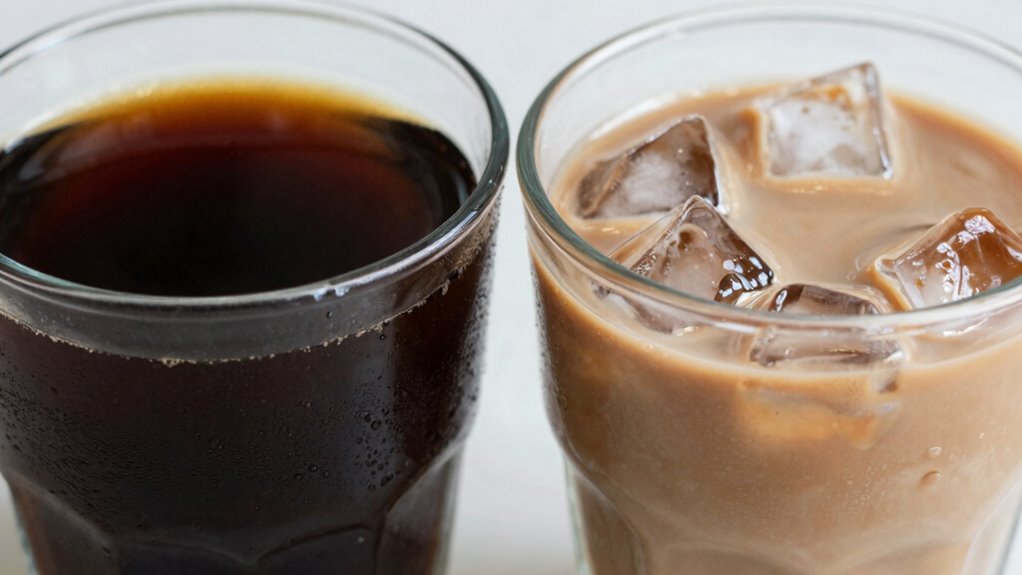
Cold brew and iced coffee differ markedly in their nutritional content and caffeine levels, which can impact your health in various ways. Cold brew typically contains a higher concentration of caffeine because it’s brewed with a larger coffee-to-water ratio and steeped for a longer period. This means you might get a stronger caffeine boost from cold brew, but also a higher calorie and sugar content if you add sweeteners or milk. Iced coffee, on the other hand, often has a more moderate caffeine level and can be lower in calories depending on how it’s prepared. If you’re sensitive to caffeine or watching your intake, these differences matter. Understanding the nutritional content helps you choose the drink that best aligns with your health goals. Additionally, the brewing method can influence not just caffeine levels but also the flavor profile of your coffee.
How Can You Customize Cold Brew and Iced Coffee? Popular Variations

Wondering how to make your cold brew or iced coffee more personalized? You can experiment with flavor infusions and presentation styles to suit your taste. Add a splash of vanilla, caramel, or cinnamon to create unique flavor profiles. Infusing your coffee with citrus slices or herbs like mint can elevate its taste and aroma. For presentation, try layering milk or cream for a beautiful swirl effect, or serve over ice with colorful straws and garnishes like chocolate shavings or fruit slices. These small tweaks help you craft a beverage that reflects your mood and style. Incorporating customization options can further enhance your experience and make each cup unique. Additionally, exploring different brewing techniques can influence the flavor and strength of your beverage, allowing for even more personalized options. Understanding various coffee preparation methods can help you achieve your desired taste profile. For example, adjusting the coffee grind size can significantly impact the extraction process and flavor clarity. Whether you prefer a smooth, sweet sip or a bold, aromatic experience, customizing your cold brew or iced coffee makes each cup special.
Which Cold Coffee Is Better for You? Pros and Cons of Each
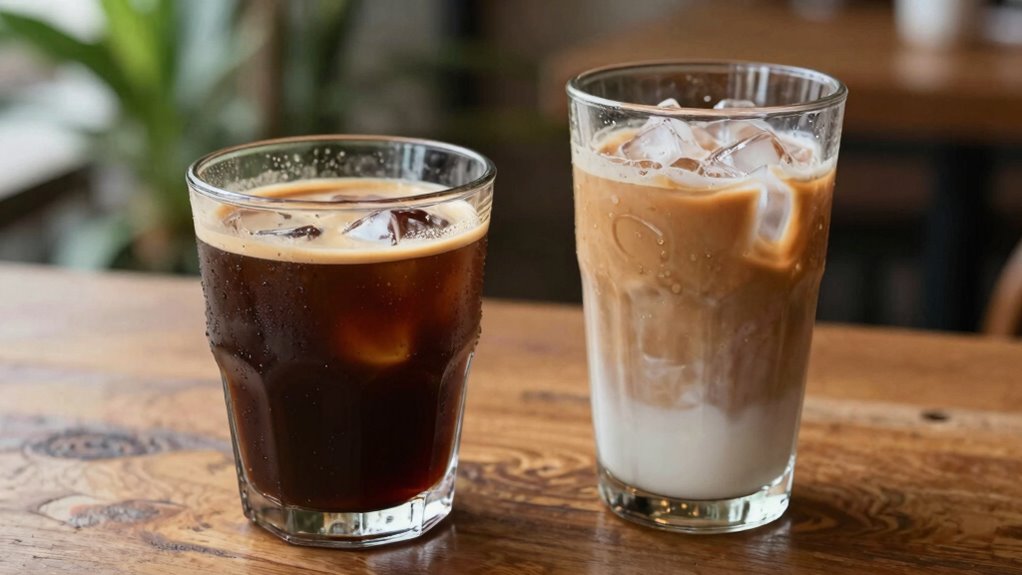
Choosing between cold brew and iced coffee depends on your taste preferences and health considerations, as each offers distinct advantages and drawbacks. Cold brew typically has a smoother, less acidic flavor, making it easier on your stomach, and often contains less added sweeteners. Iced coffee, on the other hand, is more versatile in flavor, allowing you to customize sweetness and milk options easily. The origin of the coffee bean also influences health benefits: beans from certain regions may have higher antioxidant levels, regardless of brewing method. Cold brew’s longer extraction process can retain more natural compounds, which might be beneficial. However, added sweeteners can increase calorie intake, especially if used liberally. Weigh these factors to choose the cold coffee that aligns best with your health goals and taste preferences.
Frequently Asked Questions
Which Method Extracts More Caffeine, Cold Brew or Iced Coffee?
Cold brew generally extracts more caffeine than iced coffee because of its brewing techniques. When you make cold brew, you steep coarsely ground coffee in cold water for 12-24 hours, leading to a higher caffeine concentration. Iced coffee, brewed hot and then cooled, has a different flavor profile and usually less caffeine. So, if caffeine content matters most, cold brew is your go-to, offering a stronger kick with its richer flavor profile.
How Long Does Each Brewing Process Typically Take?
They say patience is a virtue, and that’s true for brewing. Cold brew typically takes 12 to 24 hours using slow extraction with specialized equipment, resulting in a smooth flavor profile. Iced coffee, on the other hand, is quicker, usually ready in 3 to 5 minutes, made by brewing hot coffee and chilling it rapidly. Each method’s timing influences its flavor profile, so choose based on your time and taste preference.
Can Cold Brew or Iced Coffee Be Made at Home Easily?
Yes, you can easily make cold brew or iced coffee at home. For cold brew, you just need coarsely ground coffee and brewing equipment like a jar or a French press; steep for 12-24 hours for a smooth, rich flavor. For iced coffee, brew hot coffee and pour over ice. Both methods let you customize flavor profiles, and with the right equipment, it’s simple to enjoy your favorite cold coffee anytime.
Are There Any Health Risks Associated With Cold Brew or Iced Coffee?
You should be aware that cold brew and iced coffee generally pose minimal health risks, but flavor enhancement and ingredient variations can impact this. For example, adding sugar or flavored syrups may increase calorie intake, while using contaminated water or improper storage can cause issues. Always guarantee good hygiene and choose fresh ingredients. If you have allergies or sensitivities, check ingredient labels carefully, especially when customizing your drink with flavor enhancements.
How Do Storage and Shelf Life Differ Between the Two?
You should store cold brew and iced coffee differently to preserve flavor. Cold brew, stored in airtight containers in the refrigerator, can last up to two weeks, maintaining its flavor if sealed properly. Iced coffee, however, is best consumed within 24 hours, as it can lose its freshness quickly. Use airtight storage containers for both to prevent flavor loss and make certain they stay fresh longer.
Conclusion
Ultimately, choosing between cold brew and iced coffee boils down to your taste and lifestyle. Both offer unique flavors and perks, so don’t be afraid to try them both and see which suits you best. Remember, variety is the spice of life—so keep an open mind and enjoy the journey of discovering your perfect brew. Whatever you pick, it’s all about savoring the moment and making each sip count.
Fall Picks
fall essentials
As an affiliate, we earn on qualifying purchases.