
The boiler type in an espresso machine affects your coffee’s flavor, machine durability, and overall efficiency. A stable boiler maintains proper temperatures for better flavor extraction, while different designs like dual or heat exchange boilers allow for more consistent results and longer-lasting machines. Materials also matter, as they resist corrosion and thermal stress. Understanding these differences helps you choose a machine that delivers great coffee and lasts longer—there’s more to uncover if you keep exploring.

Get coffee and tea gear delivered free with Prime
- Fast, free delivery on millions of items
- Prime Video, Amazon Music and more included
- Member-only deals all year
Key Takeaways
- Boiler type affects temperature stability, impacting coffee flavor extraction and overall taste quality.
- Different boilers influence machine durability and resistance to wear over time.
- Dual boilers and heat exchange systems enable simultaneous brewing and steaming, improving efficiency.
- Material quality and design determine thermal stress handling and corrosion resistance.
- Choosing the right boiler type ensures consistent performance and prolongs the espresso machine’s lifespan.
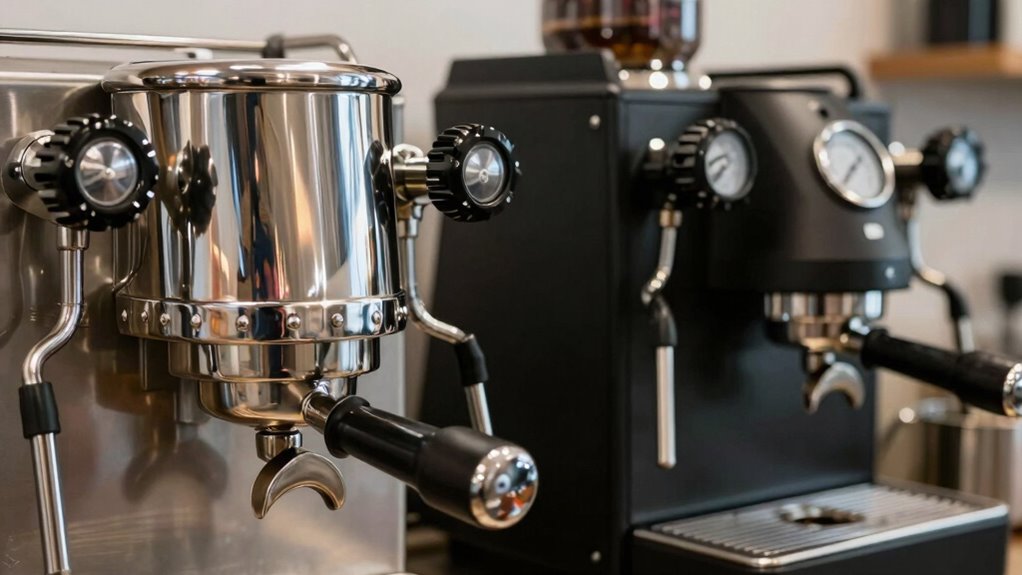
Have you ever wondered how different boiler types affect the performance of your espresso machine? The choice of boiler plays a vital role in how your machine operates, influencing both the quality of your coffee and its longevity. When it comes to coffee flavor, the boiler’s ability to maintain a stable temperature is key. A well-designed boiler ensures consistent heat, which helps extract the best flavors from your coffee grounds. If the boiler fluctuates or doesn’t reach the right temperature, your espresso might taste dull, overly bitter, or sour. Different boiler types, such as single boilers, dual boilers, and heat exchange systems, handle temperature stability in various ways, so understanding their impact can help you pick the right machine for your taste preferences.
Choosing the right boiler type ensures stable temperature, better flavor, and longer-lasting espresso machine performance.
Beyond flavor, boiler type also greatly affects machine durability. A sturdy, well-built boiler can withstand prolonged use without cracking or deteriorating. For example, commercial-grade boilers often feature high-quality materials like copper or stainless steel, which resist corrosion and thermal stress better than cheaper alternatives. Single boilers, while simple and cost-effective, might wear out faster if used heavily, especially if they’re not designed for continuous operation. Dual boilers and heat exchange systems are typically more durable because they are engineered for higher efficiency and sustained performance. Investing in a machine with a robust boiler means fewer repairs and a longer lifespan, ultimately saving you money over time. Additionally, selecting a boiler with high-quality materials can further enhance its thermal stability and resistance to corrosion. Proper boiler maintenance is also crucial in extending its lifespan and ensuring consistent performance. In fact, understanding the materials used in boiler construction can help you choose a machine that offers better longevity and reliability.
Temperature control is another factor where boiler type makes a difference. Machines with dual boilers or heat exchange systems allow you to brew espresso and steam milk simultaneously, maintaining precise temperatures throughout. This not only improves the quality of your coffee but also reduces wear on the machine since it’s less stressed trying to compensate for temperature fluctuations. Conversely, single boiler machines require you to wait between brewing and steaming, which could put extra strain on the boiler and lead to quicker wear. So, if you’re serious about both coffee flavor and machine durability, choosing the right boiler type becomes a pivotal step in your decision-making process.
Additionally, the boiler’s design and material can influence how well it handles thermal stress and corrosion over time, impacting the machine’s longevity. In the end, understanding the nuances of boiler types helps you make a smarter choice. Whether it’s achieving better flavor profiles or ensuring your machine stands the test of time, the boiler is at the heart of it all. Don’t just focus on features and price—consider how the boiler’s design and quality influence the overall performance and longevity of your espresso machine. Making an informed choice means you’ll enjoy consistently excellent coffee and a reliable machine that lasts for years.
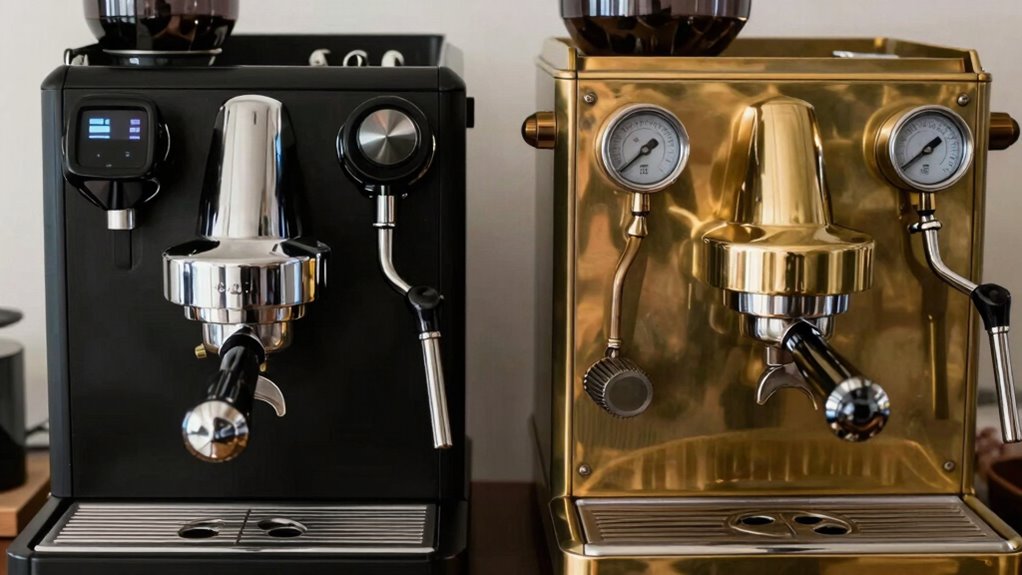
espresso machine with dual boilers
As an affiliate, we earn on qualifying purchases.
As an affiliate, we earn on qualifying purchases.
Frequently Asked Questions
How Does Boiler Type Affect Espresso Flavor?
Boiler type directly impacts your espresso flavor by influencing flavor extraction and temperature consistency. A single boiler heats water to a specific temperature, which can cause fluctuations that affect taste. In contrast, a heat exchange or dual boiler maintains steady temperatures, ensuring ideal flavor extraction. With more consistent heat, you’ll notice richer, more balanced espresso shots, making your brewing experience better and your coffee more flavorful every time.
Are Certain Boiler Types More Durable Than Others?
Certain boiler types, like those with stainless steel or brass materials, stand like sturdy guardians, offering more durability than flimsy alternatives. Larger boilers, with their generous size, act like reliable giants, enduring daily use without faltering. Your choice of boiler material and size determines how well your espresso machine withstands the test of time, ensuring it stays a faithful companion in your coffee journey for years to come.
Can Boiler Type Influence Machine Maintenance Requirements?
Yes, boiler type influences your machine’s maintenance needs. For example, machines with multiple boilers may require more frequent cleaning cycles to prevent mineral buildup, especially if water quality isn’t ideal. Single boiler systems are generally easier to maintain, but poor water quality can still cause scaling and corrosion. So, understanding your boiler type helps you plan proper maintenance, ensuring your espresso machine stays in top shape longer.
Do Different Boiler Types Impact Energy Efficiency?
Think of boiler types like different engines in a car—they each impact energy efficiency differently. Your choice influences energy consumption and startup time; for example, a heat exchange boiler heats quickly but uses more energy, while a single boiler is more efficient but takes longer to warm up. So, selecting the right boiler type can save you energy and reduce wait times, making your espresso experience smoother and more cost-effective.
Is Boiler Type a Factor in Machine Temperature Stability?
Yes, boiler type affects machine temperature stability. Different boiler materials, like stainless steel or copper, respond uniquely to temperature fluctuations, influencing consistency. You’ll notice that machines with high-quality boilers maintain steadier temperatures, reducing shot variability. A well-designed boiler, with better heat retention, minimizes fluctuations, ensuring your espresso stays at the most favorable temperature. So, when choosing a machine, consider the boiler material for reliable temperature stability during your brewing sessions.
stainless steel boiler espresso machine
As an affiliate, we earn on qualifying purchases.
As an affiliate, we earn on qualifying purchases.
Conclusion
Choosing the right boiler type isn’t just a small detail—it’s the secret sauce that can make or break your espresso experience. Whether you opt for a single boiler, heat exchanger, or dual boiler, each impacts flavor, temperature stability, and brewing speed in ways you’ll notice every morning. Don’t settle for a mediocre shot; with the right boiler, you’ll discover espresso greatness that’s out of this world. Make your choice wisely and elevate your coffee game to legendary status!
As an affiliate, we earn on qualifying purchases.
commercial grade espresso boiler
As an affiliate, we earn on qualifying purchases.
As an affiliate, we earn on qualifying purchases.
Halloween Picks
halloween
As an affiliate, we earn on qualifying purchases.