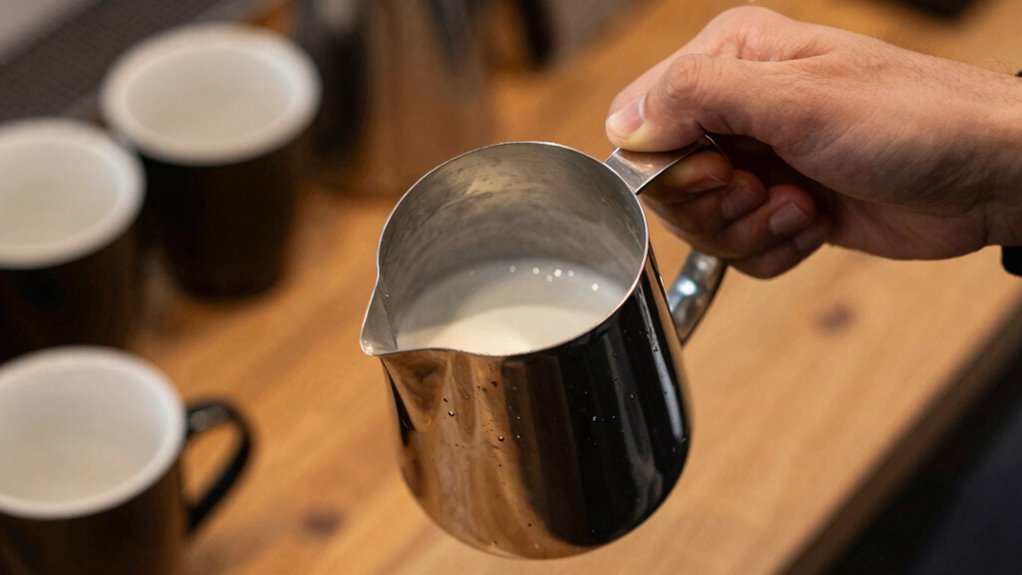

Your pitcher size impacts your control, technique, and ability to make detailed latte art. Smaller pitchers (12-16 oz) help you pour with precision, making it easier to develop steady, deliberate movements. Larger pitchers (20 oz+) tend to lead to faster, less controlled pours, which can hinder fine detail work. Choosing the right size allows you to focus on mastering your skills. Keep exploring how different pitcher sizes can refine your art and improve your confidence.

Get coffee and tea gear delivered free with Prime
- Fast, free delivery on millions of items
- Prime Video, Amazon Music and more included
- Member-only deals all year
Key Takeaways
- Smaller pitchers offer better control for delicate pouring and fine details in latte art.
- Larger pitchers encourage faster pours, making precise designs more difficult for learners.
- Pitcher size influences flow rate and angle, impacting the ability to create intricate patterns.
- Switching to smaller pitchers helps develop steady techniques and improves overall control.
- Material and size together affect heat retention and handling, crucial for consistent latte art practice.
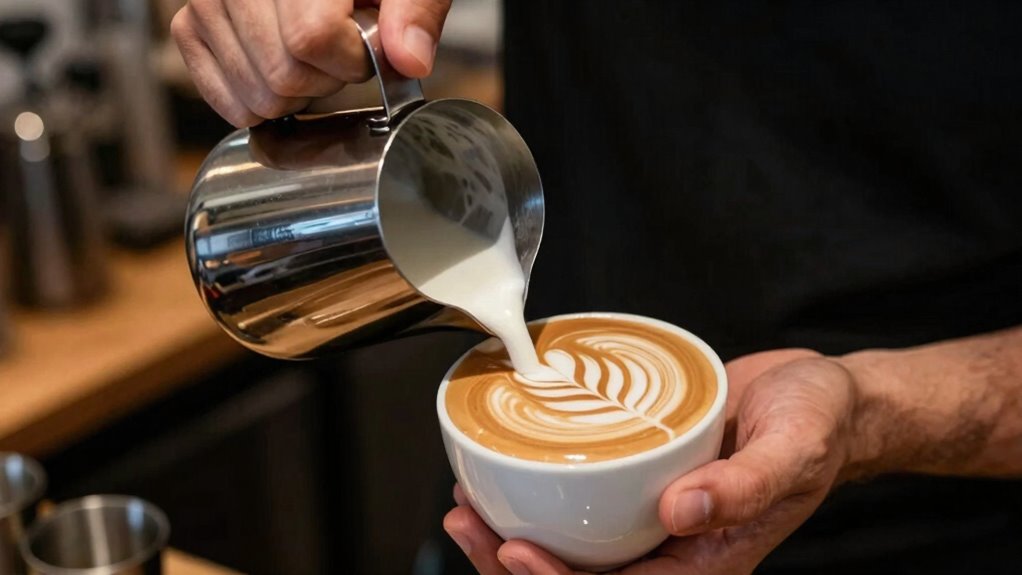
Choosing the right pitcher size is essential for creating beautiful and consistent latte art. When you’re learning, the size of your pitcher directly impacts your ability to control the pour and shape your designs. A smaller pitcher, around 12 to 16 ounces, offers greater precision and makes it easier to develop steady pouring techniques. With a smaller vessel, you can better manipulate the flow of milk, allowing you to craft intricate patterns like rosettas or tulips. Conversely, larger pitchers, such as those holding 20 ounces or more, can be more challenging because they hold more milk and tend to produce a faster, less controlled pour. This can make it harder to achieve the fine details that define good latte art, especially when you’re just starting out.
Choosing the right pitcher size enhances control and precision for beautiful, consistent latte art.
Your choice of pitcher material also influences how your latte art develops. Metal pitchers are popular because they heat quickly and distribute heat evenly, helping you maintain a steady milk temperature during steaming. This stability is crucial for creating the microfoam needed for smooth, glossy pours. Plastic pitchers, on the other hand, are lightweight and often more affordable, but they may not conduct heat as well, which could cause your milk temperature to fluctuate and affect your pouring consistency. Glass pitchers, while less common, allow you to see the milk as you pour, giving you visual feedback to improve your pouring techniques. Whichever material you choose, it’s essential to find one that feels comfortable in your hand and gives you good control over the flow.
The size of your pitcher also influences how you approach pouring techniques. With a smaller pitcher, you’re more likely to develop a steady, deliberate pour, focusing on controlling the flow rate and height from which you pour. Larger pitchers often tempt you to rush, which can lead to uneven designs and messy pours. As you practice, you’ll notice that refining your pouring techniques—such as the speed of your pour, the angle, and the height—becomes easier with the right-sized pitcher. If you’re struggling to make consistent art, switching to a smaller one might help you slow down and focus on the details. Additionally, understanding biodiversity and sustainable practices can inspire a mindful approach to your craft, emphasizing balance and harmony in your creations. This awareness can also extend to choosing eco-friendly materials for your equipment, which can influence your overall sustainable practices and connection to your craft. Incorporating awareness of environmentally friendly options can further enhance your practice and commitment to responsible artistry.
Choosing the appropriate pitcher size and material is also influenced by your personal comfort and handling style, which can significantly impact your skill development. In the end, selecting the right pitcher size and material isn’t just about preference; it’s about optimizing your control over pouring techniques. Developing a good understanding of microfoam and how it interacts with different pitcher types can greatly improve your latte art outcomes. It helps you develop confidence and precision, which are key to mastering latte art. As you gain experience, you’ll discover what works best for your style and your setup. The right pitcher becomes a vital tool in transforming steamed milk and espresso into beautiful, artistic creations.
12 oz stainless steel milk frothing pitcher
As an affiliate, we earn on qualifying purchases.
As an affiliate, we earn on qualifying purchases.
Frequently Asked Questions
How Does Pitcher Material Affect Latte Art Quality?
The pitcher material greatly affects your latte art quality by influencing milk temperature and your grip. Metal pitchers heat up quickly, helping you maintain consistent milk temperature, which is essential for smooth, glossy microfoam. They also provide a sturdy grip, giving you better control for precise pours. In contrast, plastic pitchers might be lighter but can be harder to manage, affecting your ability to create detailed designs.
Can Pitcher Size Influence Milk Frothing Techniques?
A pitcher size can drastically influence your milk frothing techniques. With a larger pitcher, you gain better temperature control and more room to maneuver, helping you master pouring speed and steam consistency. Conversely, a smaller pitcher demands precision but limits your movement. Think of it as wielding a brush; the size shapes your control, making the difference between a shaky pour and a masterpiece. Choose your pitcher wisely to elevate your latte art game!
Is There an Ideal Pitcher Size for Beginners?
Yes, there’s an ideal pitcher size for beginners. You want a pitcher with good ergonomics, so it feels comfortable to hold and control. A 12-20 oz pitcher typically offers balanced weight distribution, making it easier to master milk frothing and pouring. Choosing a pitcher that fits well in your hand helps you develop consistent latte art skills, reducing frustration and boosting confidence as you learn.
How Does Pitcher Shape Impact Latte Art Precision?
The shape of your pitcher dramatically influences latte art precision. It controls pouring speed and foam consistency, which are essential for creating clean, defined patterns. A narrow spout guides your pour more precisely, allowing better control over your design. Conversely, a wider opening might make pouring faster and less controlled, risking blurred edges. Pay attention to your pitcher’s shape, because mastering its influence can enable the clarity and finesse you seek in your latte art.
Should I Switch Pitchers for Different Latte Art Designs?
Yes, you should switch pitchers for different latte art designs. Different designs require varying milk textures, which are influenced by milk temperature, and the pitcher shape helps control the pour. Additionally, adjusting your pitcher grip can improve precision. Using the right pitcher for each design allows better control over flow rate and steam, making intricate or larger patterns easier to execute successfully.
As an affiliate, we earn on qualifying purchases.
Conclusion
Imagine pouring a tiny pitcher as if you’re trying to craft a delicate butterfly—every move matters. Just like a painter chooses the right brush, selecting the right pitcher size transforms your latte art from clumsy to mesmerizing. When I started experimenting with different sizes, I felt like a sculptor revealing hidden beauty in each cup. Remember, the right pitcher isn’t just a tool—it’s your partner in turning simple milk into art that stirs the soul.
20 oz plastic milk frothing pitcher
As an affiliate, we earn on qualifying purchases.
As an affiliate, we earn on qualifying purchases.
glass milk frothing pitcher for latte art
As an affiliate, we earn on qualifying purchases.
As an affiliate, we earn on qualifying purchases.
Halloween Picks
halloween
As an affiliate, we earn on qualifying purchases.