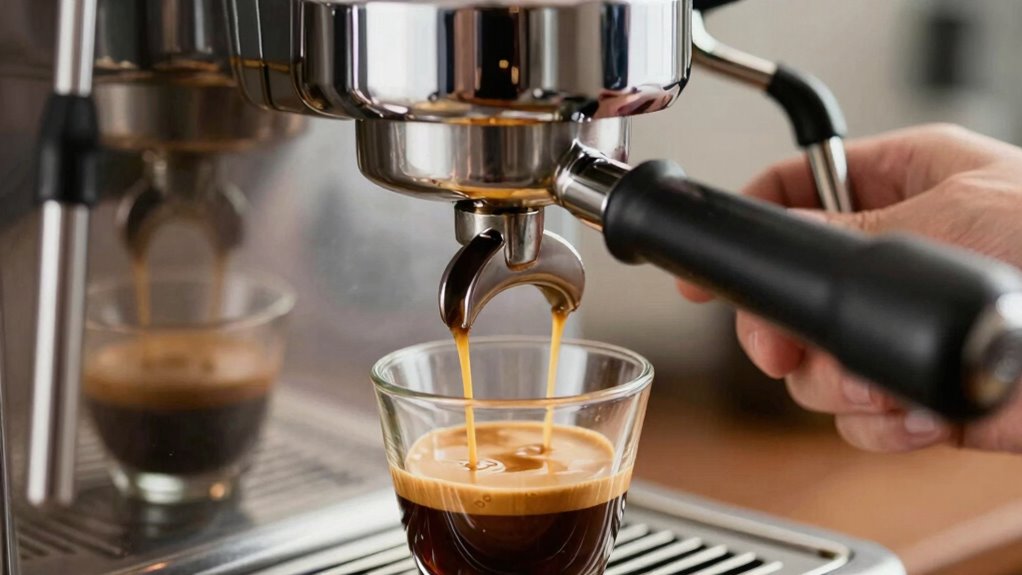

If your espresso shots run too fast or too slow, it’s usually due to grind size, tamping pressure, or machine calibration. A coarser grind lets water pass quickly, causing fast, under-extracted shots, while a fine grind can slow the flow and lead to over-extraction. Proper tamping and regular maintenance also affect flow rate. Adjusting these factors helps you get consistent shots; explore further to perfect your brew.
Key Takeaways
- Grind size directly influences flow rate; coarser grinds cause fast shots, finer grinds slow them down.
- Inconsistent tamping pressure leads to uneven extraction, affecting shot speed.
- Machine calibration, including pressure and temperature, impacts how quickly or slowly espresso extracts.
- Bean freshness and roast level alter density and porosity, influencing shot timing.
- Poor maintenance or clogging can cause irregular flow, making shots run too fast or slow.

Conical Burr Coffee Grinder, 51 Precise Grind Settings Automatic Coffee Grinder, Smart Dual Control LED Display, 1-12 Cups, with Portafilter Holder, Anti-StaticStainless Steel, Memory Function
- Precision Stainless Steel Burrs: 40mm conical burrs for even grinding
- 51 Grind Settings: Adjustable for all coffee types
- Universal Compatibility: Suitable for espresso to French press
As an affiliate, we earn on qualifying purchases.
As an affiliate, we earn on qualifying purchases.
How Grind Size Affects Espresso Flow and How to Adjust It
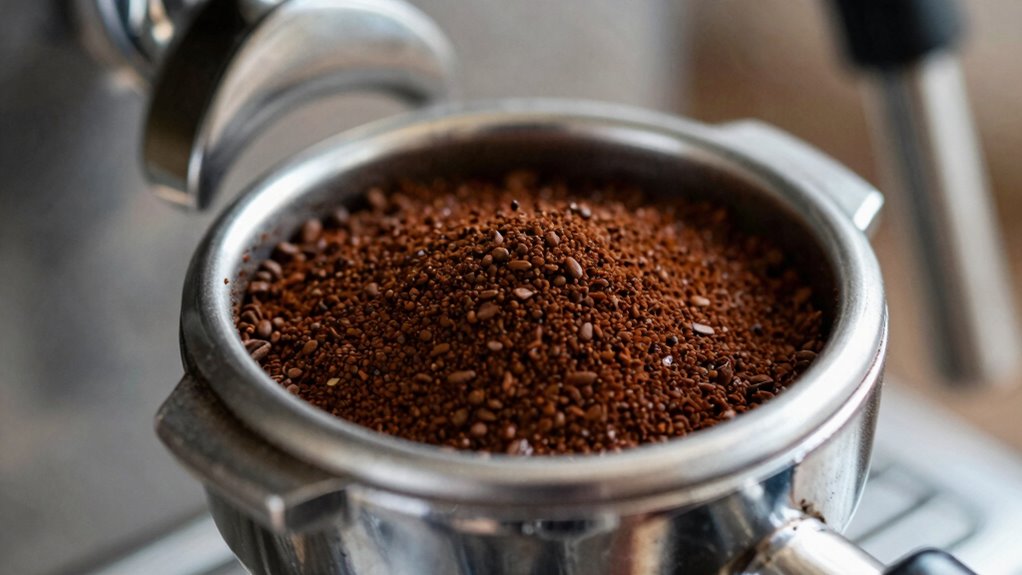
The grind size of your coffee beans directly influences how quickly water flows through the espresso puck. If your grind is too coarse, water passes too fast, resulting in a weak, under-extracted shot. Conversely, a grind that’s too fine slows water flow, leading to over-extraction and bitterness. Achieving the right grind consistency is key—uniform particles ensure even extraction. Remember, bean origin affects grind size requirements; lighter roasts or beans from different regions may need slight adjustments. To improve flow, tweak your grinder settings gradually. If your shot runs too fast, make the grind finer; if too slow, coarsen it slightly. Consistent grinding and understanding your beans help you control extraction time, producing a balanced and flavorful espresso. Uniform grind size is essential for optimal extraction and flavor. Proper calibration of your grinder based on laboratory safety principles can help maintain consistent results. Also, paying attention to particle size distribution ensures your grind remains uniform, which is crucial for a steady flow rate.

Normcore V4 Coffee Tamper 53.3mm – Spring-Loaded Tamper – Barista Espresso Tamper with 15lb / 25lb / 30lbs Replacement Springs – Anodized Aluminum Handle and Stand – Flat Base, Black
- Consistent tamping pressure: Spring-loaded mechanism for even pressure
- Multiple spring options: Includes 15lb, 25lb, and 30lb springs
- Customizable force: Easily swap springs for different beans
As an affiliate, we earn on qualifying purchases.
As an affiliate, we earn on qualifying purchases.
How Tamping Pressure Influences Your Espresso Shot

Once you’ve adjusted your grind size for ideal water flow, the next step is to focus on tamping pressure. Your tamping technique directly impacts how evenly the coffee grounds are compressed, affecting extraction and shot timing. Applying consistent tamping pressure guarantees distribution consistency, which is vital for uniform water flow through the coffee bed. Proper consistency in tamping also helps reduce channeling, a common issue that can lead to uneven extraction. Too much pressure can over-compact the grounds, slowing extraction and risking a bitter taste. Too little pressure leads to uneven extraction, causing a fast, under-extracted shot. Achieving the correct tamping pressure is essential for consistency, so practicing a steady, firm pressure—around 30 pounds—and maintaining it with each shot makes a significant difference. Developing an understanding of pressure control can help you fine-tune your tamping technique for optimal results. Practicing a consistent tamp helps you control extraction, preventing shots from running too fast or too slow, and ultimately producing a balanced, flavorful espresso. Proper tamping technique is essential for achieving the best possible espresso quality.
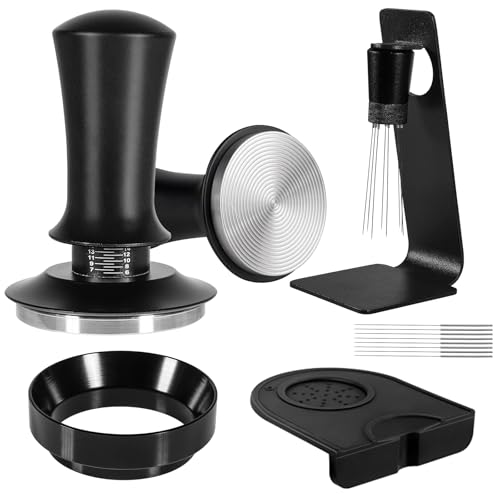
58mm Espresso Accessories Kit,Tamper,WDT Tool,Stand and Dosing Funnel
- Calibrated Espresso Tamper: Consistent 30 lbs pressure for even extraction
- Ergonomic Tamper Design: Ensures barista-quality tamping results
- Upgraded WDT Tool: Reduces spatter and channel effects
As an affiliate, we earn on qualifying purchases.
As an affiliate, we earn on qualifying purchases.
Calibrating Your Espresso Machine for Consistent Timing
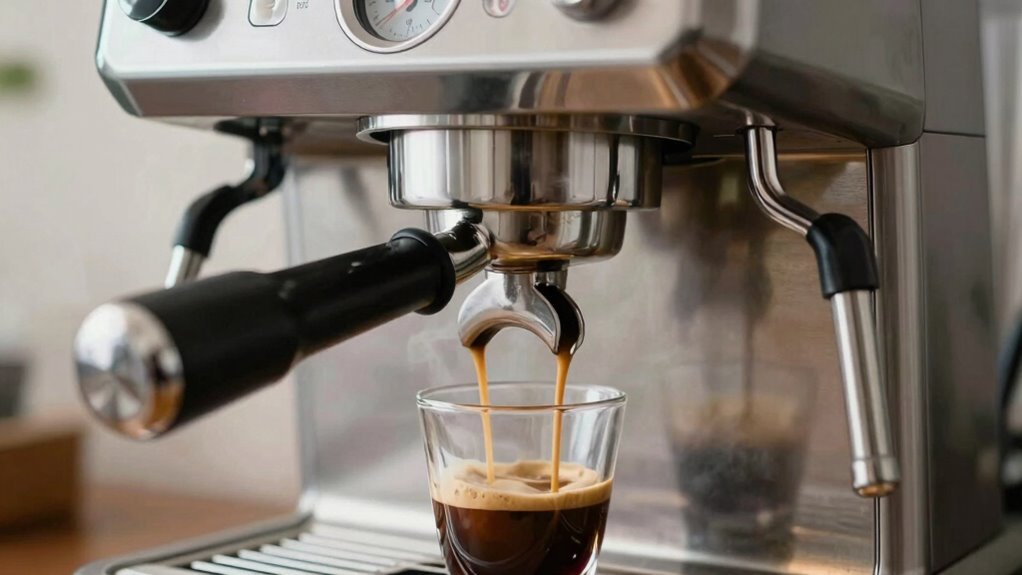
Calibrating your espresso machine is essential to achieve consistent shot timing and ideal extraction. Start by regularly performing machine maintenance, such as cleaning the group head and descale when needed, to guarantee peak performance. Adjust your grind size and dose to fine-tune extraction times—finer grind and slightly more coffee slow down shots, while coarser or less coffee speeds them up. Pay attention to milk frothing, as temperature fluctuations can affect shot flow and consistency. Use a timer to monitor shot duration, aiming for around 25-30 seconds. Proper calibration helps prevent shots from running too fast or slow, ensuring balanced flavor. Regularly checking and adjusting these variables keeps your espresso process precise and provides the best tasting coffee every time. Consistent machine maintenance is key to maintaining optimal performance over time.

NiRiOLD Espresso Tamping Mat, Coffee Tamper Mat, Food Grade Silicone 10.43″×5.63″ Portafilter Mat for Barista Espresso Machine Acceessories, Waterproof Heat Resistant Tamp Station for counter (Black)
- 【Safe Material】Our espresso tamping mat is made from…
- 【Perfect Size】Dimensions: 10.43″ × 5.63″, the moderate…
- 【Multi-slot Design】Our coffee tamper mat features dedicated slots…
As an affiliate, we earn on qualifying purchases.
As an affiliate, we earn on qualifying purchases.
How Bean Freshness and Roast Level Impact Shot Speed
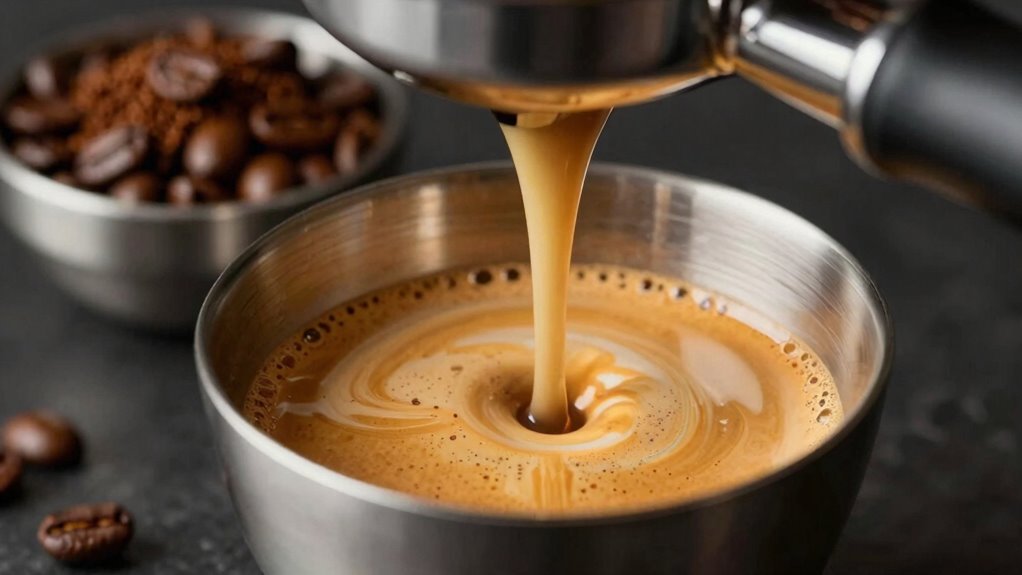
Freshness and roast level of your coffee beans play a crucial role in how quickly or slowly your espresso shot extracts. Fresh beans tend to have better flavor development, but they can also extract faster if not stored properly. A new storage method can help maintain optimal freshness, which in turn influences shot timing. The freshness of beans is essential for maintaining consistent shot timing and flavor complexity. The roast level influences the grind size and extraction rate: lighter roasts often run slower due to denser beans, while darker roasts extract faster because of their porosity. Proper bean storage preserves freshness, ensuring consistent shot timing. Additionally, understanding how bean freshness impacts extraction can help optimize both flavor and shot speed. Adjusting for freshness and roast level helps control shot speed and flavor development.
Troubleshooting Fast and Slow Espresso Shots: Causes and Fixes
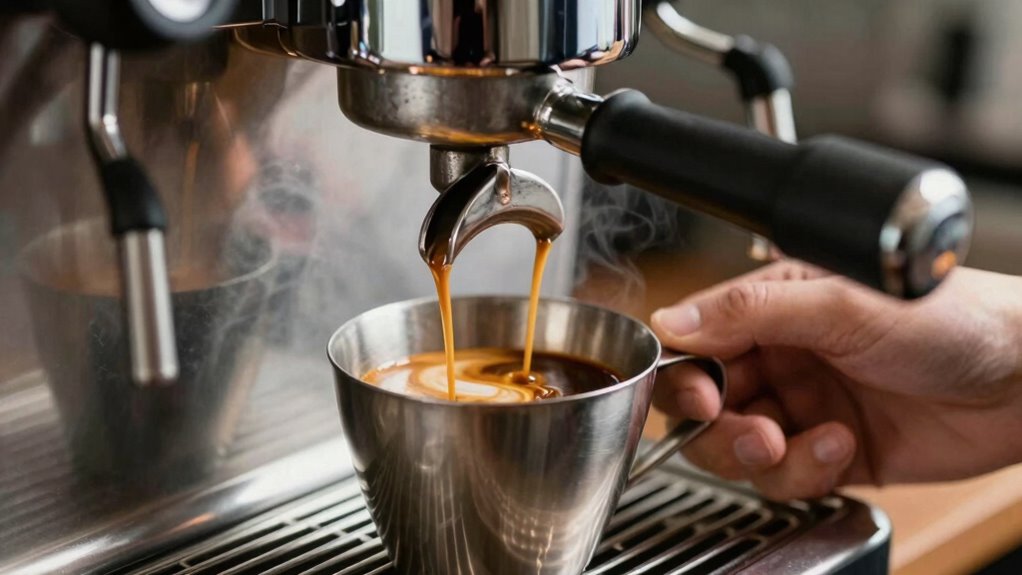
Fast or slow espresso shots often stem from specific issues in your grind size, tamping pressure, or machine settings. If your shots are too quick, try adjusting the grind to a finer setting, guarantee consistent tamping pressure, and verify your machine’s temperature and pressure. Conversely, slow shots can result from a coarse grind, too much tamping pressure, or machine malfunctions. Regular espresso machine maintenance is essential—clean your equipment to prevent clogs and maintain peak performance. Proper coffee storage techniques also matter; store beans in airtight containers away from light and moisture to preserve grind consistency. Addressing these factors helps you troubleshoot shot timing issues effectively, guaranteeing a balanced extraction every time. Additionally, understanding espresso shot timing can help you fine-tune your brewing process for optimal results. Remember that machine calibration plays a crucial role in achieving consistent shot durations and quality. Paying attention to brew temperature is also vital, as it significantly influences extraction speed and flavor balance. Maintaining consistent grind consistency ensures that each shot is brewed under similar conditions, leading to more predictable results. Regularly checking your machine’s pressure settings can also prevent discrepancies in shot flow rate and flavor extraction.
Tips for Achieving Repeatable Extraction Times Every Time
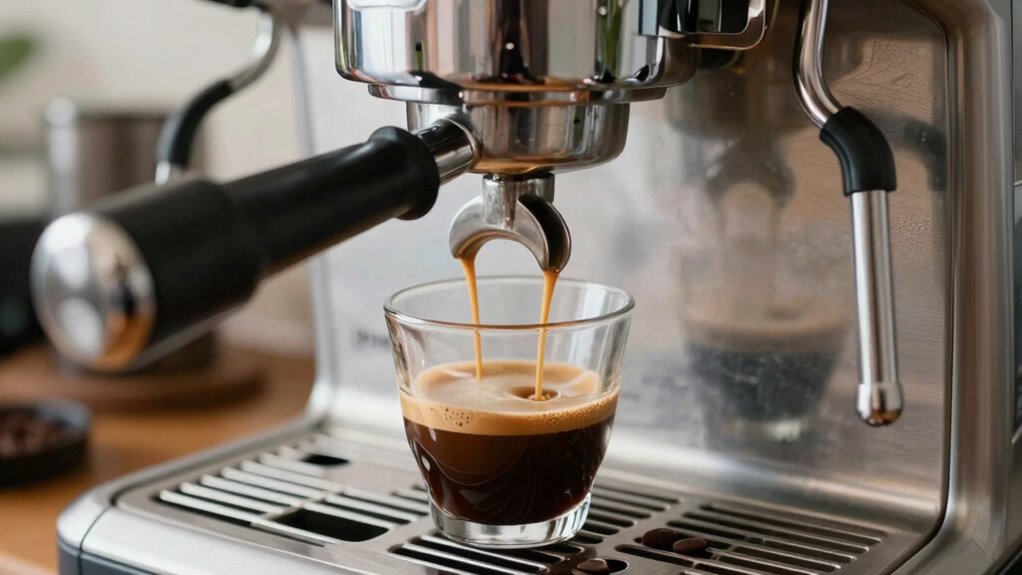
Achieving consistent extraction times requires a systematic approach to your brewing process. To maintain flavor balance and crema quality, focus on these key steps:
Consistency in extraction times ensures optimal flavor and crema quality through a systematic brewing approach.
- Use a consistent grind size: Adjust your grinder to ensure uniform particle size, which helps control extraction speed.
- Measure your dose precisely: Weigh your coffee to keep the amount consistent, preventing fluctuations in extraction times.
- Tamp evenly and with appropriate pressure: Uniform tamping ensures even water flow, supporting stable extraction.
- Monitor brew time regularly: Track your shot times and make small adjustments as needed, aiming for a steady extraction that highlights flavor and crema quality.
Frequently Asked Questions
How Does Ambient Temperature Affect Espresso Shot Timing?
Ambient temperature affects espresso shot timing by influencing how quickly water extracts flavors from your coffee. Higher temperatures can cause your coffee grind to absorb more moisture, leading to faster shots, while cooler temperatures slow down extraction. Ambient humidity also plays a role, as it impacts grind consistency. So, when the environment’s warmer or more humid, you might need to adjust your grind size or extraction time for ideal espresso shots.
Can Water Quality Influence Extraction Speed?
Water quality can dramatically influence extraction speed, almost as if it has a mind of its own. Impurities in your water, like minerals and sediments, clog your machine and slow down the process, while pure water speeds things up. Using effective filtration systems removes these impurities, ensuring water flows smoothly and consistently. This means your espresso extracts perfectly, without delays or rushes, giving you that ideal shot every time.
What Role Does Machine Pressure Play in Shot Timing?
Machine pressure plays a vital role in shot timing by ensuring pressure stability during extraction. If pressure fluctuates, your shot can run too fast or slow. Proper pump regulation maintains consistent pressure, allowing the coffee to extract evenly. When the pump is well-regulated, it sustains ideal pressure levels, giving you better control over shot duration and flavor. Inconsistent pressure can lead to uneven extraction, affecting taste and overall quality.
How Do Different Espresso Machines Impact Shot Speed Consistency?
Coincidentally, the espresso machine you choose directly influences shot speed consistency. Different machines have varying pressure systems and heating methods, which interact with your grind size and tamper pressure. A machine with stable pressure and precise temperature control helps maintain consistent shot timing. When you adjust your grind size and tamp firmly, the machine’s design guarantees these factors translate into perfectly timed shots, regardless of the machine’s brand or model.
Does Cup Temperature Affect Espresso Extraction Speed?
Yes, cup temperature affects espresso extraction speed. When your cup is too cold, it cools the shot quickly, slowing extraction, while a warm cup helps maintain ideal temperature, resulting in a smoother, faster process. To guarantee consistency, keep your coffee bean freshness high and regularly calibrate your grinder. Properly calibrated grinding and fresh beans help maintain even extraction, which in turn stabilizes the shot speed regardless of cup temperature.
Conclusion
Mastering your espresso shot is like tuning a fine instrument—you’ll eventually hit the perfect pitch. Adjust your grind, tamp with purpose, and keep your machine calibrated like a seasoned conductor. Pay attention to your beans’ freshness and roast level, and troubleshoot issues as they arise. With patience and practice, you’ll craft a shot that flows smoothly like a gentle stream, delivering rich, balanced flavor every time you press that perfect button.