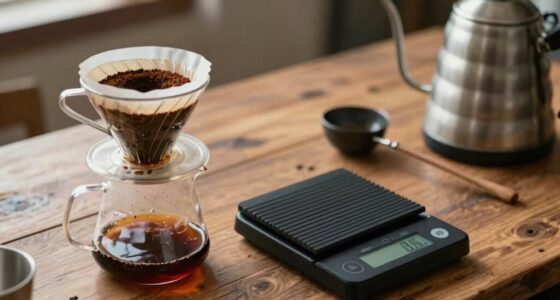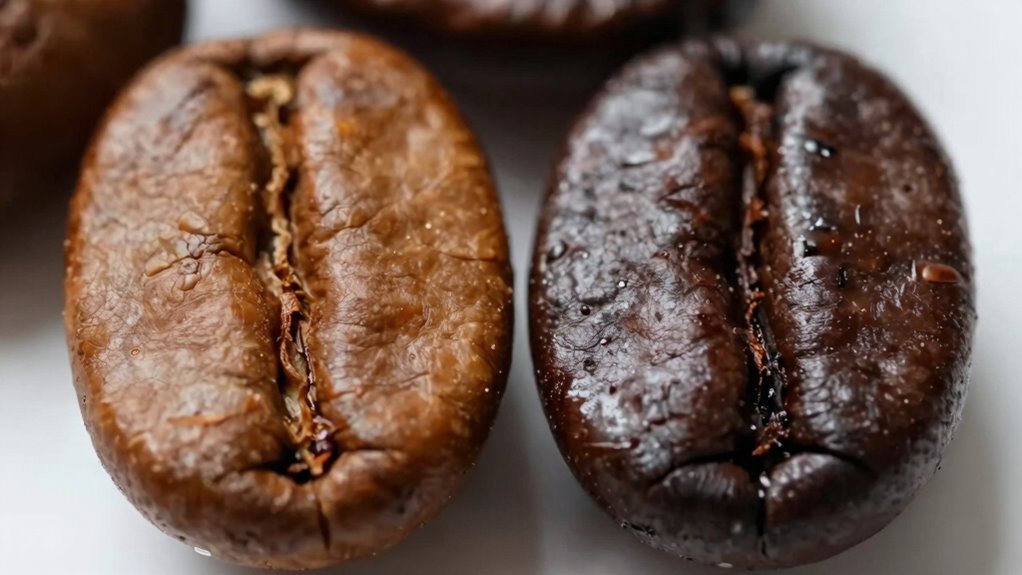

Light roast coffee preserves more of the bean’s natural flavors, offering bright, acidic, and sometimes fruity or floral notes, while dark roasts develop bolder, smoky, and caramelized flavors with lower acidity. The roast level also influences aroma, body, and how each pairs with different brewing methods. If you want to understand these differences without hype, you’ll find it helpful to explore how roast levels truly impact taste and aroma as you continue exploring.
Key Takeaways
- Light roasts preserve more of the bean’s original flavors, emphasizing brightness and acidity, while dark roasts develop bolder, smoky flavors.
- Dark roasts have lower acidity and a fuller body, offering a smoother, more robust taste compared to the brighter, more vibrant profile of light roasts.
- Caffeine levels are similar across both roast types, with slight variations; light roasts tend to have marginally more caffeine.
- Light roasts are suited for delicate brewing methods like pour-over, whereas dark roasts excel in espresso and French press.
- Roast level impacts aroma and flavor complexity, but does not determine the coffee’s quality or origin.

Amazon Fresh, Just Bright Whole Bean Coffee Light Roast, 32 Oz
Light roast with a crisp and clean flavor
As an affiliate, we earn on qualifying purchases.
As an affiliate, we earn on qualifying purchases.
What Are the Key Differences Between Light and Dark Roast Coffee?
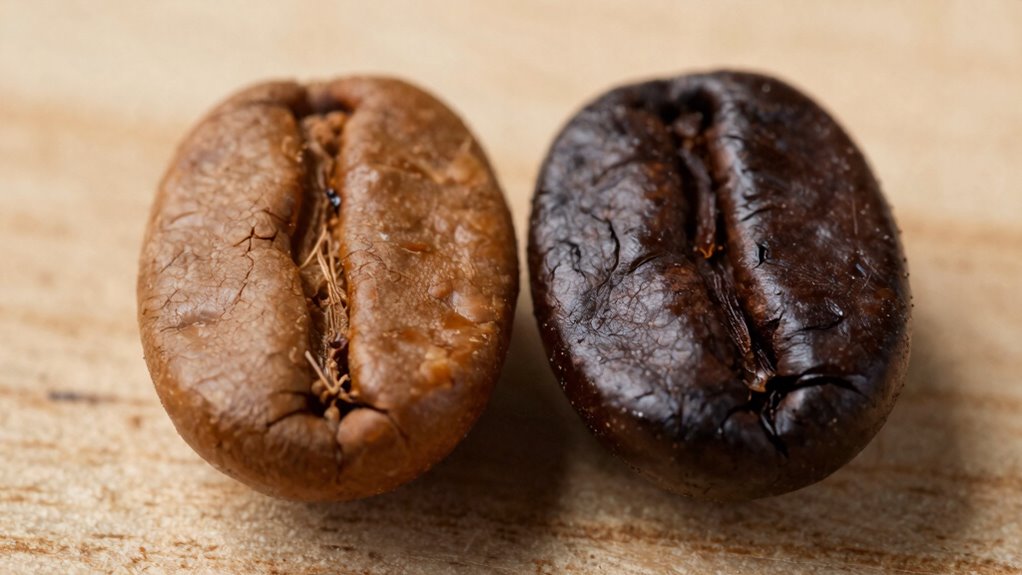
The key differences between light and dark roast coffee primarily lie in their roasting process, flavor profiles, and appearance. Coffee bean genetics influence how beans respond to roasting, affecting their ultimate flavor and characteristics. Light roasts preserve more of a bean’s original traits, emphasizing brightness and acidity, while dark roasts develop deeper, smoky flavors. Roasting technology plays a vital role in achieving these distinctions; it determines how evenly and precisely the beans are roasted. Advanced roasting machines allow for better control over temperature and timing, ensuring consistent results. As a result, light roasts tend to showcase the bean’s natural qualities, whereas dark roasts emphasize the effects of high-temperature roasting. Roasting technology also influences the development of flavor complexity, highlighting the importance of precision in roasting. Additionally, the roasting process itself impacts the aroma and texture of the final product, making it a crucial factor for coffee enthusiasts.
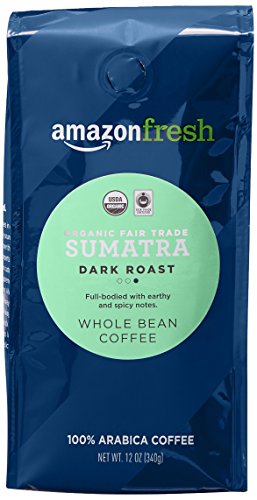
Amazon Fresh Organic Fair Trade Sumatra Whole Bean Coffee, Dark Roast, 12 Ounce
Dark roast with deep, intense flavor
As an affiliate, we earn on qualifying purchases.
As an affiliate, we earn on qualifying purchases.
How Roast Levels Affect Coffee Flavor and Aroma

Roast levels directly influence the flavor and aroma of your coffee, shaping your overall experience with each cup. Light roasts tend to retain more of the bean’s original flavors, offering a brighter, more nuanced taste with higher acidity. They also develop a delicate aroma that highlights fruity or floral notes. As you move to darker roasts, the flavor becomes bolder and more pronounced, often with smoky, roasted, or caramelized qualities. The aroma development shifts accordingly, becoming richer but less focused on the bean’s natural scents. Your choice affects the flavor complexity you perceive—lighter roasts provide more subtle layers, while darker roasts deliver a more intense, straightforward profile. Additionally, understanding how roast levels influence flavor and aroma can help you make more informed choices that enhance your coffee experience. Recognizing the impact of roast level on these qualities can also deepen your appreciation for different brewing methods and bean origins, especially since roast profile plays a crucial role in how the coffee tastes. Exploring how bean origin interacts with roast levels can further tailor your preferred flavor profile.

Bodum 34oz Pour Over Coffee Maker, High-Heat Borosilicate Glass with Reusable Stainless Steel Filter and Cork Grip – Made in Portugal
Pour Over Coffee: Manual Pour Over Coffee Maker allows you to brew an excellent cup of Coffee in…
As an affiliate, we earn on qualifying purchases.
As an affiliate, we earn on qualifying purchases.
How Roast Levels Impact Coffee Acidity and Body

As coffee beans are roasted darker, their acidity levels tend to decrease, resulting in a smoother, less tangy taste. This change occurs because higher roasting temperatures break down organic acids, which contribute to brightness and sharpness. Light roasts preserve more of the coffee bean genetics’ original acidity, offering a lively, vibrant profile. Conversely, dark roasts develop a fuller body with richer, chocolatey notes, but with reduced acidity. The roasting temperature influences this balance directly, shaping how the coffee’s body and brightness interact. Here’s a quick comparison:
| Roast Level | Acidity | Body |
|---|---|---|
| Light | High | Lighter |
| Medium | Moderate | Balanced |
| Dark | Low | Full, heavy |
Understanding this relationship helps you choose roasts based on your preferences for brightness and mouthfeel. Additionally, roast levels can influence the overall flavor profile, which is important when selecting coffee for different brewing methods or personal taste.

CASABREWS CM5418 Espresso Machine 20 Bar, Compact Espresso Maker with Steam Milk Frother, Stainless Steel Coffee Machine with 34oz Removable Water Tank for Cappuccino, Small Latte Machine, Silver
Make Your Favorite Espresso Coffee At Home: The CASABREWS coffee machine with milk frother allows you to prepare…
As an affiliate, we earn on qualifying purchases.
As an affiliate, we earn on qualifying purchases.
Which Roast Is Better for Different Brewing Methods?
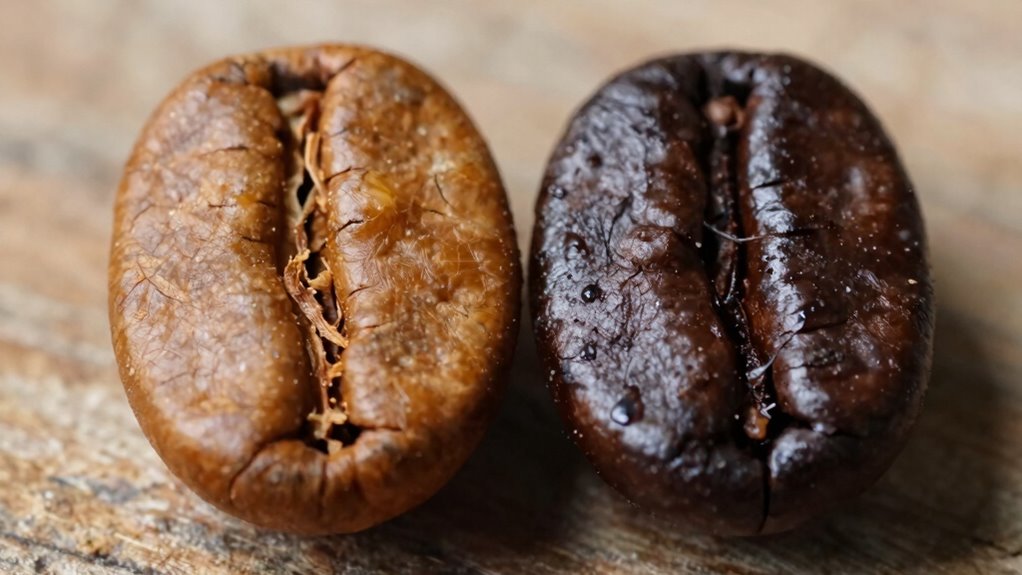
Choosing the right roast for your brewing method can profoundly influence the flavor and overall experience of your coffee. Light roasts highlight the unique coffee bean genetics, preserving bright acidity and nuanced flavors best suited for pour-over or AeroPress brewing. Dark roasts, on the other hand, develop bold, robust profiles ideal for espresso or French press, where roasting equipment differences can emphasize body and intensity.
Choosing the right roast enhances flavor, with light for delicate methods and dark for bold, intense brews.
- Light roasts retain more of the bean’s original characteristics, perfect for delicate brewing methods.
- Dark roasts’ strong flavors stand up well to brewing methods that extract boldness quickly.
- Coffee bean genetics play a role in how the roast interacts with your brewing style.
- Roasting equipment influences the level of roast, impacting flavor extraction for different methods.
- Roast level can further influence how flavors are extracted during brewing, affecting the overall profile.
- Additionally, the degree of roast can affect how evenly flavors are extracted, which is especially important when choosing your brewing method.
- Understanding the roast profile can help you tailor your brewing process to achieve the desired taste nuances.
- Furthermore, considering the flavor development during roasting can guide you toward the best roast for your preferred brewing technique.
Matching Roast Levels to Your Taste Preferences

Your taste preferences play a big role in choosing the right roast, whether you prefer bright, fruity flavors or rich, smoky notes. Keep in mind that lighter roasts generally have slightly more caffeine and highlight unique flavor profiles, while darker roasts offer bolder, more robust tastes. Consider your brewing method too, as some roasts work better with certain techniques to bring out their best qualities. For example, roast level can influence how well a coffee’s flavor profile develops during brewing. Additionally, understanding how coffee roasting process impacts flavor development can help you select the ideal roast for your preferred taste experience. Recognizing how environmental impact varies across different roasting methods can also guide you toward more sustainable choices. Being aware of sustainable roasting practices can further enhance your appreciation for ethically produced coffee options.
Flavor Profiles and Preferences
Matching roast levels to your taste preferences involves understanding how flavor profiles differ between light and dark roasts. Light roasts highlight the unique qualities of coffee bean genetics, offering bright, fruity, and floral notes. Dark roasts tend to develop bold, smoky, and bitter flavors due to longer roasting times and high heat. Your choice can also depend on roasting equipment choices, which influence the development of these flavors. Additionally, the flavor development process during roasting significantly impacts the final taste profile. Consider these factors:
- Light roasts preserve original bean characteristics, ideal for nuanced, complex tastes
- Dark roasts bring out roasted, caramelized flavors, appealing for those seeking boldness
- Roast level affects acidity and body, shaping your overall experience
- Equipment quality impacts flavor extraction and consistency, tailoring the profile to your preferences
Caffeine Content Differences
While flavor profiles are shaped by roast levels, caffeine content can also vary depending on how the coffee is roasted. Generally, light roasts retain more caffeine because they undergo less roasting time, preserving the beans’ original strength. Dark roasts, processed with advanced roasting machinery, tend to have slightly less caffeine as roasting breaks down some compounds. During coffee bean harvesting, selecting beans with ideal caffeine levels impacts the final brew’s potency. The differences are subtle but meaningful if caffeine content matters to you. Here’s a quick comparison:
| Roast Level | Caffeine Content | Notes |
|---|---|---|
| Light Roast | Higher | Less roasting, more caffeine |
| Medium Roast | Moderate | Balanced |
| Dark Roast | Slightly lower | Longer roasting, less caffeine |
| Extra Dark | Lowest | Fully roasted, less caffeine |
This helps match roast choices to your caffeine preferences effectively.
Brewing Methods Compatibility
Choosing the right brewing method can substantially enhance the flavor and aroma of your coffee, especially when considering roast levels. Light roasts tend to preserve more of the coffee bean origin’s unique flavors, making methods like pour-over or Chemex ideal to highlight these delicate notes. Dark roasts, with their bold, smoky profile, pair well with brewing techniques that extract full-bodied richness, such as French press or espresso. Your roasting equipment influences how well these flavors come through; a burr grinder ensures consistent grind size, essential for best extraction. To match roast levels to your taste:
- Use pour-over for light roasts to highlight origin nuances
- Opt for French press with dark roasts for a fuller body
- Consider espresso for intense, bold flavors
- Match brewing time with roast to avoid over- or under-extraction
Debunking Common Myths About Light and Dark Roasts

Many common beliefs about light and dark roasts are actually misconceptions. For example, some think darker roasts are inherently stronger or more caffeinated, but caffeine content remains similar across roast levels. People also assume light roasts are less processed, yet both roast levels originate from the same coffee beans; the difference lies in roasting duration and temperature. Additionally, myths suggest dark roasts are more ethical or sustainable, but ethical sourcing practices apply equally to all roast types, regardless of flavor or appearance. Understanding coffee bean processing helps clarify that roasting affects flavor, not quality or ethics. Moreover, roasting duration significantly influences the final taste profile of the coffee. Don’t let marketing hype distort your view: the roast level isn’t a reliable indicator of the coffee’s origin, processing, or sustainability. Recognizing that coffee bean origin and cultivation methods can be more telling factors helps deepen your appreciation for the diverse world of coffee. A deeper knowledge of coffee cultivation can enhance your overall coffee experience beyond just the roast level.
How Roast Levels Influence Coffee Shelf Life and Storage
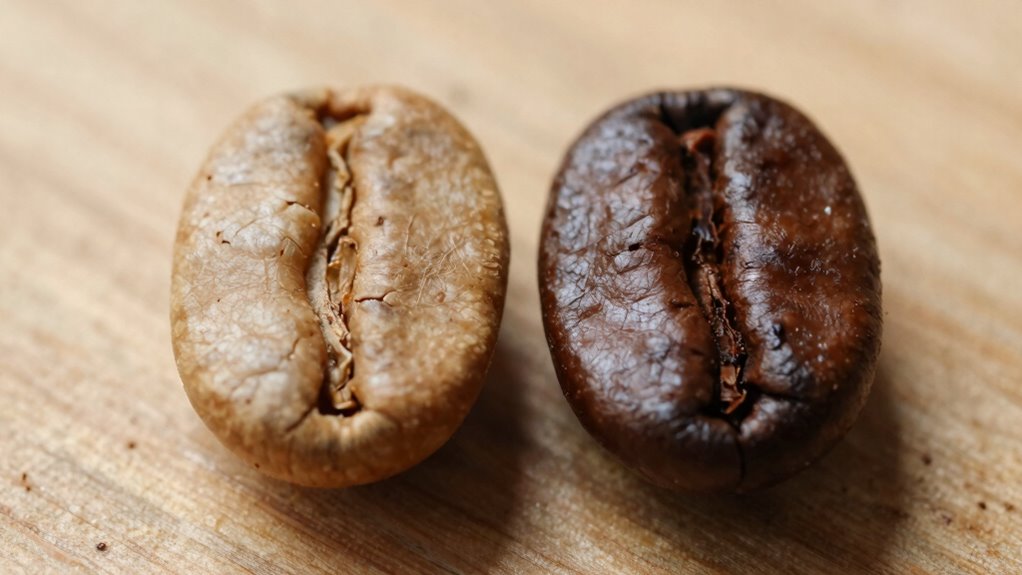
You’ll notice that lighter roasts tend to oxidize faster than darker ones, which can affect their freshness over time. Proper storage can help slow down this process, but the recommendations vary depending on the roast level. Understanding these differences helps you keep your coffee fresh longer. Additionally, market insights suggest that consumer preferences and storage habits can also impact how long your coffee remains optimal.
Oxidation Rate Differences
Understanding how roast levels influence oxidation rates is key to managing coffee’s freshness and shelf life. Light roasts tend to oxidize more slowly than dark roasts because they retain more of the bean’s original structure. Factors like coffee bean genetics and roasting equipment differences affect how quickly oxidation occurs, impacting shelf stability. Lighter roasts preserve more of the bean’s natural antioxidants, which slow oxidation but can be more sensitive to exposure. Conversely, darker roasts have undergone more heat, breaking down compounds that could slow oxidation but making them more prone to staling. Proper storage extends shelf life, regardless of roast level, but knowing how oxidation rates differ helps you make better decisions. For example:
- Bean genetics influence natural antioxidant levels
- Roasting equipment differences impact heat exposure
- Lighter roasts contain more delicate oils
- Dark roasts are more stable but still degrade over time
- Oxidation rate differences are also affected by factors like storage conditions and exposure to air and light. Additionally, storage environment plays a crucial role in maintaining freshness by controlling humidity and temperature.
Storage Recommendations Variations
Have you ever noticed how different roast levels require distinct storage approaches to maintain freshness? Light roasts, with their delicate oils, are more prone to oxidation and should be stored in airtight containers away from light and heat. Dark roasts, having undergone more roasting, are more stable but can still degrade faster if exposed to air. Your storage choices can impact shelf life, especially considering the coffee bean processing methods and sustainable roasting practices that emphasize freshness. Proper storage helps preserve flavor and aroma, regardless of roast level. Here’s a quick guide:
| Roast Level | Best Storage Method | Shelf Life (approx.) |
|---|---|---|
| Light Roast | Airtight, opaque container | 1-2 weeks |
| Medium Roast | Airtight, cool, dark place | 2-3 weeks |
| Dark Roast | Airtight, cool, dark place | 2-3 weeks |
| Freshly roasted | Use quickly for best flavor | 1-2 weeks |
| Stale coffee | Recycle or freshen | N/A |
The Roast-to-Flavor Connection: What You Need to Know
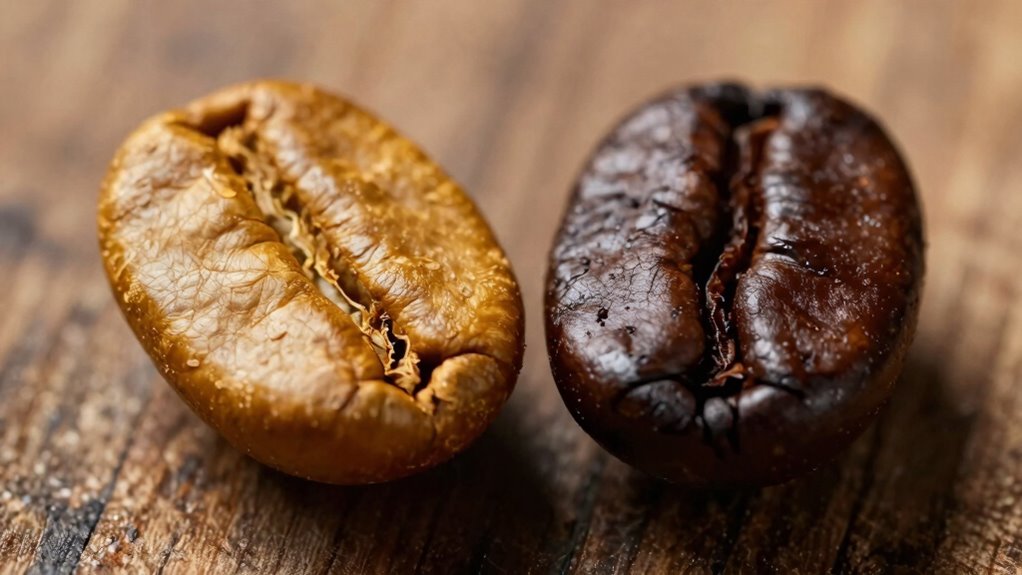
The connection between roast level and flavor is fundamental to how your coffee tastes, as the roasting process transforms the beans’ natural characteristics into a wide range of flavors. During coffee bean development, heat causes chemical changes that influence flavor profiles, from fruity and acidic to smoky and bitter. Roast color variations reflect these changes, signaling different flavor intensities. Lighter roasts preserve more of the beans’ original qualities, highlighting brightness and complex aromas. Darker roasts develop bolder, more robust flavors with roasted and caramelized notes. Understanding this connection helps you choose the right roast for your taste preferences.
Roast level shapes flavor, from bright and fruity to bold and smoky, helping you find your perfect coffee.
- Coffee bean development influences flavor complexity.
- Roast color variations reveal flavor intensity.
- Light roasts retain natural bean characteristics.
- Dark roasts emphasize bold, roasted flavors.
Tips for Sampling and Comparing Light and Dark Roasts Effectively
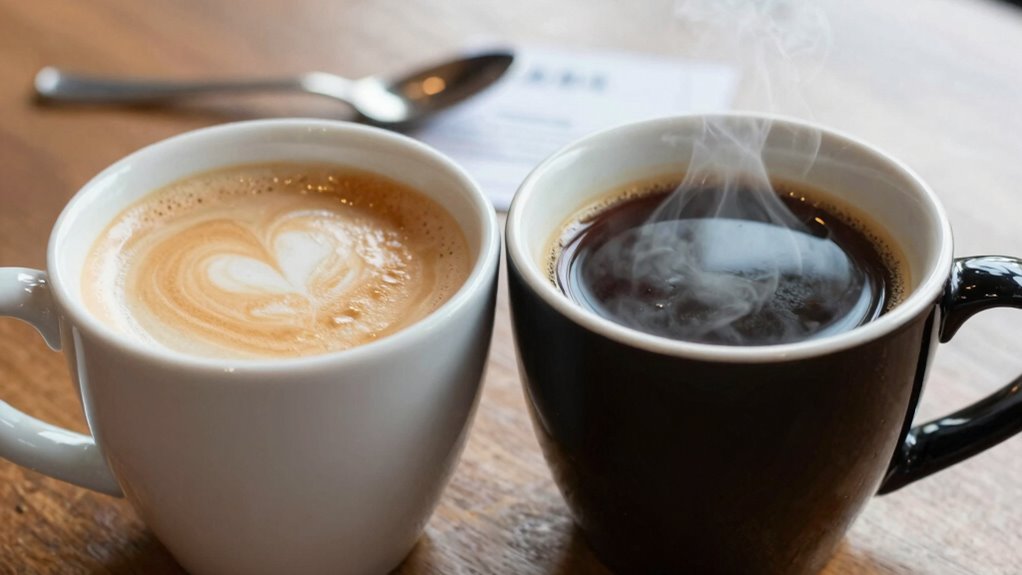
Sampling and comparing light and dark roasts requires a mindful approach to truly appreciate their differences. Use specific sampling techniques, such as tasting small amounts side by side to note subtle flavor nuances. Focus on aroma evaluation first—smell each roast before tasting to pick up on the scent profiles that reveal the roast’s character. When tasting, pay attention to body, acidity, and aftertaste, which vary markedly between light and dark roasts. Take notes on your impressions and avoid rushing the process, as this helps clarify your preferences. Temperature matters too; serve coffee at a consistent temperature to guarantee accurate comparisons. By systematically using these sampling techniques and aroma evaluation, you’ll develop a deeper understanding of what distinguishes light from dark roasts.
Frequently Asked Questions
How Do Different Coffee Bean Origins Influence Roast Flavor Profiles?
Different coffee bean origins profoundly influence roast flavor profiles due to bean diversity and inherent flavor nuances. You’ll notice that beans from regions like Ethiopia offer fruity and floral notes, while Colombian beans provide balanced, nutty flavors. Roasting enhances these traits, so lighter roasts showcase origin-specific nuances, whereas darker roasts tend to mute them. Understanding the origin helps you choose a roast that highlights the unique flavor profile you prefer.
Are There Health Differences Between Light and Dark Roasts?
You’ll find that health differences between light and dark roasts are minimal, as both contain antioxidants and beneficial compounds. Light roasts preserve more of the bean’s natural flavor nuances, which can be advantageous for those seeking a vibrant taste, while dark roasts often have a bolder profile. Your choice may depend on brewing compatibility—light roasts work well for pour-over, whereas dark roasts suit espresso. Overall, enjoy your coffee based on flavor and brewing preference, not health concerns.
How Does Roasting Impact Caffeine Content in Coffee?
You might find that darker roasts generally have slightly less caffeine than light roasts because roasting decreases caffeine stability. Surprisingly, studies show that caffeine levels remain relatively stable across different roast levels, despite differences in roast bitterness. So, even if dark roasts taste more bitter, they don’t necessarily pack more caffeine. Your caffeine intake depends more on the bean’s original amount than on the roast level itself.
Can Roasting Level Affect Coffee’s Environmental Sustainability?
Yes, roasting level can influence coffee’s environmental sustainability. Darker roasts require longer roasting times, which consume more energy, impacting eco-friendliness. To lessen environmental impact, choose coffee from eco-friendly farming practices and opt for sustainable packaging. Supporting brands that prioritize these efforts helps reduce your ecological footprint. Ultimately, lighter roasts often have a smaller environmental impact due to lower energy use during roasting, aligning better with sustainable practices.
What Are the Best Storage Practices to Preserve Roast Freshness?
To maintain roast freshness, you should focus on proper coffee storage. Keep your coffee in an airtight container, away from light, heat, and moisture. Store it in a cool, dark place like a pantry or cupboard. Avoid the fridge, as moisture can harm the beans. Regularly check for freshness and use your coffee within a few weeks of roasting. Proper coffee storage guarantees the best flavor and aroma over time.
Conclusion
Choosing between light and dark roast isn’t just about flavor—it’s about your experience. Light roasts, with their bright acidity and intricate nuances, invite exploration, while dark roasts offer bold, smoky richness that comforts and energizes. Think of it as balancing your palate’s curiosity versus its craving for comfort. So, whether you prefer the lively spark or the deep warmth, your perfect brew awaits—each roast telling its own story, just waiting for you to discover it.