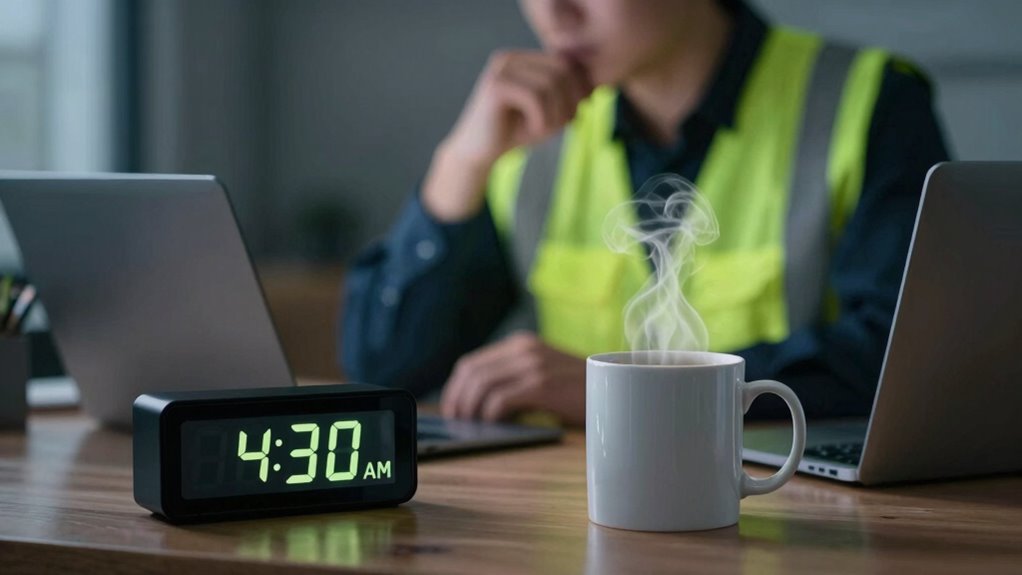

Timing your caffeine intake is key to staying alert without messing up your sleep. If you drink caffeine too late or close to bedtime, it can disrupt your ability to fall asleep and reduce rest, leaving you more tired later. Instead, use caffeine during your natural energy dips, like mid-shift, to boost alertness wisely. Being mindful of when you consume caffeine helps prevent dependence and keeps your body’s rhythm in check. Keep exploring to learn more about optimizing your caffeine habits.

Get coffee and tea gear delivered free — and shop member deals
- Fast, free delivery on millions of items
- Access to Prime Big Deal Days deals on October 6–7
- Prime Video, Amazon Music and more included
Key Takeaways
- Proper caffeine timing prevents sleep disruption and supports better rest, crucial for shift workers’ recovery.
- Timing caffeine to natural energy dips enhances alertness while minimizing interference with sleep.
- Avoiding caffeine before bedtime reduces risks of insomnia and long-term sleep problems.
- Strategic caffeine use reduces dependency, maintaining energy levels without over-reliance.
- Planning caffeine intake around body rhythms optimizes performance and overall health during shifts.

If you work irregular shifts, timing your caffeine intake can make a big difference in staying alert and maintaining your health. Caffeine is a powerful tool for combating fatigue, but when misused, it can lead to sleep disruption and increased dependency risk. The key is knowing when to consume caffeine so it enhances your alertness without sabotaging your sleep or creating a dependency cycle.
When you drink caffeine too late in your shift or too close to your intended sleep time, it can interfere with your ability to fall asleep and stay asleep. This sleep disruption can leave you feeling less rested, reduce your overall recovery, and make it harder to perform well during your next shift. If you’re constantly battling poor sleep, your body struggles to repair itself, and your alertness during work hours diminishes. Timing caffeine correctly helps prevent this cycle, allowing you to stay sharp without sacrificing the quality of your rest later. Understanding your sleep patterns can further help you optimize your caffeine consumption for better results.
Another important aspect to consider is dependency risk. Relying heavily on caffeine to get through your shifts can lead to a dependency that’s difficult to break. When you consume caffeine regularly, your body may start to depend on it to maintain energy levels, which can make you feel sluggish or fatigued without it. By strategically timing your caffeine intake—such as using it during the mid-shift slump rather than at the start or end—you reduce the likelihood of developing a reliance on caffeine as your primary energy source. Additionally, being aware of caffeine’s effects can help you make more mindful choices about consumption.
It’s also beneficial to be aware of your natural energy patterns. If you notice that your alertness dips during specific times, plan your caffeine consumption around those periods. For example, having a cup of coffee or tea during your early shift hours can give you a boost, but you should avoid caffeine for at least a few hours before bedtime. This helps minimize sleep disruption and ensures you get restorative sleep, which is crucial for your overall health and performance. Understanding your body’s natural energy rhythms can help you optimize your caffeine timing for better alertness and recovery.
Ultimately, timing your caffeine intake allows you to maximize its benefits while minimizing downsides. It’s about finding the right balance—using caffeine to stay alert when you need it most without letting it interfere with your sleep or become a crutch that leads to dependency. By paying attention to your body’s rhythms and planning your caffeine consumption carefully, you can stay productive during your shifts and maintain better health in the long run.
best coffee mugs for shift workers
As an affiliate, we earn on qualifying purchases.
As an affiliate, we earn on qualifying purchases.
Frequently Asked Questions
How Does Caffeine Affect Sleep Quality During Daytime Rest?
Caffeine can disrupt your sleep quality during daytime rest by causing sleep disruption, making it harder to fall asleep and reducing REM sleep. Its effects depend on caffeine metabolism, which varies among individuals. If you consume caffeine too close to your rest period, it lingers in your system longer, impairing sleep. To improve sleep, limit caffeine intake at least 4-6 hours before your rest and consider your personal caffeine metabolism.
Can Caffeine Consumption Lead to Long-Term Health Issues for Shift Workers?
Yes, caffeine consumption can lead to long-term health issues for shift workers. You might develop caffeine dependency, making it harder to function without your daily fix. Over time, excessive caffeine intake increases your heart health risk, raising blood pressure and straining your cardiovascular system. By consuming caffeine irresponsibly, you risk more than just alertness—you risk your future health, your well-being, and your quality of life.
What Are Alternative Strategies to Boost Alertness Besides Caffeine?
You can boost alertness through natural remedies like staying hydrated, eating balanced meals, and taking short physical breaks. Prioritize sleep hygiene by creating a consistent sleep schedule, limiting screen time before bed, and making your sleep environment comfortable. These strategies help improve your overall energy and focus, reducing reliance on caffeine. Incorporating natural remedies and good sleep habits supports your alertness during shift work without risking long-term health issues.
How Does Individual Caffeine Sensitivity Influence Timing Recommendations?
Your genetic factors and metabolic differences considerably influence how you respond to caffeine, affecting ideal timing. If you’re highly sensitive, you should limit caffeine intake closer to your sleep time to avoid disruptions. Conversely, if you metabolize caffeine quickly, you might benefit from consuming it earlier in your shift. Recognizing your individual sensitivity helps tailor caffeine timing, ensuring you stay alert without compromising your rest.
Are There Specific Types of Caffeine That Are More Effective for Shift Work?
Think of caffeine options like a toolbox—you pick what works best. For shift workers, classic caffeine like coffee or energy drinks often provide quick alertness. But if you’re sensitive, decaffeinated options or herbal infusions can help maintain focus without jitters. These alternatives can be effective, especially if timed right. Remember, the key isn’t just what you drink, but when, to keep your energy steady throughout your shift.
As an affiliate, we earn on qualifying purchases.
Conclusion
Now that you know the importance of timing your caffeine intake, imagine what it could do for your night shifts. Will you stick to the right moments, or risk disrupting your sleep even more? The choice is yours, but every decision shapes your alertness and recovery. So, are you ready to discover the secret to staying sharp without sacrificing rest? The clock is ticking—your next move could change everything.
sleep aid supplements for shift workers
As an affiliate, we earn on qualifying purchases.
As an affiliate, we earn on qualifying purchases.
energy-boosting tea for alertness
As an affiliate, we earn on qualifying purchases.
As an affiliate, we earn on qualifying purchases.
Fall Picks
fall essentials
As an affiliate, we earn on qualifying purchases.