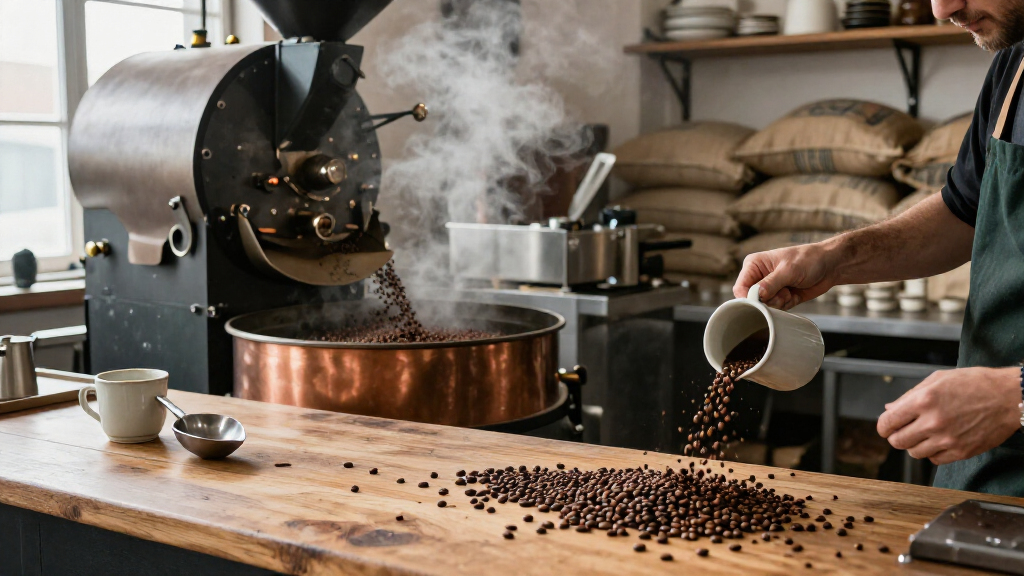

Choosing the best commercial coffee roasters requires balancing production volume, heat source availability, and control precision. The BEILOCKERY Commercial Gas Drum Roaster stands out as the best overall pick for high-volume operations due to its 110 lb capacity and robust gas burners, which offer superior heat recovery compared to many electric alternatives. For smaller startups or cafes with limited space, the EQCOTWEA Commercial Electric Coffee Bean and Nut Roaster provides a compact, stainless steel solution that handles versatile roasting tasks without the need for gas lines. Buyers face a primary tradeoff between batch size efficiency and energy source logistics; larger gas machines demand proper ventilation and plumbing, while smaller electric units offer plug-and-play convenience but longer cycle times. This guide breaks down the full lineup to help you match your specific production goals with the right equipment.

Get coffee and tea gear delivered free with Prime
- Fast, free delivery on millions of items
- Prime Video, Amazon Music and more included
- Member-only deals all year
Complete the kit


Key Takeaways
- Gas-powered roasters dominate the high-capacity segment (50 lb+) because they maintain consistent heat during large batch drops, whereas electric models struggle with thermal recovery at that scale.
- PID temperature control is becoming standard even on mid-range electric units, allowing for reproducible roast profiles that were previously exclusive to expensive, manual-gauge machines.
- Stainless steel construction is not just about aesthetics; it significantly impacts cleaning time and longevity, especially for roasters that also process nuts or spices which leave oily residues.
- Batch capacity should be chosen based on daily sales volume, not just machine capability; oversizing leads to stale inventory and wasted energy, while undersizing creates bottlenecks during peak hours.
- Smokeless drum designs and integrated cooling trays are critical features for urban locations with strict air quality regulations or limited outdoor venting options.
| BEILOCKERY Commercial Gas Drum Roaster, 110 lb Capacity |  | Best for High-Volume Gas Roasting | Capacity: 110 lb (50 kg) | Fuel: LPG or natural gas | Voltage and phase: 220V, single-phase | VIEW LATEST PRICE | See Our Full Breakdown |
| Ropoana Automatic Stainless Steel Coffee Bean Roaster, 14.5 L |  | Best for Small-Batch Gas-Stove Roasting | Drum capacity: 14.5 L (3.83 gal) | Coffee capacity: 2.5–3 kg (5.51–6.61 lb) per batch | Rotation speed: 5–45 rpm | VIEW LATEST PRICE | See Our Full Breakdown |
| GYQSSD Electric Coffee and Multi-Purpose Roaster, 2,000–4,000 g |  | Best for Multi-Ingredient Batch Roasting | Capacity: 2,000–4,000 g | Temperature range: 0–350°C | Timer range: 0–999 minutes | VIEW LATEST PRICE | See Our Full Breakdown |
| HNZXIB Commercial Electric Coffee Bean Roaster, 4.4 lb Capacity |  | Best Compact Electric Drum | Capacity: 4.4 lb | Temperature range: 86–572°F | Timer: 0–999 minutes | VIEW LATEST PRICE | See Our Full Breakdown |
| EQCOTWEA Commercial Electric Coffee Bean and Nut Roaster, 16.5 lb, Stainless Steel, 3 kW, 220 V |  | Best Mid-Scale Electric Commercial Roaster | Capacity: 16.5 lb (7.5 kg) | Power: 3,000 W | Electrical supply: 220V, single-phase, 60 Hz | VIEW LATEST PRICE | See Our Full Breakdown |
| Stainless Steel Electric Coffee and Nut Roaster with Timer and Adjustable Temperature |  | Best Multi-Purpose Electric Pick | Material: Stainless steel | Temperature range: 0–350°C | Timer range: 0–999 minutes | VIEW LATEST PRICE | See Our Full Breakdown |
| ICZW 14.5L Stainless Steel Coffee Bean Roaster |  | Best Gas-Stove Batch Capacity | Model: JT-3A | Capacity: 14.5 liters | Roasting capacity: Approximately 3.5–4.0 kg (7.7–8.8 lbs) per batch | VIEW LATEST PRICE | See Our Full Breakdown |
| HENGCMM Electric Drum Coffee Roaster, Type 10 |  | Best for Straightforward 4 kg Electric Batches | Model / type: crts-929600 / Type 10 | Approximate coffee capacity: 4 kg | Power: 1.5 kW / 2.2 kW | VIEW LATEST PRICE | See Our Full Breakdown |
| NIASIA 500 g Automatic Coffee Roaster for Home Use |  | Best for Home Roast Development | Model: PKF-500g | Power source / voltage: Electric / 110 V | Wattage: 1000 W | VIEW LATEST PRICE | See Our Full Breakdown |
| Commercial Electric Drum Roaster for Coffee Beans, Nuts, and Grains, Type 5 |  | Best for Automated Drum Handling | Model / capacity: Type 5: approximately 2 kg; Type 10: approximately 4 kg of coffee beans | Power: 1.8 kW / 2.5 kW | Temperature range: 0–350°C | VIEW LATEST PRICE | See Our Full Breakdown |
| EQCOTWEA 110 lb Commercial Gas Roaster, 304 Stainless Steel, 280 W, 0–300°C Temperature Control |  | Best for High-Volume Gas Roasting | Model: CY-100 | Listed capacity: 110 lb (55 lb / 25 kg pot body) | Heating fuel: LPG or natural gas | VIEW LATEST PRICE | See Our Full Breakdown |
| Automatic Stainless Steel Coffee Bean Roaster with Speed Controller |  | Best for Gas-Stove Batch Flexibility | Capacity: 3.83 gallons | Roasting capacity: About 5.51–6.61 lb per batch | Rotation speed: 5–45 rpm | VIEW LATEST PRICE | See Our Full Breakdown |
| Electric Coffee Bean Roaster with Smokeless Drum Roasting |  | Best for Learning Roast Control | Model: BAMI-T500 | Maximum capacity: 500 g | Roasting modes: Automatic, assisted, and manual | VIEW LATEST PRICE | See Our Full Breakdown |
| Precision Coffee Roaster, 1 kg Capacity, 240V, 2000W |  | Best for Profile-Driven Small Commercial Roasting | Capacity: 1 kg (2 lb) | Electrical supply: 240 V AC | Wattage: 2000 W | VIEW LATEST PRICE | See Our Full Breakdown |
| B500 Electric Coffee Bean Roaster with Smokeless Drum and PID Temperature Control |  | Best for Compact PID-Controlled Batches | Model: B500 | Maximum bean capacity: 500 g | Roasting type: Electric drum | VIEW LATEST PRICE | See Our Full Breakdown |
| commercial coffee roaster | Dimensions | Capacity |
|---|---|---|
| BEILOCKERY Commercial Gas Drum | — | 110 lb (50 kg) |
| Ropoana Automatic Stainless St | 30 × 18 × 34.5 cm (11.8 × 7.1 × 13.6 in) | — |
| GYQSSD Electric Coffee and Mul | — | 2,000–4,000 g |
| HNZXIB Commercial Electric Cof | 10 × 10 × 10 in | 4.4 lb |
| EQCOTWEA Commercial Electric C | 26.8 × 26.8 × 31.5 in | 16.5 lb (7.5 kg) |
| Stainless Steel Electric Coffe | — | — |
| ICZW 14.5L Stainless Steel Cof | 8.8 × 8.7 × 9.8 inches | 14.5 liters |
| HENGCMM Electric Drum Coffee R | 57.5 × 32 × 37.5 cm | — |
| NIASIA 500 g Automatic Coffee | 16 × 12 × 20 in (D × W × H) | 500 g maximum; 350–400 g recommended batch |
| Commercial Electric Drum Roast | — | — |
| EQCOTWEA 110 lb Commercial Gas | 29.19 × 66.93 × 50.39 in (D × W × H) | — |
| Automatic Stainless Steel Coff | 11.8 × 7.1 × 13.6 in | 3.83 gallons |
| Electric Coffee Bean Roaster w | 19.29 × 10.24 × 15.75 in | — |
| Precision Coffee Roaster | — | 1 kg (2 lb) |
| B500 Electric Coffee Bean Roas | 19.2 × 10.6 × 16.1 in | — |
More Details on Our Top Picks
BEILOCKERY Commercial Gas Drum Roaster, 110 lb Capacity
For a roasting operation that needs to process large batches, the 110 lb capacity is the main reason to choose this BEILOCKERY. Its horizontal drum and food-grade 304 stainless steel inner liner suit coffee as well as nuts, while the 0–300°C temperature range offers room to adjust roasting heat. Compared with the EQCOTWEA 16.5 lb electric roaster, this is built for much larger batches, but it also needs a gas connection and 220V power rather than a simpler electric setup. The casters help with repositioning, though they do not make a 342.82 lb machine easy to move around. I’d shortlist it for a production space with appropriate gas service, ventilation, and room for a substantial roaster; small shops and flexible pop-up setups should look at smaller equipment.
Pros:- 110 lb (50 kg) listed capacity supports large batches.
- Food-grade 304 stainless steel inner liner is specified for the roasting drum.
- 0–300°C temperature adjustment supports a broad range of roasting settings.
- Movable casters help reposition the machine within a suitable workspace.
Cons:- Requires LPG or natural gas as well as 220V electrical power.
- Its 342.82 lb net weight makes installation and relocation demanding.
- The large capacity may be excessive for businesses with modest batch needs.
Best for: Coffee businesses with gas service that need to roast large batches and have floor space for a heavy production machine.
Not ideal for: Small cafés, home roasters, or mobile operators without a dedicated gas supply, 220V power, and room for a 342.82 lb machine.
- Capacity:110 lb (50 kg)
- Fuel:LPG or natural gas
- Voltage and phase:220V, single-phase
- Power:280W
- Temperature range:0–300°C (32–572°F)
- Inner liner:Food-grade 304 stainless steel
- Net weight:342.82 lb (155.5 kg)
Our verdict“Choose this BEILOCKERY when high batch capacity and gas-fired operation matter more than easy installation or a compact footprint.”
Ropoana Automatic Stainless Steel Coffee Bean Roaster, 14.5 L
The Ropoana offers a middle ground between compact electric machines and dedicated commercial equipment: its 14.5 L drum is listed for 2.5–3 kg of coffee per batch, and adjustable rotation from 5–45 rpm lets the operator vary drum movement. Internal baffles agitate the beans, while a viewing hole helps monitor the batch and pour it out. Unlike the HNZXIB 4.4 lb electric roaster, the Ropoana does not provide its own heat source; it mounts on a gas stove, so the heating setup depends on the workspace. Its 12V motor also needs a corded connection. At just 13.21 lb, it is far easier to handle than the BEILOCKERY 110 lb gas roaster, but its batch capacity and stove-based heating make it a fit for modest production, not a high-throughput roasting line.
Pros:- Listed coffee capacity of 2.5–3 kg per batch is substantial for a compact unit.
- Adjustable 5–45 rpm drum rotation allows changes to bean movement.
- Viewing hole helps monitor roasting and pour contents.
- Light 13.21 lb net weight is easier to handle than the large commercial machines in this lineup.
Cons:- Must be heated on a gas stove, which is not included as a dedicated roaster heat source.
- The 12V DC motor requires a corded electrical connection.
- Its batch capacity is far below the BEILOCKERY 110 lb roaster for high-volume production.
Best for: Small cafés, test roasters, and food businesses with a gas stove that want adjustable drum rotation for batches of a few kilograms.
Not ideal for: Production roasteries needing a self-contained heating system, large batches, or equipment designed for continuous commercial throughput.
- Drum capacity:14.5 L (3.83 gal)
- Coffee capacity:2.5–3 kg (5.51–6.61 lb) per batch
- Rotation speed:5–45 rpm
- Motor:14 W, 12V DC
- Heating setup:Mounts on a gas stove
- Dimensions:30 × 18 × 34.5 cm (11.8 × 7.1 × 13.6 in)
- Net weight:5.99 kg (13.21 lb)
Our verdict“Pick the Ropoana for adjustable, kilogram-scale batches when you already have a suitable gas stove and do not need a full production roaster.”
GYQSSD Electric Coffee and Multi-Purpose Roaster, 2,000–4,000 g
The GYQSSD is the most flexible choice here for businesses that roast more than coffee: it is listed for 2,000–4,000 g batches of beans, grains, peanuts, chestnuts, dried peppers, and other dry goods. Adjustable temperature and a timer that runs up to 999 minutes give operators control over settings, while the stirring paddle is intended to keep contents moving across the heating area. Its electric heating tube makes it a different setup from the gas-fired BEILOCKERY 110 lb roaster, though the GYQSSD’s smaller batch range is better matched to varied, modest runs than bulk production. The key limitation is that specifications vary by model, including power, dimensions, and weight. Roasting also produces smoke, so a well-ventilated location is part of the operating setup, not an optional extra.
Pros:- Handles coffee and a range of other dry goods, including grains, peanuts, chestnuts, and dried peppers.
- Adjustable temperature and timer support varied roasting tasks.
- Stirring paddle is designed to keep contents moving for more even heating.
- Heating stops when the timer ends.
Cons:- Roasting produces smoke and requires a well-ventilated workspace.
- Capacity, power, dimensions, and weight vary by model, making configuration checks necessary.
- Its 2–4 kg listed capacity is much smaller than the BEILOCKERY’s 50 kg batch capacity.
Best for: Small food producers and specialty shops that want one electric machine for coffee and several kinds of dry goods in controlled small batches.
Not ideal for: High-volume coffee roasteries or enclosed workspaces without strong ventilation; buyers should also confirm which capacity and power configuration they are ordering.
- Capacity:2,000–4,000 g
- Temperature range:0–350°C
- Timer range:0–999 minutes
- Power options:1.8 kW or 2.5 kW
- Heating element:Stainless steel heating tube
- Suitable ingredients:Coffee beans, grains, peanuts, chestnuts, dried peppers, and other dry goods
- Model-dependent gross weight:10 kg or 13 kg
Our verdict“Choose the GYQSSD if ingredient flexibility and timed electric operation matter more than large coffee batches or a clearly uniform specification.”
HNZXIB Commercial Electric Coffee Bean Roaster, 4.4 lb Capacity
For a shop that wants a dedicated electric drum without the footprint of a production machine, the HNZXIB keeps its listed capacity to 4.4 lb and its dimensions to 10 × 10 × 10 inches. Its removable stainless steel drum is a practical distinction: it gives operators a way to clean roasting residue without treating the whole appliance as a fixed assembly. The PID temperature control, 86–572°F range, and timer up to 999 minutes provide adjustable operating settings, while the EQCOTWEA 16.5 lb roaster offers substantially more batch capacity at the cost of a heavier, larger machine and 220V power. The HNZXIB uses 110V, but it should not be run continuously for more than four hours. It suits smaller batches, not uninterrupted high-volume production.
Pros:- Compact listed dimensions of 10 × 10 × 10 inches suit space-constrained work areas.
- Removable stainless steel drum supports easier residue cleaning.
- PID temperature control and an 86–572°F range provide adjustable heat settings.
- 110V electrical supply is less demanding than the 220V requirement of the EQCOTWEA 16.5 lb model.
Cons:- The 4.4 lb capacity is limited for commercial production.
- Continuous heating should not exceed four hours.
- The timer’s 999-minute range does not remove the stated limit on continuous heating.
Best for: Small cafés, test roasters, and specialty food shops that need an electric drum with a removable component for cleaning and modest batches.
Not ideal for: Large roasteries or operators who need batches above 4.4 lb or continuous operation beyond the stated four-hour limit.
- Capacity:4.4 lb
- Temperature range:86–572°F
- Timer:0–999 minutes
- Power source:Electric, 110V
- Drum material:Stainless steel; removable
- Dimensions:10 × 10 × 10 in
- Weight:22 lb
Our verdict“Choose the HNZXIB for compact, smaller-batch electric roasting with a removable drum, but not for long production runs.”
EQCOTWEA Commercial Electric Coffee Bean and Nut Roaster, 16.5 lb, Stainless Steel, 3 kW, 220 V
The EQCOTWEA fills the gap between compact electric units and the 110 lb gas BEILOCKERY: its 16.5 lb (7.5 kg) capacity suits a business that needs meaningful batches without a gas-fired installation. Adjustable time and temperature controls let operators set a run, while the cast iron pot and 3D stirring blades are designed to move coffee, nuts, and seeds through the roast. Its 3 kW single-phase power setup is electric, but the 220V requirement still calls for a compatible supply. At 185 lb and 26.8 × 26.8 × 31.5 inches, it is not a countertop appliance; compared with the HNZXIB 4.4 lb roaster, it offers far more capacity but demands more floor space and a heavier-duty electrical installation. I’d favor it for fixed-location, mid-scale operations rather than flexible or small-batch use.
Pros:- 16.5 lb (7.5 kg) capacity exceeds the HNZXIB’s 4.4 lb batch size.
- Adjustable time and temperature controls support operation across different ingredients.
- Cast iron pot and 3D stirring blades are designed to move contents during roasting.
- Stainless steel frame is described as rust-resistant and easy to clean.
Cons:- Requires a 220V single-phase supply.
- At 185 lb, it is difficult to relocate once installed.
- Its 26.8 × 26.8 × 31.5 in dimensions require dedicated floor space.
Best for: Small commercial roasteries and food producers with 220V single-phase power that need larger electric batches of coffee, nuts, or seeds.
Not ideal for: Home roasters, mobile vendors, or businesses without 220V service, adequate floor space, or a way to position a 185 lb machine.
- Capacity:16.5 lb (7.5 kg)
- Power:3,000 W
- Electrical supply:220V, single-phase, 60 Hz
- Pot material:Cast iron
- Frame material:Stainless steel
- Controls:Adjustable time and temperature
- Dimensions:26.8 × 26.8 × 31.5 in
- Weight:185 lb
Our verdict“Pick the EQCOTWEA for mid-scale electric roasting when its 16.5 lb capacity justifies a fixed 220V installation and substantial footprint.”
Stainless Steel Electric Coffee and Nut Roaster with Timer and Adjustable Temperature
For a small operation that roasts more than coffee, this model stands out for its automatic stirring, adjustable heat, and timer. It handles beans, nuts, grains, and rice, so it can support a broader dry-goods workflow than the coffee-focused NIASIA 500 g Automatic Coffee Roaster. Its detachable drum and air circulation system also make cleanup and smoke management part of the design, while the two model options give buyers a choice of power and weight.
The tradeoff is that the listed capacity is not specified, making it harder to plan production than with the HENGCMM Type 10, which lists an approximate 4 kg batch. A feed hopper is also sold separately, and the listed finish may include black spots or polishing residue at welds. I’d choose it for versatility, not for clearly documented throughput.
Pros:- Automatic stirring is designed to promote more even roasting without constant manual turning.
- Adjustable temperature and timer support control over different dry goods.
- Detachable drum and air circulation system are intended to ease cleaning and vent smoke.
- Handles coffee, nuts, beans, grains, and rice.
Cons:- No batch capacity is provided, limiting production planning.
- Feed hopper is not included and must be purchased separately.
- Weld seams may show black spots or polishing residue.
Best for: Small food businesses that want one automatic machine for coffee and several types of nuts, grains, or rice.
Not ideal for: Coffee roasters planning batches around a firm capacity target, or buyers who need a feed hopper included.
- Material:Stainless steel
- Temperature range:0–350°C
- Timer range:0–999 minutes
- Models:TK5 / TK10
- Total power:1.5 kW / 2.2 kW
- Gross weight:11 kg / 15 kg
- Operation mode:Fully automatic
- Included accessories:Heat-resistant gloves (1 pair), user manual
Our verdict“Choose this for flexible, multi-product roasting with automatic operation, but favor the HENGCMM Type 10 if a stated coffee-batch capacity matters more.”
ICZW 14.5L Stainless Steel Coffee Bean Roaster
The ICZW is the unusual pick here for buyers who already have a suitable gas stove and want roughly 3.5–4 kg per batch without choosing an electric machine. Its 14.5-liter drum is larger than the NIASIA’s 500 g capacity, making it a better fit for small-batch production than home sampling. A thermometer, cooling holes, and double baffles provide practical cues and support for monitoring and more even roasting.
That capacity comes with a significant setup constraint: the stove supplies the heat, so this is not a standalone electric roaster like the HENGCMM Type 10. The listed 22-watt power and 100-volt rating do not replace the gas heat source. Buyers should also treat the thermometer as a monitoring aid rather than assuming precise automated roast control; the supplied information does not list adjustable temperature or timer controls. It suits a gas-equipped workspace, not a plug-and-roast workflow.
Pros:- 14.5-liter capacity accommodates approximately 3.5–4.0 kg of beans per batch.
- Thermometer helps operators monitor roasting temperature.
- Double baffles are designed to support more even roasting.
- Stainless steel construction and versatility for coffee, peanuts, nuts, and soybeans.
Cons:- Requires a gas stove for heating, limiting where it can be used.
- No adjustable temperature or timer controls are listed.
- Manual heat management offers less set-and-run convenience than the electric drum options.
Best for: Small roasteries or food businesses with a suitable gas stove that want larger batches and can manage heat manually.
Not ideal for: Buyers who need an electric, self-contained roaster or automated temperature and timer control.
- Model:JT-3A
- Capacity:14.5 liters
- Roasting capacity:Approximately 3.5–4.0 kg (7.7–8.8 lbs) per batch
- Material:Stainless steel
- Operation mode:Fully automatic
- Power / voltage:22 watts / 100 volts
- Dimensions:8.8 × 8.7 × 9.8 inches
- Weight:7 pounds
- Included components:Adapter, drum-type roasting machine, S-hook, shovel, thermometer
Our verdict“Pick the ICZW if gas heat and a larger batch matter more than electric convenience and automated controls.”
HENGCMM Electric Drum Coffee Roaster, Type 10
The HENGCMM Type 10 earns its place for buyers who want a defined, approximately 4 kg electric batch in a stainless steel drum. Adjustable temperature and timer settings give an operator more control than the gas-heated ICZW, while the removable inner drum makes routine cleaning more manageable. Its rotating drum also suits buyers who prefer an automatic roasting mechanism over a manually managed setup.
Compared with the Commercial Electric Drum Roaster Type 5, the HENGCMM’s stated capacity and dimensions line up with the larger 4 kg format, but its product information is less specific about discharge features. It is also not a universal dry-goods machine: flour and small particles are unsuitable, and batch size and roasting time can vary with moisture. I’d pick it for relatively simple electric drum roasting, not for buyers who need tightly specified process results or flour handling.
Pros:- Approximate 4 kg coffee capacity gives buyers a clear batch-size reference.
- Adjustable temperature and timer support process control.
- Rotating drum is designed to promote even roasting.
- Removable inner drum simplifies cleaning.
Cons:- Cannot roast flour or small particles.
- Batch capacity and roasting time vary with the product and its moisture.
- The supplied details do not specify automatic discharge.
Best for: Small commercial operators seeking an electric drum roaster with a stated 4 kg approximate capacity and adjustable controls.
Not ideal for: Businesses roasting flour or very small particles, or operators who need fixed roast times across varying bean moisture.
- Model / type:crts-929600 / Type 10
- Approximate coffee capacity:4 kg
- Power:1.5 kW / 2.2 kW
- Temperature range:30–350°C
- Timer range:0–999 minutes
- Weight:13 kg
- Dimensions:57.5 × 32 × 37.5 cm
- Material:Stainless steel
Our verdict“Choose the HENGCMM for a straightforward electric drum setup and a stated 4 kg batch, but choose the Type 5 if automatic discharge is a priority.”
NIASIA 500 g Automatic Coffee Roaster for Home Use
The NIASIA is the smallest and most explicitly home-focused option in this group. Its 350–400 g recommended batch, nine roast profiles, and manual or automatic modes give home users room to compare roast approaches without committing to the larger equipment used by the HENGCMM Type 10. A separate cooling tray and smoke-handling accessories also make it more complete for home experimentation than a basic drum machine.
Those conveniences do not make it a commercial production roaster: the product is not recommended for commercial use, and its 500 g maximum is far below the other listed batch options. Medium and dark roasts require outdoor smoke venting, while inconsistent beans may jam the drum. I’d choose this as a learning or sample-roasting machine, not as the centerpiece of a roasting business that needs regular volume.
Pros:- Manual and automatic modes with nine profiles support experimentation.
- Recommended batches of 350–400 g suit sample roasting and home use.
- Smoke purifier, exhaust pipes, and chaff collector are included.
- Separate cooling tray and high-speed cooling fan support post-roast handling.
Cons:- Not recommended for commercial roasting and has a much smaller capacity than the other drum roasters here.
- Medium and dark roasting requires smoke venting outdoors.
- Defective or inconsistent beans may jam the drum.
Best for: Home coffee enthusiasts and small roasters developing profiles or testing beans in modest batches.
Not ideal for: Commercial operators who need production capacity, or buyers unable to vent medium and dark roast smoke outdoors.
- Model:PKF-500g
- Power source / voltage:Electric / 110 V
- Wattage:1000 W
- Capacity:500 g maximum; 350–400 g recommended batch
- Control modes:Manual and automatic
- Roast profiles:9
- Dimensions:16 × 12 × 20 in (D × W × H)
- Materials:Carbon steel; stainless steel drum
- Included components:Smoke purifier, two aluminum alloy smoke pipes, chaff collector, separate cooling tray
Our verdict“Choose the NIASIA for home profile development and small batches, but not for commercial throughput.”
Commercial Electric Drum Roaster for Coffee Beans, Nuts, and Grains, Type 5
This model stands out for combining adjustable heat and timing with automatic rotation and discharge. That discharge feature can reduce hands-on handling at the end of a roast, which gives it a practical workflow advantage over the HENGCMM Type 10, whose supplied details list a removable drum but not automatic discharge. Buyers can choose between a Type 5 rated for approximately 2 kg of coffee and a Type 10 rated for approximately 4 kg, matching equipment size to their intended batch scale.
The flexibility has limits: neither version suits flour or very small particles, and the product instructions recommend leaving the machine uncovered when roasting damp products. Its listed power differs by size—1.8 kW or 2.5 kW—so buyers should confirm the selected configuration before planning installation. This is a more workflow-oriented option than the NIASIA, but it is not the right pick for specialty home batches or fine-particle roasting.
Pros:- Type 5 and Type 10 capacity options cover approximately 2 kg and 4 kg coffee batches.
- Automatic rotation and discharge can reduce manual handling.
- Adjustable temperature and timer support repeatable operating routines.
- Removable inner drum supports easier cleaning.
Cons:- Not suitable for flour or very small particles.
- Instructions recommend leaving the machine uncovered when roasting damp products.
- Power and dimensions vary by model, so buyers need to verify the selected configuration.
Best for: Small commercial roasters who want a choice of 2 kg or 4 kg batches and value automatic rotation and discharge.
Not ideal for: Operators who roast flour or very small particles, or buyers seeking a compact home machine with small-batch controls.
- Model / capacity:Type 5: approximately 2 kg; Type 10: approximately 4 kg of coffee beans
- Power:1.8 kW / 2.5 kW
- Temperature range:0–350°C
- Timer range:0–999 minutes
- Drum size:Type 5: 30 × 20 × 12 cm; Type 10: 26 × 40.5 × 14 cm
- Product size:Type 5: 47.5 × 27 × 29 cm; Type 10: 57.5 × 32 × 37.5 cm
- Net weight:Type 5: 10 kg; Type 10: 13 kg
- Material:Stainless steel
Our verdict“Choose this model for small commercial batches where automatic discharge matters, after confirming which capacity and power configuration you need.”
EQCOTWEA 110 lb Commercial Gas Roaster, 304 Stainless Steel, 280 W, 0–300°C Temperature Control
For a production operation that needs larger batches, the EQCOTWEA’s 55 lb drum capacity sets it apart from the 1 kg Precision Coffee Roaster and the 500 g electric models. LPG or natural-gas heating and adjustable time and temperature controls suit restaurants or food processors with an appropriate gas line and operators who can manage a substantial machine. Its 304 stainless steel drum is a practical choice for repeated commercial use, while forward and reverse controls support drum operation in both directions. Four casters help reposition it, but they do not make a 490 lb roaster easy to move. I would skip it for a small café or a site without compatible gas and 220 V power; this is a high-capacity installation, not a flexible countertop option.
Pros:- 55 lb drum capacity supports substantially larger batches than the smaller electric roasters in this roundup
- LPG or natural-gas heating fits commercial sites already equipped for gas
- Adjustable temperature and time controls give operators control over roast settings
- 304 stainless steel drum and four casters suit frequent use and occasional repositioning
Cons:- At 490 lb, it requires a suitable floor, installation plan, and help when moving
- Needs both a compatible gas supply and 220 V single-phase power
- Its large batch scale is poorly suited to low-volume cafés or frequent small-batch changes
Best for: Restaurants and food processors with compatible gas service, 220 V power, and steady demand for large roast batches
Not ideal for: Small cafés, mobile operators, or businesses without gas-line access and floor space for a 490 lb machine
- Model:CY-100
- Listed capacity:110 lb (55 lb / 25 kg pot body)
- Heating fuel:LPG or natural gas
- Temperature range:0–300°C
- Power:280 W
- Electrical supply:220 V, single phase
- Drum material:304 stainless steel
- Dimensions:29.19 × 66.93 × 50.39 in (D × W × H)
- Weight and mobility:490 lb; four casters
Our verdict“Choose the EQCOTWEA when your operation has the space and utilities for a gas-fired roaster and needs batches far larger than the 1 kg Precision model can handle.”
Automatic Stainless Steel Coffee Bean Roaster with Speed Controller
This roaster’s strongest distinction is its 5–45 rpm speed control, which lets buyers vary drum rotation rather than rely on a single setting. Its stated 5.51–6.61 lb batch range is larger than the 500 g B500 and BAMI-T500, though nowhere near the 55 lb EQCOTWEA. That middle ground may appeal to a small producer who wants larger batches without installing a full commercial gas roaster. The tradeoff is its gas-stove dependence: the burner is not built in, so the result depends on the user’s stove and setup. A viewing hole helps monitor the roast, but this is a less integrated arrangement than the electric roasters with onboard controls. I would also check ingredient size requirements before buying, since it is specified for whole ingredients larger than 0.04 inches.
Pros:- Adjustable 5–45 rpm drum speed offers more rotation control than fixed-speed designs
- Stated 5.51–6.61 lb batch range exceeds the 500 g B500 and BAMI-T500
- Viewing hole allows visual monitoring during roasting
- Stainless steel drum construction supports roasting coffee and other suitable ingredients
Cons:- Requires a gas stove rather than providing an integrated heating system
- Heat control depends on the stove and operating setup, unlike the electric models with built-in controls
- Specified ingredient size must exceed 0.04 inches, limiting what can be roasted
Best for: Small coffee businesses with a suitable gas stove that want adjustable drum speed and batches larger than a half-kilogram roaster
Not ideal for: Roasteries seeking a self-contained electric machine, or buyers who need production-scale capacity and independent heat control
- Capacity:3.83 gallons
- Roasting capacity:About 5.51–6.61 lb per batch
- Rotation speed:5–45 rpm
- Motor power:14 W
- Electrical supply:12 V DC
- Heating setup:Designed for use on gas stoves
- Dimensions:11.8 × 7.1 × 13.6 in
- Weight:13.2 lb
- Warranty:2 years
Our verdict“Pick this model if you have a reliable gas stove and want adjustable drum speed with more batch capacity than a 500 g electric roaster.”
Electric Coffee Bean Roaster with Smokeless Drum Roasting
The BAMI-T500 is the most approachable pick here for buyers who want to move from automated roasting toward hands-on control. Its automatic, assisted, and manual modes provide different levels of involvement, while bean-temperature and rate-of-rise detection give the operator information for adjusting firepower and damper settings. That makes it more instructive than the simpler B500, which lists PID control and roast-curve recording but not the same set of modes and detection features. The built-in smoke and dust purifier is useful for indoor setups, although it does not change the machine’s modest 500 g batch ceiling. A next-batch preheat while the previous batch cools can help keep a small workflow moving. I would choose a larger roaster, such as the 1 kg Precision model, for regular café production.
Pros:- Three operating modes accommodate both guided roasting and manual experimentation
- Bean temperature and rate-of-rise detection give useful information for adjusting a roast
- Smoke and dust purifier supports use in a more space-constrained environment
- Can preheat the next batch while the previous batch cools
Cons:- Maximum capacity of 500 g limits output compared with the 1 kg Precision roaster and larger machines
- Compact batch size may require many cycles to meet regular commercial demand
- More roast controls may take time to learn for operators who want a simple, preset-only workflow
Best for: New or developing roasters who want guided and manual modes, roast data, and a purifier for a small indoor setup
Not ideal for: Cafés or production teams that need batches larger than 500 g or high throughput from each roasting cycle
- Model:BAMI-T500
- Maximum capacity:500 g
- Roasting modes:Automatic, assisted, and manual
- Detection and controls:Bean temperature, ROR, firepower, and damper
- Smoke management:Smoke and dust purifier
- Dimensions:19.29 × 10.24 × 15.75 in
- Weight:22 lb
Our verdict“Choose the BAMI-T500 to learn and adjust roast profiles in small batches, but move to the Precision model if output matters more than hands-on practice.”
Precision Coffee Roaster, 1 kg Capacity, 240V, 2000W
The Precision Coffee Roaster is the strongest fit in this group for a small business that wants repeatable profiles and room to grow beyond half-kilogram batches. Its 1 kg capacity doubles the listed batch size of the BAMI-T500 and B500, while 10 automatic profiles and manual profile saving support both routine production and custom recipes. The 10.1-inch touchscreen keeps roast data visible, and Artisan compatibility gives technically minded operators another way to work with profiles. Compared with the 55 lb EQCOTWEA, this is a much smaller-scale machine, but it avoids that model’s gas requirement and industrial footprint. The main constraints are its 240 V supply, NEMA 6-15 plug, and 70 lb weight; buyers should confirm electrical compatibility and placement before choosing it.
Pros:- 1 kg capacity provides twice the listed batch size of the 500 g BAMI-T500 and B500
- Ten automatic profiles and manual profile saving support repeatable roasting and custom recipes
- Artisan compatibility suits operators who want software-assisted profile work
- Large touchscreen displays roasting data during operation
Cons:- Requires 240 V AC power and a NEMA 6-15 outlet
- At 70 lb, it is less convenient to reposition than the 22 lb compact roasters
- Its 1 kg batch capacity remains far below industrial models such as the EQCOTWEA
Best for: Small cafés, micro-roasteries, and serious operators who want profile repeatability, Artisan support, and 1 kg batches
Not ideal for: Businesses without 240 V service or buyers whose daily volume calls for batches well above 1 kg
- Capacity:1 kg (2 lb)
- Electrical supply:240 V AC
- Wattage:2000 W
- Roasting profiles:10 automatic profiles; manual profile saving
- Software compatibility:Artisan
- Display:10.1-inch HD LCD touchscreen
- Operation mode:Semi-automatic
- Material:Stainless steel
- Dimensions and weight:21.3 × 13.4 × 17.7 in; 70 lb
Our verdict“Choose the Precision model for profile-focused small commercial roasting if your site supports 240 V and 1 kg batches match your output needs.”
B500 Electric Coffee Bean Roaster with Smokeless Drum and PID Temperature Control
The B500 makes the most sense for a buyer who values PID temperature control and roast-curve recording in a compact electric drum roaster. At 500 g, it has the same stated capacity as the BAMI-T500, but the BAMI-T500 offers more explicit operating modes and temperature and rate-of-rise detection. The B500’s clearer distinction is its recordable roast curves, which can help an operator track and repeat small-batch profiles. It is also much easier to place than the 70 lb Precision model, though its smaller batch size makes it a weaker choice for a café with steady production needs. The product is described as suitable for home and commercial roasting, but the supplied specifications do not detail power requirements or smoke-management hardware; I would confirm those before planning a business installation.
Pros:- PID temperature control supports controlled adjustment during roasting
- Roast-curve recording helps track and repeat small-batch profiles
- 500 g capacity matches the BAMI-T500 while remaining suitable for compact setups
- 22 lb weight is easier to accommodate than the 70 lb Precision roaster
Cons:- 500 g maximum capacity limits output compared with the 1 kg Precision model
- Supplied product data does not specify voltage or wattage
- Supplied product data does not describe smoke-management hardware, so installation needs checking
Best for: Small-batch roasters who want PID temperature control and roast-curve recording in a compact electric drum machine
Not ideal for: Commercial operators who need more than 500 g per batch, or buyers who require clearly specified electrical and smoke-management details
- Model:B500
- Maximum bean capacity:500 g
- Roasting type:Electric drum
- Temperature control:PID
- Roast-curve recording:Supported
- Dimensions:19.2 × 10.6 × 16.1 in
- Weight:22 lb
Our verdict“Pick the B500 for compact, profile-conscious 500 g roasting, but choose the Precision model for larger batches or the BAMI-T500 for more documented roast modes.”
How We Picked
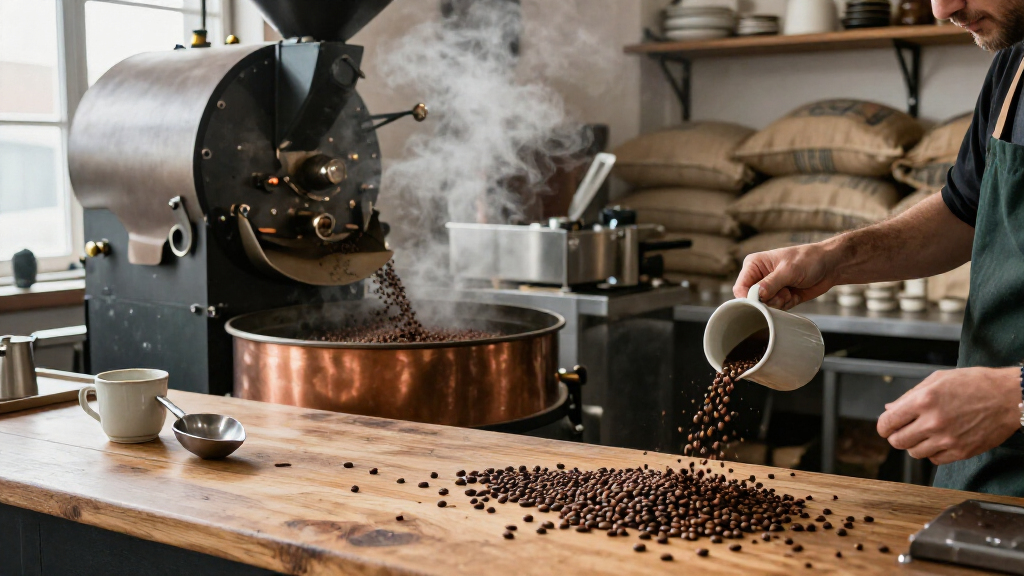
I evaluated these machines by analyzing their thermal efficiency, build quality, and operational flexibility. The ranking prioritizes roasters that offer a clear return on investment for their specific target audience, whether that is a micro-roaster starting out or a wholesale producer scaling up. I looked closely at how each machine manages heat distribution, the precision of its temperature controls, and the ease of maintenance, as downtime is costly for any coffee business.
Comparison logic focused on matching capacity to typical business sizes. For instance, I did not rank the 500 g home-style roaster against the 110 lb industrial unit; instead, I assessed each within its intended operational bracket. Products that offered versatile functionality, such as roasting both beans and nuts, received higher marks for adaptability, which is valuable for businesses diversifying their product lines. Durability indicators, such as stainless steel grade and motor quality, were weighted heavily to predict long-term reliability.
Factors to Consider When Choosing Best Commercial Coffee Roasters
Selecting the right roaster goes beyond just picking the biggest machine you can afford. It is about aligning equipment capabilities with your business model, location constraints, and long-term growth plans.Gas vs. Electric: The Power Source Decision
The choice between gas and electric is often dictated by your facility’s infrastructure rather than preference. Gas roasters generally provide more immediate heat response and higher BTU output, making them ideal for large batches where thermal mass is significant. They are typically more cost-effective to operate in regions where natural gas is cheap. Electric roasters, however, offer cleaner operation with no combustion byproducts, which can simplify ventilation requirements. They are easier to install in locations without existing gas lines, though they may require dedicated high-amperage circuits. If you are in a historic building or a food court, electric might be the only viable option, so check local codes before purchasing.
Batch Size and Daily Throughput
It is a common mistake to buy a roaster based on its maximum capacity rather than your average daily sales. A 10 kg roaster might seem impressive, but if you only sell 5 kg a day, you are burning energy on half-empty drums or roasting too far in advance. Conversely, a 1 kg roaster will force you to run dozens of cycles daily, increasing labor and wear. Calculate your peak daily volume and divide by the number of hours you are willing to spend roasting. This calculation reveals the minimum batch size you need. Remember that smaller roasts lose heat faster, so larger machines often produce more consistent results per pound of coffee, but only if you can fill the drum adequately.
Control Systems: Manual vs. Automated Profiles
Consistency is the currency of specialty coffee. Basic roasters rely on manual gauge readings, requiring the operator to constantly adjust gas flow or heat settings. This method is labor-intensive and prone to human error. Modern units increasingly feature PID controllers and programmable profiles, which automate heat application based on bean temperature probes. This reduces the skill gap for new hires and ensures that your Monday roast tastes exactly like your Friday roast. However, automated systems require precise calibration. If you value artistic control and want to make real-time adjustments based on smell and sound, a manual or semi-automatic interface might still be preferable, provided you have an experienced roaster on staff.
Ventilation and Environmental Compliance
Roasting produces smoke, chaff, and volatile organic compounds. Local environmental regulations vary widely, with some urban areas requiring afterburners or specialized scrubbers. Before buying, confirm if the roaster comes with integrated smoke reduction features or if you need to budget for external filtration systems. Electric roasters often produce less visible smoke than gas, but they still generate particulate matter. Check the decibel rating as well; loud cooling fans can be a nuisance in retail spaces. Proper ventilation is not just a compliance issue; it affects the health of your staff and the flavor of the coffee, as poor airflow can lead to stale, smoky tastes.
Maintenance and Build Quality
Coffee oils are corrosive and sticky. Over time, they accumulate in the drum, chaff collector, and exhaust pipes. Machines with removable parts and accessible design features save hours of cleaning time. Look for stainless steel interiors that resist staining and are easy to wipe down. Cheaper models may use painted steel, which chips and rusts, contaminating the coffee flavor. Motor reliability is another factor; a failed fan motor can shut down production for weeks while waiting for parts. Investing in a machine with widely available service parts and a robust warranty can save significant money in the long run compared to buying a cheaper unit that breaks down frequently.
Frequently Asked Questions
Do I need a fire suppression system for a commercial coffee roaster?
Most commercial roasters, especially those using gas, require a UL 300 rated fire suppression system in the hood above the machine. This is a standard building code requirement in many jurisdictions to prevent grease and coffee oil fires. You must consult with your local fire marshal and building inspector before installation, as requirements vary by city and state. Even electric roasters may need specific ventilation setups that trigger suppression requirements if the exhaust temperature exceeds certain limits. Budgeting for this system early prevents costly retrofitting later.Can I use a commercial roaster for nuts and spices as well as coffee?
Many electric drum roasters, such as the EQCOTWEA models, are designed for multi-purpose use including nuts, grains, and spices. However, cross-contamination is a significant risk. Coffee absorbs odors readily, and spices like cumin or chili can leave residual flavors that ruin subsequent coffee batches. If you plan to roast multiple items, you need a dedicated cleaning protocol between batches or, ideally, separate machines. Some professionals use one roaster exclusively for coffee and another for food items to maintain flavor integrity. Check the manufacturer’s guidelines to ensure the materials are compatible with hot oils from nuts.How long does a typical commercial roaster last?
With proper maintenance, a high-quality commercial roaster can last 15 to 20 years. The lifespan depends heavily on usage intensity and cleaning frequency. Gas burners and electric heating elements are wear items that may need replacement every 5 to 7 years. Motors, bearings, and control boards can last longer but are susceptible to dust and oil buildup. Neglecting chaff removal can cause fires or motor strain, drastically shortening the machine’s life. Regular professional servicing, including electrical inspections and gas line checks, is essential for longevity and safety.Is it better to buy a new or used commercial roaster?
Buying used can save significant capital, but it carries risks regarding hidden wear and obsolete technology. Older machines may lack modern PID controls or energy-efficient insulation, leading to higher operating costs. Inspect the drum for warping, the exhaust for rust, and the controls for accuracy. If the machine is older than 10 years, verify that parts are still available. For critical production lines, new machines offer warranty protection and predictable performance. Used units are often best for backup machines or for startups with very tight budgets who have the technical skills to perform repairs.What is the difference between drum roasters and air roasters?
Drum roasters, which dominate this list, use a rotating drum to tumble beans over a heat source, providing conductive and convective heat. They offer traditional flavor profiles and are easier to control for various roast levels. Air roasters (fluid bed) suspend beans in a stream of hot air, roasting faster and more evenly, often resulting in brighter, cleaner flavors. However, air roasters can be louder and may produce more chaff. For most commercial settings, drum roasters are preferred for their versatility, capacity, and the ability to produce a wider range of roast styles, from light to dark.Conclusion
Selecting the best commercial coffee roasters depends entirely on your production scale and facility constraints. For high-volume wholesale operations, the BEILOCKERY Commercial Gas Drum Roaster offers the capacity and heat recovery needed to keep up with demand. If you are launching a small cafe or micro-roastery, the EQCOTWEA Commercial Electric Coffee Bean and Nut Roaster provides a versatile, space-saving entry point without the complexity of gas lines. For those prioritizing precision and automation in a mid-sized operation, the B500 Electric Coffee Bean Roaster with PID control stands out as a reliable, modern choice. Ultimately, match the machine’s capabilities to your actual daily output, not your theoretical maximum, to ensure efficiency and quality.