
TL;DR

Get coffee and tea gear delivered free with Prime
- Fast, free delivery on millions of items
- Prime Video, Amazon Music and more included
- Member-only deals all year
The USDA’s Food Safety and Inspection Service plans to phase in expanded Listeria sampling at establishments selling ready-to-eat meat from January through March 2027. Inspectors will collect four environmental swabs alongside existing product samples; results from an earlier pilot have not been published.
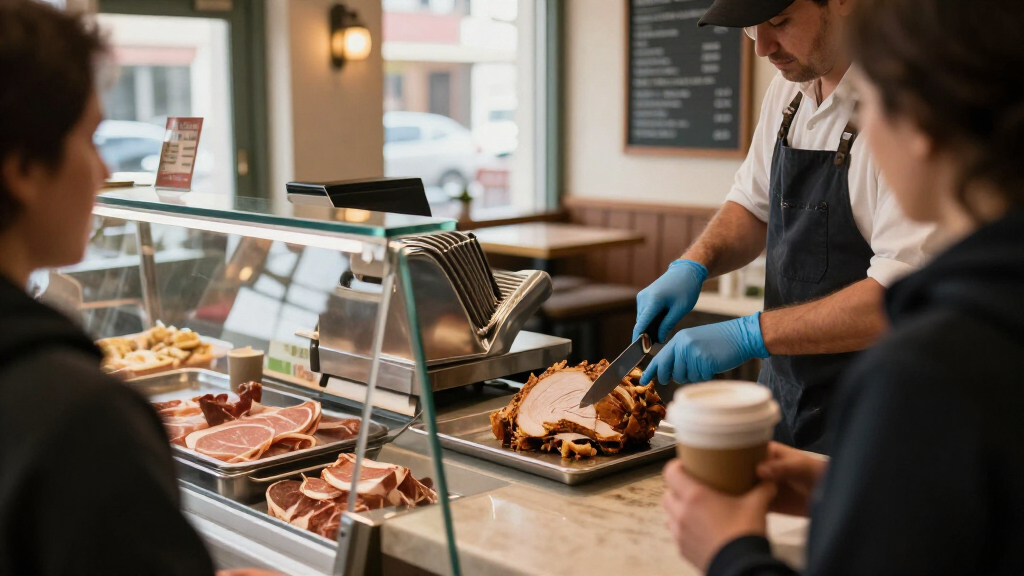
The U.S. Department of Agriculture’s Food Safety and Inspection Service plans to expand Listeria testing nationwide at establishments selling ready-to-eat meat, including deli meats, by adding regular surface swabs to existing product sampling. FSIS says the rollout will begin across its nine districts in January 2027 and continue through March, giving inspectors more information about contamination risks in facilities and stores handling these foods.
Under the program, in-plant inspectors will collect four environmental swabs at the same time they take ready-to-eat product samples under the existing program. Two swabs will come from food-contact surfaces and two from non-food-contact surfaces. Each will be tested for Listeria monocytogenes and other Listeria species. The source report describes the program as covering establishments selling ready-to-eat meat, including grocery stores that sell deli meat.
If a sample identifies Listeria monocytogenes, FSIS will conduct whole genome sequencing (WGS) and compare the result with reported illnesses and historical test results. Sequencing can help assess whether a detected strain is related to illness reports or earlier findings; the agency says the broader data will also help it work with establishments on corrective actions aimed at root causes or places where the bacteria may persist.
The program follows a pilot in the Alameda, Chicago and Raleigh districts. FSIS plans to train inspectors responsible for taking samples and their supervisors as the initiative is phased in. Results from the pilot have not been published in the source report, so its findings and how they informed the nationwide approach are not yet available.
More Regular Checks for Listeria
The change adds routine environmental sampling to a system in which such samples have typically been collected through specialized activities at irregular intervals. FSIS says a more regular, if limited, set of swabs can help identify possible Listeria harborage sites and assess sanitation at individual establishments, while also adding information about national trends.
For consumers, the stakes include the safety of ready-to-eat deli meats, which can be eaten without further cooking. The expanded program could help inspectors and businesses spot sanitation problems that product testing alone may not reveal. However, sampling is a monitoring tool, not a guarantee that food is free of contamination; the source does not claim that the program will prevent every illness or specify consumer-level risk changes.
FSIS expects companies to review environmental monitoring records, corrective actions and root-cause investigations before the new sampling begins. Businesses may also update their procedures and prepare to interpret WGS results. Those steps matter because a positive environmental finding may require investigation and effective follow-up, rather than simply additional testing.
food contact surface sanitation wipes
As an affiliate, we earn on qualifying purchases.
As an affiliate, we earn on qualifying purchases.
Changes After the 2024 Outbreak
The expanded testing is part of a broader series of FSIS changes to oversight of Listeria in ready-to-eat facilities after the deadly 2024 outbreak traced to Boar’s Head deli meat. The source report says a review of records found repeated food-safety violations at the company’s Jarrett, Virginia, production facility that remained unresolved. The new program applies to a wider category of establishments and is described as a nationwide sampling initiative, not as a finding about any specific business.
Before the change, environmental samples were generally gathered during specialized sampling activities, often by Enforcement, Investigations and Analysis Officers at irregular intervals. Under the new approach, in-plant inspectors will collect a small number of environmental samples more regularly alongside existing product sampling. The three-district pilot preceded the planned nine-district rollout, but its results have not been made public in the supplied report.
““Broader sampling and more data ultimately means safer food.””
— Food Safety and Inspection Service
Listeria testing kits for home use
As an affiliate, we earn on qualifying purchases.
As an affiliate, we earn on qualifying purchases.
Pilot Findings Still Unpublished
The available report does not include the results of the three-district pilot, so it is unclear what it found or whether those findings prompted changes to the nationwide plan. FSIS also has not provided, in the source material, details on the sampling frequency at each establishment, the criteria for selecting sites, or how positive results will affect inspection or enforcement decisions.
The report does not specify how the agency will publish nationwide results or what thresholds will trigger particular corrective steps. It also does not identify the individual businesses that will be sampled. Those details may emerge as the rollout approaches; until then, the program’s full operating procedures and its measurable effect on food safety remain unknown.
As an affiliate, we earn on qualifying purchases.
Nine-District Rollout Begins in January
FSIS plans to phase in the program across its nine districts from January through March 2027. The agency will train inspectors and supervisors during implementation. Establishments producing ready-to-eat products under FSIS jurisdiction are expected to review their environmental monitoring programs, past findings and corrective-action practices, and to prepare to understand and assess WGS results.
The next developments to watch are the start and pace of district implementation, any published findings from the pilot, and information FSIS releases about results and follow-up. The source report does not give a date for publication of pilot data or a later review of the nationwide program.
As an affiliate, we earn on qualifying purchases.
Key Questions
What is changing at deli counters?
FSIS plans to add four environmental surface swabs to existing ready-to-eat product sampling. The swabs will include two food-contact and two non-food-contact surfaces and will be tested for Listeria.
When will the nationwide program begin?
The agency plans a phased rollout across its nine districts from January through March 2027. The source does not provide specific dates for each district.
What happens if a swab detects Listeria monocytogenes?
FSIS says it will use whole genome sequencing and compare the result with reported illnesses and historical results. The supplied report does not detail what enforcement or corrective steps would follow particular findings.
Are the pilot program results available?
No. The report says the pilot ran in the Alameda, Chicago and Raleigh districts, but its results have not been published.
What should affected businesses do before sampling expands?
FSIS expects companies to review environmental monitoring records, corrective actions and root-cause investigations, consider updates to their programs, and prepare to assess WGS results.
Source: rss
Halloween Picks
halloween
As an affiliate, we earn on qualifying purchases.