
TL;DR

Get coffee and tea gear delivered free with Prime
- Fast, free delivery on millions of items
- Prime Video, Amazon Music and more included
- Member-only deals all year
A 2024 travel report documented a rare invitation to a txoko, a private Basque culinary society, in the coastal town of Mundaka. The account describes a large communal meal and traces the societies’ history from men-only gathering places to institutions whose membership rules have changed, while access remains by invitation.
A 2024 travel report described an invitation-only txoko feast in Mundaka, offering an account of a private Basque culinary society where members and guests cook, eat and socialize together. The report places the gathering within a tradition said to date to San Sebastián in 1870, and says access remains restricted to people invited by a member.
The writer, John Henderson, said he attended the meal with his partner and another traveler after being picked up in Bilbao by Ricardo Hernani, a Basque local and member of the Travelers’ Century Club. Hernani had a family connection to the cook, Zigor Egia. The gathering took place in Mundaka, a small coastal town on the Bay of Biscay, about 20 miles north of Bilbao according to the report.
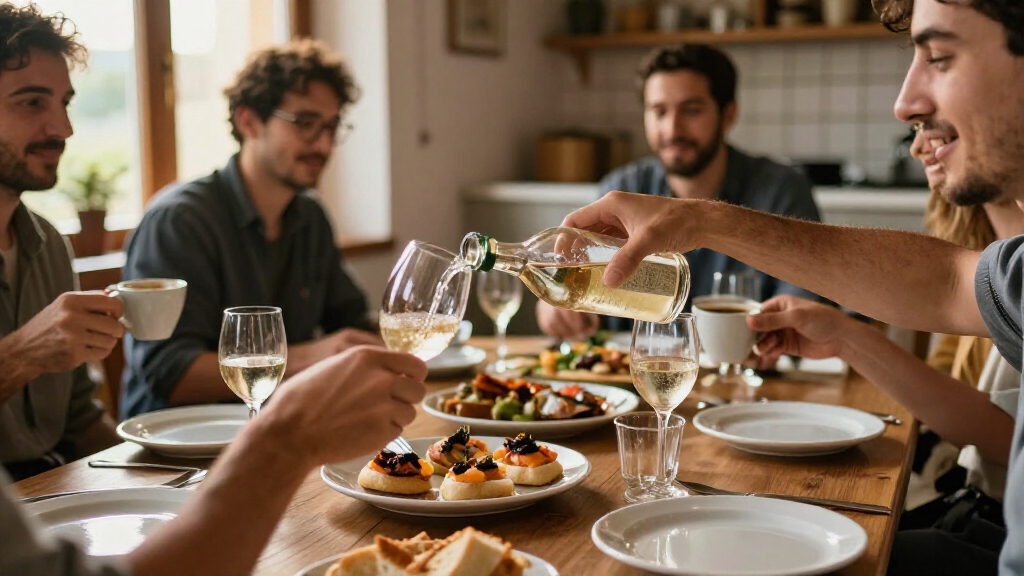
Henderson described a crowded table and a substantial menu: eight kilograms of steak cooked on a grill, calamari, prawns, side dishes and wine. The report also mentions a wheel of cheese valued at €7,000, identified as Aguiniga cheese. These are details from the writer’s account; it does not provide independent confirmation of the cheese’s price or the amount of food.
The report characterizes a txoko as a private society with a kitchen and dining space where members gather to cook and spend time together. It says there are an estimated 1,000 to 1,500 txokos in Spain, most of them in the Basque Country. The venues are not presented as restaurants open to visitors: Henderson says guests need an invitation from a member.
The gathering matters as a window into a form of local social life that travelers may not encounter through public restaurants or festivals. In Henderson’s account, food was central, but the txoko also provided a setting for friendship, conversation and shared customs. The invitation made the meal possible; it did not turn the society into a public attraction.
The history described in the report also links the societies to political and social change. Henderson writes that txokos offered Basques places to meet during periods when authorities restricted public life and, under Francisco Franco’s dictatorship, the use of the Basque language. That history helps explain why members may value the societies as private community spaces, though the report does not independently document each historical claim.
The account also highlights a change in who may belong. The writer says women were historically excluded from txokos and that, about two decades before the report, the Basque government began offering financial support to societies that allowed women. Women are now allowed, the report says, but are not allowed to cook. That description suggests access has broadened while gender restrictions may remain in some activities.
Products Worth Considering

Weber Searwood 600 Wood Pellet Smoker Grill, Black

Weber Genesis E-415 4-Burner Propane Gas Grill, Black

Traeger Woodridge Pro Wood Pellet Grill and Smoker, 970 sq. in., WiFIRE
As an affiliate, we earn on qualifying purchases.
From Industrial-Era Clubs to Today
Henderson traces the origins of txokos to the late 19th century, when industrialization brought more people to the Basque region and, in his account, local bars’ curfews encouraged residents to create their own gathering places. The first txoko was established in San Sebastián in 1870, according to the report. The early societies were described as places for men to meet, cook, drink and talk.
The report says txokos gained importance during Franco’s rule, which it dates from 1938 to 1975, because Basques could speak and sing in their language in these private settings. Henderson describes this as a refuge from state restrictions. The article does not name archival sources or provide a detailed account of how the societies operated across that period.
The 2024 visit was part of a late-October trip to the Basque Country for a meeting of the Travelers’ Century Club’s Mediterranean chapter. Henderson’s group first met Hernani at the Guggenheim Museum in Bilbao, then traveled to Mundaka. The report also notes Mundaka’s reputation for surfing, but the txoko meal—not the town’s waves—is the central development in the account.
““Now we want to live free and forget.””
— Illan Urkia, a bartender in Mundaka, as quoted in Henderson’s report
What the Account Cannot Establish
The report is a first-person travel account of one society and one meal, not a survey of txokos across the Basque region. It does not identify the Mundaka society by name, provide membership figures or explain how widely its reported rules on women apply. The claimed total of 1,000 to 1,500 societies is presented as an estimate without a named source or date for the count.
Some historical and policy details also remain unverified within the supplied account. It does not cite records for the 1870 founding date, explain the terms of government funding, or specify when individual societies changed their membership policies. The reported €7,000 cheese valuation is likewise not supported by a cited seller or appraisal. The account does not establish whether these details represent common practice or circumstances specific to the visit.
Further Reporting on Membership and Access
The supplied report offers no announced follow-up event or policy decision. To clarify how the tradition operates today, further reporting would need to speak with txoko societies, Basque authorities and members about membership rules, women’s participation and public funding. A broader survey could also test the estimate of how many societies remain active and distinguish common customs from the practices of the Mundaka group.
For visitors, the practical point in the account is that a txoko is not described as a venue that can simply be booked like a restaurant. Access depends on a member’s invitation. The report does not give contact details or a public route for arranging a visit, and it does not indicate that the society discussed plans to open its doors to tourists.
Key Questions
What is a txoko?
A txoko is a private Basque society and gathering place where members meet to cook, eat and socialize. Henderson’s 2024 report says access is by invitation from a member rather than open to the public.
Where did the reported feast take place?
The meal described in the report took place in Mundaka, a coastal town in the Basque Country, north of Bilbao on the Bay of Biscay.
Can tourists visit a txoko?
The report says txokos are not open to the public and that guests need an invitation from a member. It does not describe a public booking system or visitor program.
Are women allowed in txokos?
According to Henderson’s report, women are now allowed in txokos, following changes linked to government support for societies that admitted women. The report says women are not allowed to cook, but does not establish whether that rule applies everywhere.
What foods were served at the Mundaka gathering?
The writer described grilled steak, calamari, prawns, side dishes and wine, as well as a wheel of Aguiniga cheese said in the report to be valued at €7,000. The account does not independently verify that valuation.
Source: johnhendersontravel.com