
Espresso temperature surfing is about adjusting your brewing process to counteract temperature fluctuations that affect flavor. When temperature drifts, you can tweak grind size, tamp pressure, or shot time to maintain ideal extraction. By making small, precise changes based on how the shot tastes, you can balance acidity, sweetness, and bitterness. Mastering this technique helps you produce consistently great espresso, even if your equipment isn’t perfectly stable. Keep exploring to learn how to refine your temperature control skills further.
Open a free Amazon Business account
Business pricing, bulk buying and tax-exempt orders.
As an affiliate, we earn on qualifying purchases.
Key Takeaways
- Espresso temperature surfing involves adjusting temperature mid-brew to optimize extraction based on real-time shot behavior.
- It helps compensate for temperature fluctuations caused by bean freshness, grind size, or equipment inconsistencies.
- Proper temperature control enhances flavor balance, reducing bitterness or dullness in the espresso.
- Techniques include monitoring shot development and making incremental temperature adjustments during extraction.
- Mastering temperature surfing enables more consistent, high-quality espresso shots despite variable conditions.
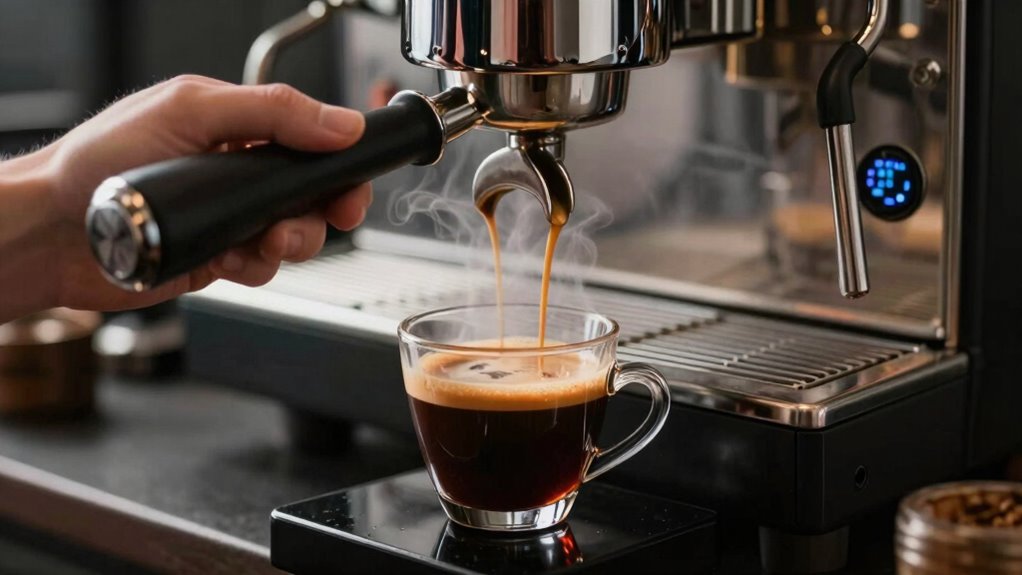
Ever wondered how temperature affects the flavor of your espresso? It’s a crucial factor that can make or break your coffee experience. When you’re aiming for that perfect shot, understanding how temperature interacts with other elements—like coffee bean freshness and grind size consistency—can elevate your brewing game. Fresh coffee beans are the foundation of a great espresso, offering vibrant flavors and aromatic oils that degrade over time. Using stale beans results in dull, flat shots regardless of how well you control the temperature. So, always prioritize fresh beans to ensure your espresso captures the true essence of your roast.
Temperature impacts espresso flavor; pairing it with fresh beans and consistent grind elevates your brewing mastery.
Once you’ve secured fresh beans, grind size consistency becomes your next priority. A uniform grind ensures water flows evenly through the coffee bed, extracting flavors uniformly. Inconsistent grind sizes can lead to under-extraction or over-extraction, which may be exacerbated by temperature fluctuations. When your water is too hot, it can extract bitter compounds rapidly, especially if your grind is uneven, resulting in harsh or burnt flavors. Conversely, if the water’s too cool, the extraction might be weak and lack complexity. Maintaining a consistent grind size helps stabilize extraction, making temperature adjustments more predictable and manageable. Additionally, temperature stability during extraction is vital for achieving optimal flavor, as fluctuations can compromise the balance of your espresso. Proper equipment calibration and temperature control are essential to maintain the desired temperature range throughout the brewing process. Incorporating techniques like pre-heating your equipment can also help maintain a steady temperature, further improving your shot quality. Recognizing how temperature interacts with other variables can empower you to troubleshoot and refine your technique more effectively. Furthermore, understanding the sensitivity of extraction to temperature changes can help you develop a more intuitive approach to brewing.
Temperature plays a pivotal role during extraction because it influences the rate at which flavors dissolve from the coffee grounds. When water is at the optimal temperature—usually between 90-96°C (194-205°F)—you achieve a balance where aromatic oils, acids, and sugars are extracted harmoniously. If the temperature drops below this range, you’ll notice a duller taste, with insufficient extraction of bright and nuanced flavors. If it rises above, your espresso risks bitterness and over-extraction. To master temperature control, it’s essential to keep your equipment calibrated and stable throughout the brewing process. This stability allows you to adapt your grind size and tamping pressure accordingly, ensuring consistency shot after shot. Understanding the interaction of temperature with other variables can help you troubleshoot and refine your technique more effectively. By paying close attention to these factors, you can consistently produce espresso with a balanced complexity and depth.
In essence, espresso temperature surfing is about understanding how these elements interact. By starting with fresh beans, ensuring grind size consistency, and maintaining precise temperature control, you can fine-tune your extraction to produce a balanced, flavorful espresso. It’s a delicate dance, but once you grasp how temperature influences extraction—especially in relation to your coffee’s freshness and grind size—you’ll be able to craft espresso that’s truly exceptional every time.
espresso temperature control thermometer
As an affiliate, we earn on qualifying purchases.
As an affiliate, we earn on qualifying purchases.
Frequently Asked Questions
How Does Ambient Temperature Affect Espresso Temperature Surfing?
Ambient temperature profoundly influences your espresso temperature surfing by affecting heat transfer between the environment and your espresso shot. A warmer ambient environment speeds up heat transfer, making it easier to reach your target temperature quickly. Conversely, cooler surroundings slow down heat transfer, requiring more time and adjustments. You need to account for ambient influence to control your shot’s temperature precisely, ensuring consistent extraction and flavor.
Can Temperature Surfing Improve Espresso Flavor Consistency?
You’re right on the money—temperature surfing can definitely improve espresso flavor consistency. It helps with flavor stabilization by allowing you to fine-tune extraction, ensuring each shot tastes just right. By carefully selecting beans and adjusting temperature, you avoid surprises—like a rolling stone gathering no moss. This method gives you control, leading to a more predictable, high-quality espresso every time. It’s a game changer for serious coffee enthusiasts.
What Equipment Is Best for Temperature Surfing?
You should use a temperature-controlled espresso machine with precise equipment calibration for the best results. These machines allow you to fine-tune the brewing temperature, enhancing flavor extraction and consistency. A digital thermometer or a PID controller can help monitor and adjust the temperature accurately during surfing. Investing in high-quality equipment guarantees you maintain ideal temperature ranges, leading to better flavor enhancement and more consistent espresso shots every time.
How Long Should Each Temperature Step Last?
Each temperature step should last about 30 seconds to a minute, allowing you to observe how grind size and brew time impact flavor. Experiment with shorter or longer durations to find what highlights your preferred taste. Keep in mind, consistent timing helps refine your technique, but don’t hesitate to adjust based on your espresso’s extraction and aroma. This method balances precision and flexibility, revealing how temperature influences overall flavor profile.
Is Temperature Surfing Suitable for All Espresso Beans?
Temperature surfing isn’t suitable for all espresso beans. If your beans are very fresh or of lighter roast levels, they might not respond well to the fluctuating temperatures, which can affect flavor extraction. You need to take into account bean freshness and roast levels when trying this technique. It works best with medium to darker roasts and beans that aren’t too fresh, allowing you to fine-tune flavor profiles without compromising the quality.
coffee temperature surfing tools
As an affiliate, we earn on qualifying purchases.
As an affiliate, we earn on qualifying purchases.
Conclusion
Now that you’ve learned about espresso temperature surfing, you’re like a skilled surfer catching the perfect wave—gliding smoothly along the crest of temperature control. With each shot, you’ll fine-tune your craft, riding the thermal tide to extract rich, balanced flavors. Remember, it’s all about riding the heat with finesse, turning each brew into a flavorful adventure. So go ahead, harness that thermal wave and make every espresso a masterpiece worth riding.
As an affiliate, we earn on qualifying purchases.
barista thermometer for espresso
As an affiliate, we earn on qualifying purchases.
As an affiliate, we earn on qualifying purchases.
Fall Picks
fall essentials
As an affiliate, we earn on qualifying purchases.