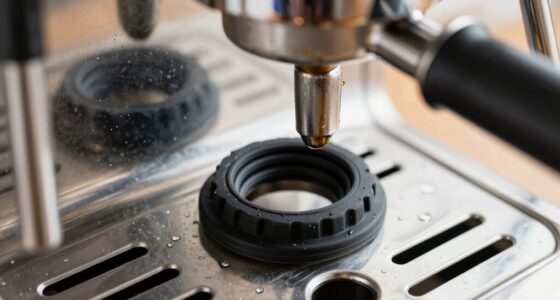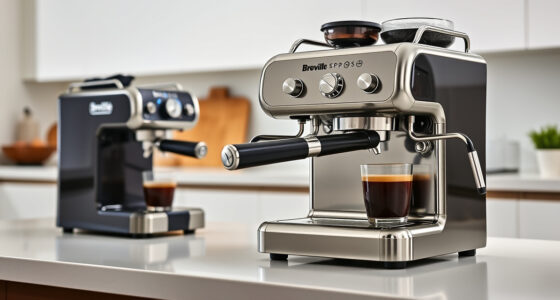

Coffee oils build up faster than you might think, especially if you brew often, use high temperatures, or opt for darker roasts. These oils cling to your machine’s components and can accumulate quickly without regular cleaning. Over time, this buildup affects flavor, causes clogs, and can even harm your equipment. If you stick with it, you’ll discover effective ways to keep your coffee fresh and your machine in top shape.

Get coffee and tea gear delivered free — and shop member deals
- Fast, free delivery on millions of items
- Access to Prime Big Deal Days deals on October 6–7
- Prime Video, Amazon Music and more included
Key Takeaways
- Darker roasts release more oils, accelerating buildup on brewing equipment.
- Frequent brewing and higher temperatures increase oil release and residue accumulation.
- Poor cleaning routines allow oils to accumulate quickly, causing flavor contamination.
- Residual oils cling to equipment surfaces, especially in grinders and brew baskets.
- Routines neglecting regular maintenance lead to faster oil buildup and equipment clogging.
As an affiliate, we earn on qualifying purchases.
Why Coffee Oils Build Up and How They Affect Your Coffee

Coffee oils naturally accumulate on your equipment over time, especially if you don’t clean your grinder or brewer regularly. These oils are a part of coffee bean chemistry, containing flavorful compounds that contribute to your coffee’s taste. However, when exposed to air and heat, oil oxidation occurs, causing the oils to break down and develop stale or rancid flavors. This process alters the oil’s chemical structure, impacting the aroma and taste of your brew. Over time, the buildup of oxidized oils can create a barrier that affects water flow and extraction, leading to uneven brewing. The combination of coffee bean chemistry and oil oxidation explains why these oils build up faster than you might expect, ultimately compromising the freshness and quality of your coffee. Additionally, proper cleaning practices can help slow down the accumulation and preserve your equipment’s performance. Regular maintenance can also prevent the formation of bacterial growth that can occur on uncleaned surfaces. Understanding how oil oxidation accelerates on uncleaned surfaces can motivate regular maintenance to keep your coffee tasting fresh. Regular cleaning not only prevents oil buildup but also helps maintain the integrity of your brewing process, ensuring a consistently high-quality cup. Furthermore, recognizing the signs of oil rancidity can help you identify when it’s time for a thorough cleaning.
As an affiliate, we earn on qualifying purchases.
How Coffee Beans Contribute to Oil Buildup in Your Machine

As coffee beans are ground and brewed, their natural oils are released into your equipment, contributing markedly to buildup over time. The origin of the beans influences oil content; beans from different regions vary in oil levels, affecting how quickly buildup occurs. Additionally, roasting level plays a significant role—darker roasts tend to release more oils, accelerating residue accumulation. The table below summarizes how these factors impact oil contribution:
| Factor | Effect on Oil Buildup |
|---|---|
| Coffee origin | Some regions produce beans with higher oil content, leading to faster buildup. |
| Roasting level | Darker roasts release more oils, increasing residue in your machine. |
Knowing these factors helps you anticipate and manage oil buildup effectively. Regular cleaning is essential to prevent oil accumulation and ensure optimal coffee flavor. To better understand how different beans and roasting processes impact your equipment, consider exploring coffee bean characteristics. Additionally, understanding oil composition can help in selecting the right cleaning methods for your machine.
Furthermore, being aware of oil content variations can assist in choosing beans that minimize buildup and extend the lifespan of your coffee maker. An understanding of oil release mechanisms can also contribute to more effective maintenance practices.
As an affiliate, we earn on qualifying purchases.
Recognizing the Signs Your Coffee Maker Needs a Deep Clean
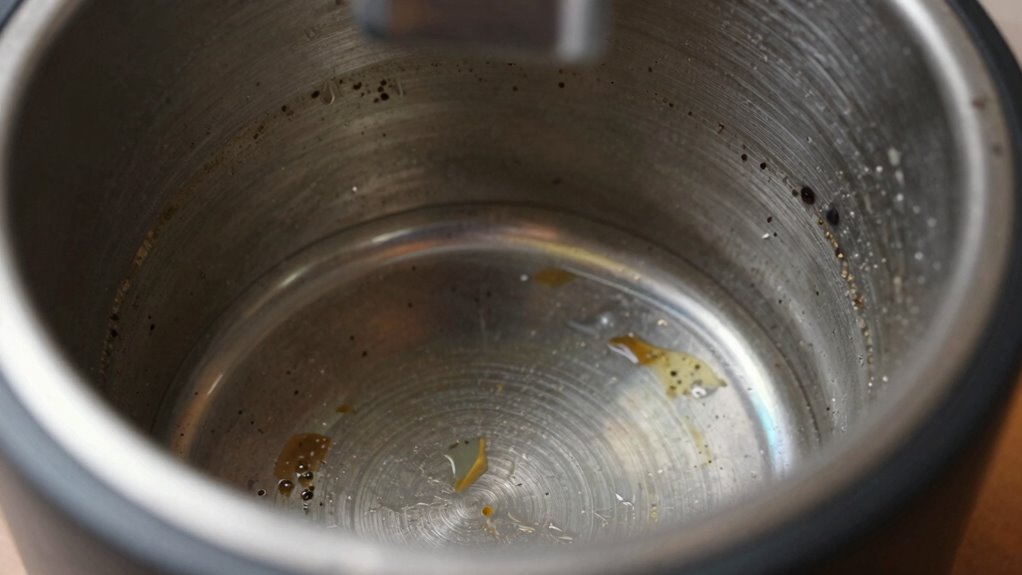
Over time, you might notice your coffee maker isn’t performing as well as it used to, signaling that a deep clean is overdue. Changes in the coffee’s flavor, such as a stale or burnt taste, often point to oil buildup from coffee bean characteristics. You might also observe longer brewing times or inconsistent extraction, which can be caused by residue affecting brewing temperature. Additionally, a lingering coffee smell or visible grime around the filter basket and water reservoir are clear signs. Regular cleaning helps maintain best brewing temperature and preserves flavor. Watch out for these signs:
- Coffee tastes off or stale
- Extended brewing time or uneven extraction
- Visible residue or foul odors inside the machine
- Oil buildup can accelerate if the machine isn’t cleaned regularly, impacting both flavor and performance. Proper maintenance not only enhances taste but also prolongs the lifespan of your coffee maker by preventing clogged components and other damage. Regular descaling and cleaning can help prevent oil accumulation, as well as bacterial growth, ensuring your machine stays in optimal condition.
As an affiliate, we earn on qualifying purchases.
How Frequent Use Accelerates Coffee Oil Accumulation
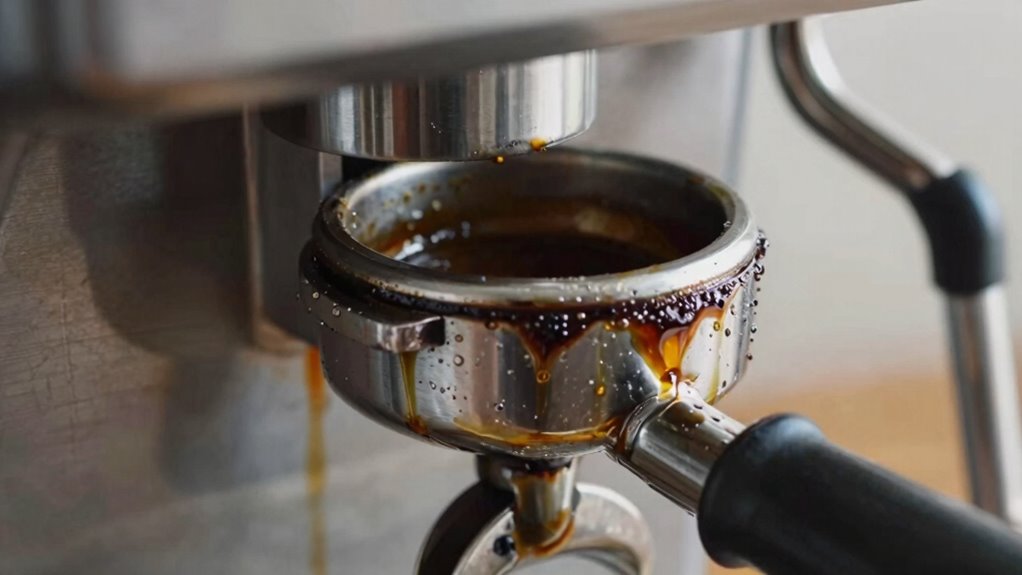
The more often you brew coffee, the faster oils build up in your machine. With shorter cleaning intervals, oil residues can accumulate to higher levels, affecting flavor and performance. Staying aware of your brewing habits helps you manage oil buildup before it becomes a problem. Regular cleaning can also prevent air quality issues that may arise from residual oils and contaminants. Additionally, understanding coffee oil composition can help you choose the best cleaning methods to maintain your equipment’s longevity. Recognizing the impact of brewing frequency on oil accumulation can guide you in establishing effective maintenance routines. Being mindful of home interior organization can also contribute to easier cleaning and maintenance of your coffee station. Knowing how angel numbers relate to daily routines can provide unexpected insights into maintaining a balanced and harmonious coffee setup.
Increased Brewing Frequency
Frequent brewing sessions cause coffee oils to accumulate more quickly in your coffee maker. Each brew leaves behind residual oils, which can build up faster with increased use. This accumulation can impact brewing consistency, making each cup taste different over time. The more often you brew, the less time there is for oils to break down or be cleaned away naturally. Coffee roasting also influences oil buildup—darker roasts tend to release more oils, which settle into your machine faster with frequent use. To manage this, you might notice:
- Oil buildup speeds up with more brewing sessions
- Lighter roasts produce fewer oils, delaying buildup
- Consistent brewing schedules can lead to faster accumulation
Staying aware of your brewing habits helps prevent unexpected flavor changes caused by oil buildup. Additionally, understanding coffee oil composition can help you customize cleaning routines for optimal flavor preservation.
Shorter Cleaning Intervals
When you use your coffee maker more often, you accelerate the buildup of coffee oils inside the machine. This means you’ll need to clean it more frequently to maintain ideal coffee flavor and preserve bean freshness. The oils can quickly accumulate, affecting the taste of each brew and creating a layer that traps residue. If you don’t stick to shorter cleaning intervals, you risk dulling your coffee’s vibrant flavor and allowing stale oils to dominate the brew. Regular cleaning ensures oils don’t build up too fast, helping your coffee stay fresh and flavorful. The more often you brew, the more attentive your cleaning schedule should be. Staying on top of shorter intervals keeps your machine in top shape and your coffee tasting just right. Additionally, kitchen air quality can influence how quickly residues and oils settle, so maintaining a clean environment also supports your brewing process. Proper maintenance can significantly reduce the rate of oil buildup and extend the lifespan of your coffee maker. Regular descaling and using appropriate cleaning products can also help minimize buildup and keep your machine functioning optimally. Proper cleaning techniques are essential to prevent oil residues from impacting your coffee’s quality over time.
Higher Oil Residue Levels
As your coffee maker sees more frequent use, the buildup of coffee oils accelerates considerably. Higher oil residue levels result from continuous brewing, leading to increased oil accumulation inside your machine. This residue buildup can affect the taste of your coffee and shorten your equipment’s lifespan. When you brew often, oils don’t have enough time to fully rinse away, creating a sticky layer that attracts dirt and bacteria. To combat this, regular cleaning is essential. Key points include:
- Frequent use speeds up oil accumulation.
- Residue buildup can clog filters and pathways.
- Consistent cleaning prevents excessive oil residue.
Easy Ways to Clean Coffee Oils From Your Equipment
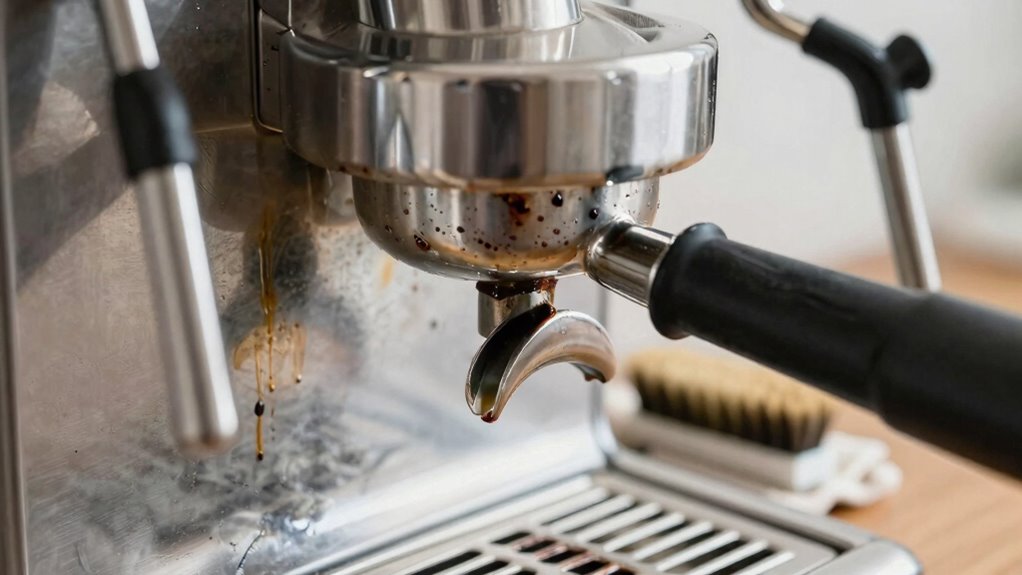
To keep your coffee equipment free of oil buildup, start with a vinegar rinse regularly to break down residues. Make sure to deep clean your machine at least once a month, and use proper cleaning tools like brushes or cloths to reach all surfaces. These simple steps will help maintain your equipment’s cleanliness and improve your coffee’s flavor.
Regularly Use Vinegar Rinse
Regularly rinsing your coffee equipment with vinegar is one of the simplest and most effective ways to remove built-up coffee oils. These oils, derived during oil extraction from the coffee plant, can accumulate quickly and impact flavor. Using vinegar helps break down these residues, keeping your equipment clean and functioning ideally. To do this, fill your machine’s water reservoir with a mixture of equal parts water and vinegar, then run a brew cycle. Afterward, run plain water through to rinse thoroughly. This method prevents oil buildup, extends equipment life, and maintains fresh-tasting coffee.
- Loosens stubborn oils and residues
- Prevents flavor contamination
- Keeps equipment in prime condition
Deep Clean Monthly
While vinegar rinses are great for routine maintenance, giving your coffee equipment a deep clean once a month guarantees stubborn oils and residues are thoroughly removed. Different coffee bean varieties can produce varying amounts of oils, which build up faster than you think. Additionally, brew temperature plays a role—higher temperatures extract more oils that cling to your equipment. To deep clean effectively, run a cleaning solution through your machine, focusing on parts that contact the coffee directly. This process helps break down residual oils, especially those from oily beans or high-temperature brews. Regular deep cleaning prevents rancid flavors and maintains ideal extraction. Incorporate this monthly routine into your coffee care to keep your equipment in prime condition and your brew tasting fresh.
Use Proper Cleaning Tools
Ever wonder if your cleaning tools are actually doing the job? Using the right tools is essential for effectively removing coffee oils and maintaining coffee bean freshness. Old brushes or sponges can harbor oils, making your equipment prone to buildup. Invest in dedicated brushes for grinders and brewers, as well as soft cloths designed for coffee equipment. Proper tools help you reach tricky spots and prevent cross-contamination, which affects flavor. Also, regularly check your grinder calibration, as accumulated oils can impact grind size and extraction. To keep everything in top shape, consider these:
- Use bristled brushes for grinder burrs
- Employ soft, lint-free cloths for carafes
- Replace cleaning tools regularly to avoid oil transfer
These steps ensure your equipment stays clean, preserving flavor and coffee bean freshness.
Tools and Products to Help Remove Coffee Oil Buildup
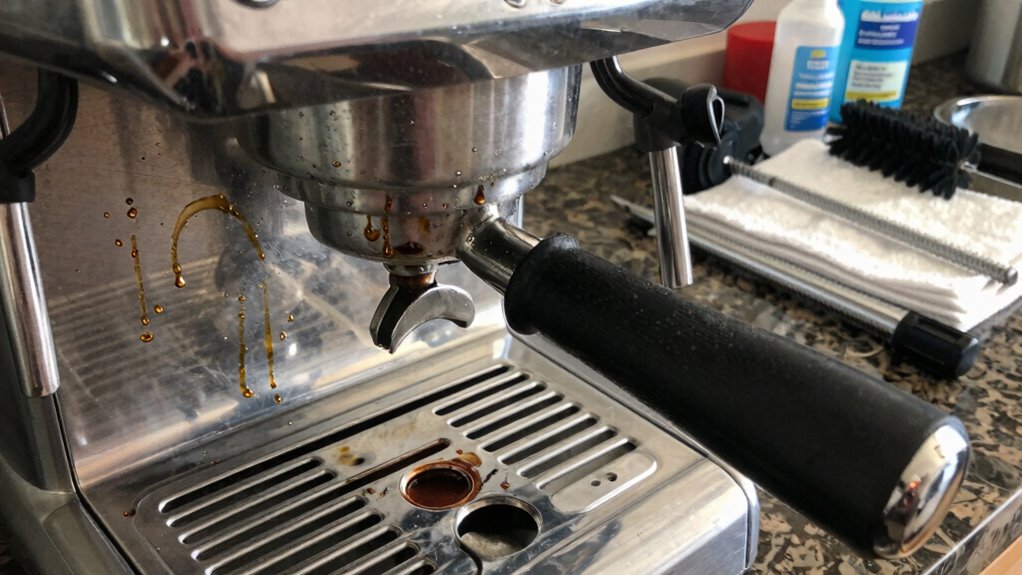
To effectively remove coffee oil buildup, you need the right tools and products that target stubborn residues. Start with a good coffee bean roasting brush to loosen oils from hard-to-reach areas. Use oil absorption pads or cloths designed to soak up excess oils without scratching your equipment. For deep cleaning, specialized cleaning solutions containing oils or coffee bean roasting compounds work well—they break down stubborn residues efficiently. A soft-bristled brush can help scrub surfaces gently without damaging delicate parts. Consider using a descaling solution periodically to prevent oil buildup from becoming a persistent problem. These tools and products are essential for maintaining freshness and ensuring your coffee equipment stays clean, free of lingering oils that can affect flavor and performance.
Routine Maintenance Tips to Prevent Coffee Oil Accumulation
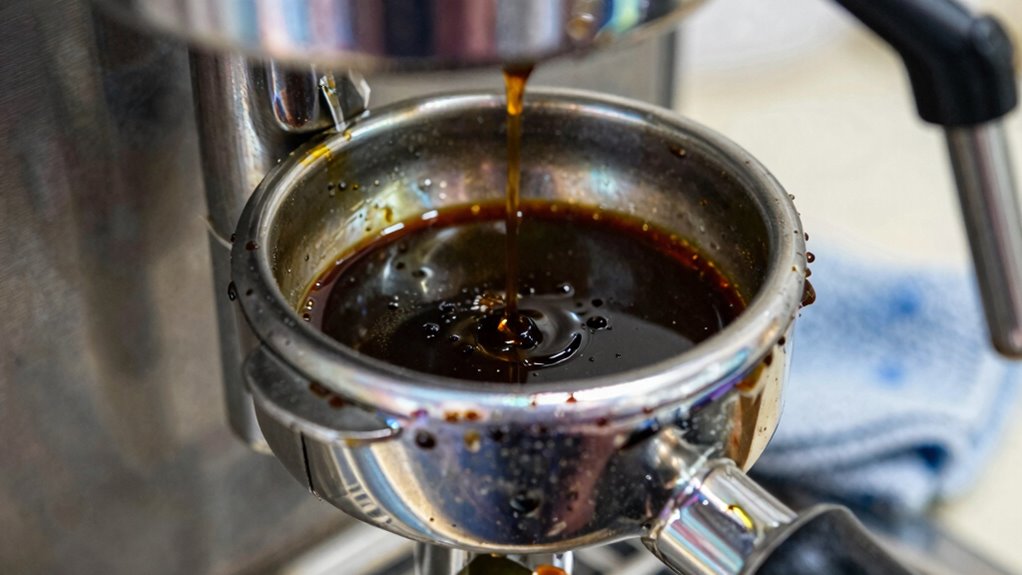
Regularly performing simple maintenance tasks can prevent coffee oil buildup before it becomes a problem. One key step is cleaning your equipment after each use to remove residual oils. Adjust your brewing temperature to avoid overheating, which can cause oils to break down and stick to surfaces. Also, consider the coffee bean varieties you choose; lighter roasts produce less oil than dark roasts, reducing buildup.
To keep your machine in top shape, remember these tips:
- Clean filters and baskets regularly
- Use the right brewing temperature for your coffee
- Switch between coffee bean varieties to minimize oil accumulation
Consistent maintenance guarantees your coffee tastes fresh and your machine stays clean longer.
How Coffee Oil Buildup Affects Flavor and Machine Longevity
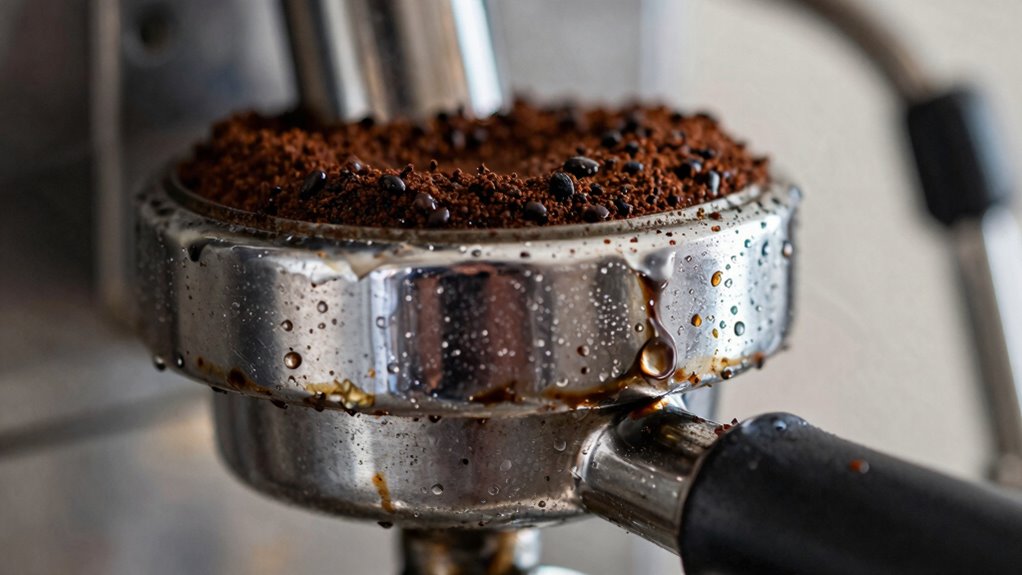
When coffee oils build up on your machine, they can considerably alter the flavor of your brew, making it taste stale or rancid over time. The oil residue left behind can hinder flavor enhancement, preventing your coffee from reaching its full potential. Instead of fresh, vibrant flavors, you may notice a dull or bitter taste that lingers. Over time, this buildup can also impact your machine’s longevity, as the oil residue can clog components and cause wear. The accumulated oils create a barrier that traps moisture and debris, increasing the risk of malfunctions. Regular cleaning helps prevent these issues, ensuring your coffee retains its authentic flavor and your machine stays in good shape longer.
Tips for Keeping Your Coffee Fresh and Oil-Free Year-Round

To keep your coffee fresh and free of oil buildup, store your beans in an airtight container away from light and heat. Regularly clean your brewing equipment to prevent oil residues from accumulating. These simple steps help preserve flavor and extend your machine’s lifespan year-round.
Proper Storage Techniques
Proper storage is essential to keep your coffee fresh and prevent oil buildup that can compromise flavor. To achieve this, consider the unique characteristics of different coffee bean varieties and their sensitivities. Keep your coffee at a consistent storage temperature—ideally between 50-70°F—to slow oxidation and preserve oils. Store beans in an airtight container away from light, heat, and moisture, which accelerate oil rancidity. Avoid transparent containers that expose beans to light, and steer clear of refrigeration, as fluctuating temperatures can cause condensation.
- Use opaque, airtight containers
- Maintain a stable, cool environment
- Keep beans away from direct sunlight and heat sources
Regular Equipment Maintenance
Regularly cleaning your coffee equipment is key to maintaining fresh, oil-free beans and preventing flavor contamination. Coffee bean roasting releases oils that can cling to surfaces, so cleaning guarantees these oils don’t build up and affect future brews. Pay special attention to grinders, brew baskets, and carafes, as leftover oils can become rancid over time. Adjust your brew temperature to optimize extraction and reduce oil buildup; too high a temperature can cause more oils to release. Consistently cleaning and maintaining your equipment helps preserve the true flavor of your coffee and minimizes the risk of stale, oily residues. Incorporate routine descaling and deep cleaning to keep your coffee gear in top shape, ensuring each cup stays fresh and flavorful.
Common Questions About Cleaning Coffee Oils and Maintenance
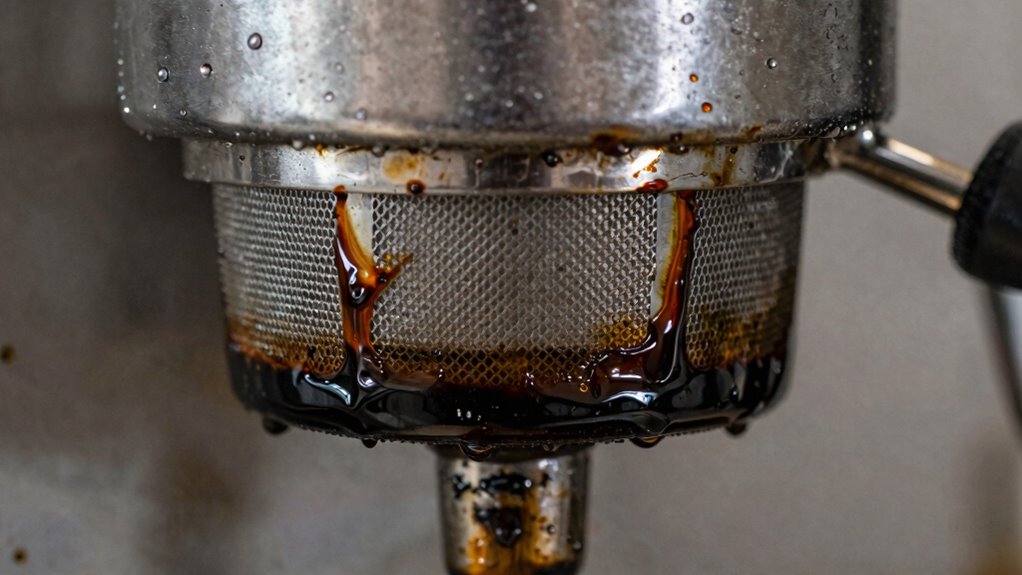
Many coffee enthusiasts wonder how often they should clean their machines to prevent oil buildup, and the truth is, it depends on usage. If you roast your own coffee beans, they tend to release more oils, increasing the need for regular cleaning to prevent flavor transfer and clogging. Proper maintenance also guarantees maximum caffeine absorption, so your brew stays flavorful and strong.
To help, consider these tips:
- Clean your machine after every few uses, especially if brewing dark roasts.
- Use specialized cleaning solutions to dissolve coffee oils effectively.
- Regularly descale and inspect for oil buildup to avoid flavor contamination and equipment issues.
Frequently Asked Questions
Can Using Different Coffee Brands Affect Oil Buildup Speed?
Yes, switching coffee brands can affect oil buildup speed because different brands have varying oil absorption levels. When you use different brands, inconsistent oil residues can accumulate faster or slower depending on the brand’s oil content. Maintaining brand consistency helps manage oil buildup better, as you become familiar with how your coffee machine handles that specific oil level. This can prolong the time between cleanings and keep your machine running smoothly.
Are There Specific Cleaning Products Best for Removing Coffee Oils?
You should use cleaning products specifically designed for coffee equipment, like espresso machine cleaners or descaling solutions that target coffee bean oils. These products effectively break down the buildup caused by coffee bean oils, especially when you regularly clean your machine. Keep in mind, brewing temperature influences oil residue; higher temperatures can cause oils to stick more quickly. Regular cleaning ensures your equipment stays efficient and your coffee tastes fresh.
How Does Water Quality Influence Coffee Oil Accumulation?
Water quality directly impacts coffee oil buildup, especially through water mineralization. Hard water with high mineral content accelerates oil accumulation in your coffee maker, making it harder to clean. Using well-filtered water with effective filtration reduces mineral deposits, slowing oil buildup. By choosing water with balanced mineral levels and ensuring your filtration system works well, you can extend your machine’s cleanliness and enjoy better-tasting coffee without frequent deep cleaning.
Can Roasted Coffee Beans’ Freshness Impact Oil Buildup?
Yes, roasted coffee beans’ freshness markedly impacts oil buildup. When beans aren’t fresh, their oils start to break down, leading to flavor degradation and aroma loss. As these oils become more exposed and oxidized, they accumulate faster in your equipment, accelerating buildup. This not only affects your coffee’s taste but also increases the chances of oil residues causing further flavor issues over time. Fresh beans help maintain better oil management and flavor integrity.
Is It Necessary to Replace Parts Due to Oil Buildup Over Time?
Did you know that oil residue can accumulate in your coffee machine in just a few weeks? You don’t always need to replace parts; regular maintenance routines can prevent costly damage. Cleaning components like the brew head and grinder helps remove oil buildup, extending their lifespan. If you notice persistent issues or significant residue, replacing parts might be necessary. Staying proactive with maintenance keeps your machine running smoothly and coffee tasting fresh.
Conclusion
If you want your coffee to taste as rich as a medieval alchemist’s potion, stay on top of oil buildup. Regular cleaning and mindful maintenance keep your machine running smoothly, ensuring every cup is fresh and flavorful. Don’t let coffee oils turn your modern-day espresso into a relic of the past—like a forgotten knight’s armor gathering dust. Stay diligent, and your coffee adventures will always feel like a journey through time, not a quest for a clean machine.
Fall Picks
fall essentials
As an affiliate, we earn on qualifying purchases.