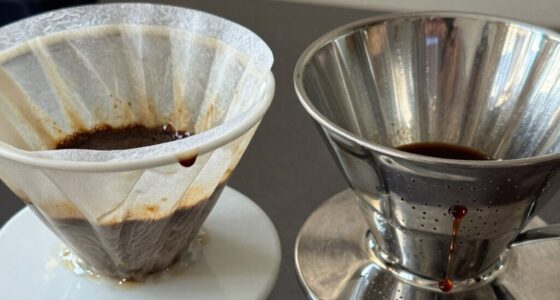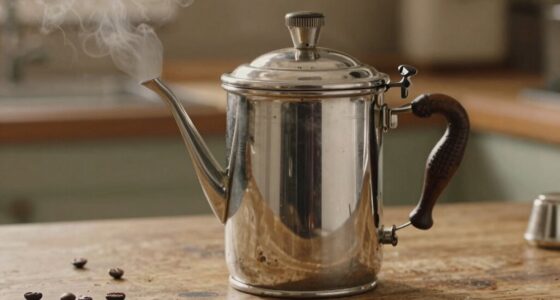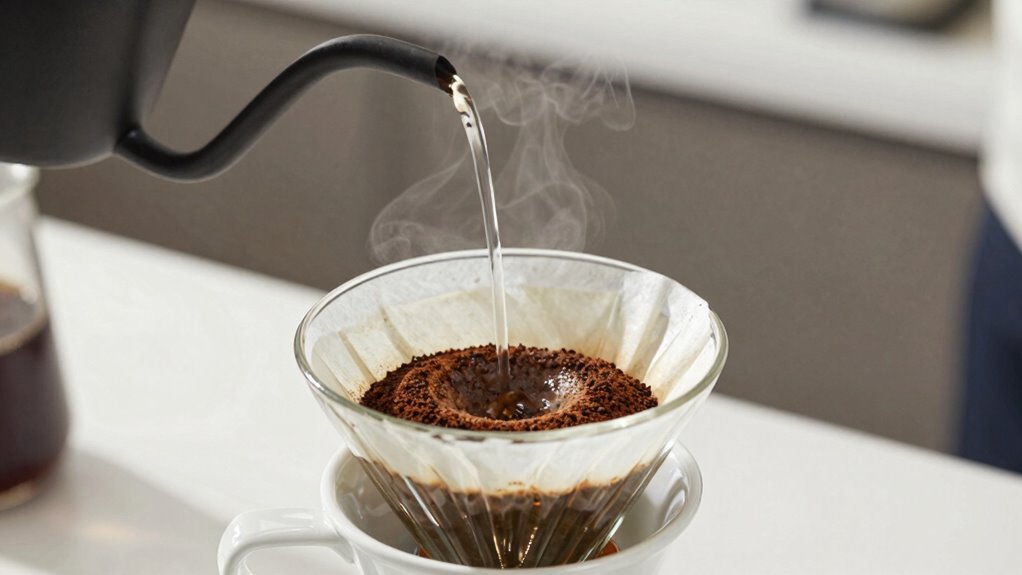

Pour over coffee is simpler than it looks because you only need a few basic tools like a dripper, a gooseneck kettle, and fresh beans. You pour hot water in a controlled, circular motion to extract flavors, giving you a smooth, flavorful cup. Perfecting it is mostly about controlling factors like water temperature, pour speed, and grind size. Want to master it? Keep exploring, and you’ll discover easy tips to make your best brew every time.
Key Takeaways
- Pour over coffee requires minimal equipment: just beans, a filter, a dripper, and a kettle.
- The brewing process is straightforward: pour hot water slowly over grounds for fresh, flavorful coffee.
- Controlling pour speed and water temperature is easy with practice, enhancing flavor without complexity.
- Adjusting grind size and pour technique helps improve results, making it accessible for beginners.
- With simple steps, anyone can brew high-quality coffee at home using pour over method.
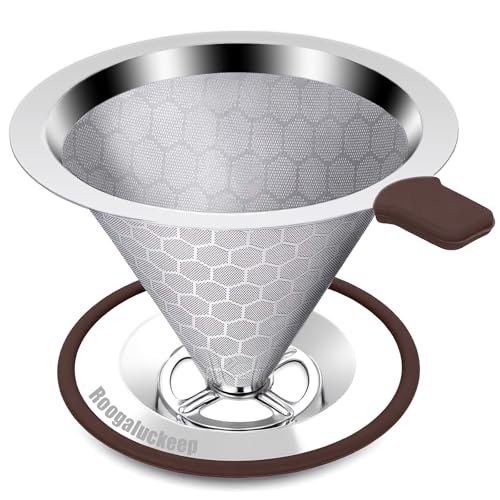
Roogaluckeep Pour over Coffee Dripper, Stainless Steel Paperless Reusable Coffee Filter, Metal 600 Mesh Strainer Coffee Maker (1-2 Cups)
Precision Extraction Design: Precision-engineered spiral ribs and large drainage hole ensure optimal water flow and full flavor extraction
As an affiliate, we earn on qualifying purchases.
As an affiliate, we earn on qualifying purchases.
What Equipment Do You Need for Pour Over Coffee?

To make a great pour-over coffee, you’ll need a few essential pieces of equipment. First, select high-quality coffee beans, considering their origin, as different regions add unique flavor notes. A good burr grinder is vital for achieving a consistent grind size, which directly impacts extraction. You’ll also need a pour-over dripper and a filter, preferably paper, to control flow and clarity. A gooseneck kettle helps you pour precisely, maintaining a steady brewing temperature—ideally between 195°F and 205°F—important for extracting perfect flavors. A digital scale ensures accurate coffee-to-water ratios, while a mug or carafe collects the brewed coffee. Proper biodiversity in coffee sourcing can enhance the sustainability of your brew and support conservation efforts. Additionally, understanding the coffee plant’s growth environment can help you select beans that align with your flavor preferences and ethical considerations. Being aware of processing methods used on the beans can also influence the final taste of your coffee. With these tools, you’re set to brew a flavorful, well-balanced pour-over every time.

Gooseneck Kettle for Manual Drip Coffee & Tea 40oz Stainless Steel Pour Over Coffee Kettle with Thermometer Tea Kettle for Stovetop,1200ml,6 Cup,Silver,1Pack
ENJOY BETTER COFFEE AT HOME: The coffee pot is designed with a gooseneck spout. This kind of gooseneck…
As an affiliate, we earn on qualifying purchases.
As an affiliate, we earn on qualifying purchases.
How Does Pour Over Coffee Work? A Simple Explanation

Understanding how pour-over coffee works can enhance your appreciation and control over the brewing process. When you pour hot water over coffee beans, you’re extracting flavors directly from the beans’ origins, which influence the final taste. The brewing temperature is vital; ideally, it should be between 195°F and 205°F to reveal the beans’ full potential without over-extracting bitterness. As hot water interacts with the coffee grounds, it dissolves soluble compounds, releasing rich oils and aromatic compounds that create the coffee’s flavor profile. The pour-over method allows you to control the flow rate and saturation, ensuring even extraction. This process emphasizes the importance of fresh beans, precise temperature, and proper pouring technique to produce a flavorful, well-balanced cup. Additionally, mastering brewing techniques can lead to consistently better results and a deeper appreciation for the craft. Understanding the extraction process can help you fine-tune your brewing for optimal flavor, and paying attention to water quality can also significantly impact the final taste.
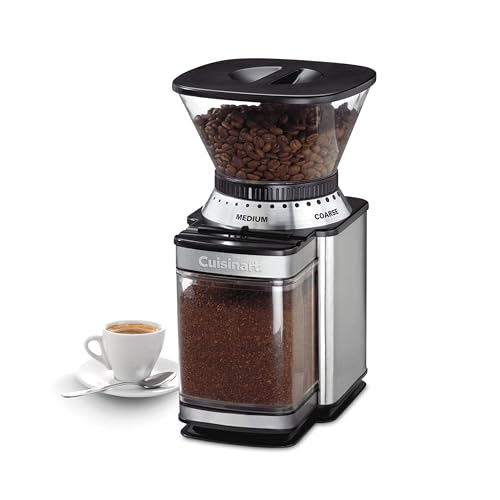
Cuisinart Coffee Grinder, Electric One-Touch Automatic Burr Coffee Grinder with 18-Position Grind Selector, Cup Size Selector for 4 – 18 Cups, DBM-8P1, Black Stainless
ENJOY OPTIMUM FLAVOR: The Cuisinart Coffee Grinder with 18-position slide-dial grind selector provides a uniform grind from ultra-fine…
As an affiliate, we earn on qualifying purchases.
As an affiliate, we earn on qualifying purchases.
How to Brew Your First Pour Over Coffee

Starting your first pour-over coffee can seem intimidating, but with a few simple steps, you’ll be brewing a flavorful cup in no time. Begin by choosing coffee beans with interesting origins, like Ethiopian or Colombian, to enhance flavor. Grind the beans to a medium-coarse consistency, similar to sea salt. Heat your water to the ideal brewing temperature—around 200°F (93°C)—to extract the best flavors without bitterness. Place a paper filter in your dripper, rinse it to remove paper taste, then add your ground coffee. Slowly pour hot water over the grounds in a circular motion, allowing the coffee to bloom and release gases. Let it drip through, then enjoy your freshly brewed pour-over coffee. Water temperature plays a crucial role in extracting the optimal flavors, so maintaining the correct temperature ensures a better-tasting cup.
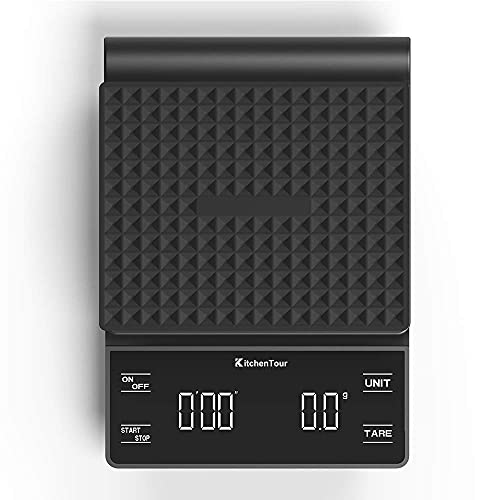
KitchenTour Coffee Scale with Timer 3kg/0.1g High Precision Pour Over Drip Espresso Scale with Back-Lit LCD Display (Batteries Included)
#PRECISE MEASUREMENT & WIDE RANGE# – KitchenTour EK6002 defines the latest in precision weighing technology with a weight…
As an affiliate, we earn on qualifying purchases.
As an affiliate, we earn on qualifying purchases.
Tips for Perfect Pour Over Coffee

Achieving the perfect pour-over coffee involves paying close attention to a few key techniques that highlight the coffee’s best qualities. Start by choosing high-quality coffee beans with clear origins, as different regions offer unique flavors. Freshly grind your beans to maximize aroma and taste. When brewing, control your temperature—aim for around 195-205°F—since too hot or cold water can dull flavors or cause uneven extraction. Pour slowly and steadily in a spiral motion to evenly saturate the grounds, ensuring consistent extraction. Pay attention to your grind size; medium grind works well. Using the right kitchen tools can also enhance your overall coffee brewing space. Proper water temperature plays a crucial role in flavor extraction and can make a noticeable difference. Understanding the coffee extraction process can help you fine-tune your brewing technique for optimal flavor. Additionally, experimenting with different brewing techniques can help you discover what produces the best flavor profile for your taste. Finally, be patient and precise, as small adjustments in temperature, bean origin, and pouring technique make a noticeable difference in achieving a balanced, flavorful cup.
Common Problems and How to Fix Them

Even with careful technique, common problems can still arise when making pour-over coffee. These issues often affect coffee flavor and can be linked to equipment maintenance. To troubleshoot, consider this table:
| Problem | Cause | Fix |
|---|---|---|
| Weak or sour flavor | Under-extraction | Increase brew time or grind finer |
| Bitter or burnt taste | Over-extraction | Use a coarser grind or reduce brew time |
| Uneven extraction | Uneven pouring or clogged filter | Pour slowly and ensure filter is clean and properly seated |
Regular equipment maintenance, like cleaning your dripper and grinder, prevents flavor issues. Additionally, understanding the extraction process can help you better control flavor outcomes. Proper brew technique is essential for consistent results. Developing a good understanding of coffee grind size can also significantly improve your brewing consistency. Paying attention to water temperature can further optimize extraction and flavor. Being mindful of equipment upkeep is key to maintaining optimal flavor and performance. Addressing these common problems helps guarantee consistent, flavorful pour-over coffee.
Variations and Flavor Boosts for Your Pour Over

Want to enhance your pour-over experience? You can spice it up with herbs or spices, add fruit infusions for a touch of brightness, or experiment with alternative milks to create unique flavor profiles. These simple tweaks let you customize each cup to suit your taste perfectly. Incorporating shopping advice can also help you find the best products to elevate your brewing game. Exploring home robotics solutions for brewing can also streamline your process and ensure consistent results. Additionally, understanding muscle recovery techniques can inspire you to incorporate relaxing practices that complement your coffee ritual and boost your overall well-being.
Spice It Up
To elevate your pour-over experience, consider adding spices and flavor boosts that complement the coffee’s natural richness. Spice it up by incorporating ingredients like cinnamon, cardamom, or a touch of nutmeg into your grounds before brewing. These spices create a warm, aromatic flavor infusion that enhances the coffee’s depth. You can also experiment with a pinch of vanilla or ginger for a subtle twist. Keep in mind, less is more—start small and adjust to taste. This simple addition transforms your brew into a cozy, personalized treat. By spice it up thoughtfully, you add complexity and warmth without overpowering the coffee’s natural notes. It’s an easy way to customize your pour-over and make each cup uniquely yours.
Fruit Infusions
Have you ever considered infusing your pour-over with fresh fruit to elevate its flavor? Fruit pairings can add natural sweetness and complexity, transforming your coffee experience. To do this, use simple infusion methods like placing sliced fruit directly in the filter, or steeping fruit in hot water before pouring. For subtle accents, try berries with citrus, or stone fruits with herbs. Here’s a quick guide:
| Fruit Type | Best Pairings | Infusion Method |
|---|---|---|
| Berries | Lemon, mint | Add during brewing |
| Citrus | Ginger, basil | Steep pre-brew |
| Stone Fruits | Lavender, cinnamon | Mix with grounds |
Experiment with these combinations to find your perfect flavor boost without overcomplicating your pour-over routine. Additionally, understanding the science of caffeine extraction can help you optimize infusion times for the best flavor.
Alternative Milks
Ever considered how switching up your milk options can transform your pour-over experience? Alternative milks like almond, oat, or coconut add unique flavors and textures that can elevate your coffee. They also open up exciting flavor combinations—try adding a splash of vanilla or a dash of cinnamon for extra depth. Using different alternative milks can soften the brew’s acidity or introduce creaminess without dairy. Experimenting with these options allows you to customize each cup to your taste, making your pour-over more personalized and enjoyable. Plus, many alternative milks complement specific beans, highlighting different flavor notes. By exploring various options, you can craft a more vibrant, nuanced coffee experience tailored just for you.
Troubleshooting and Improving Your Pour Over Coffee

If your pour over coffee isn’t quite right, start by adjusting your grind size to control extraction. Focus on pouring steadily and evenly to improve your technique, and keep an eye on your brew time to avoid under- or over-extraction. Small tweaks in these areas can make a noticeable difference in your coffee’s flavor and strength. Additionally, using a consistent pouring technique can help ensure even saturation of the coffee grounds.
Adjust Grind Size
Adjusting the grind size is essential for optimizing your pour-over coffee. When your grind is too fine, water struggles to flow, resulting in over-extraction and bitter flavors. If it’s too coarse, water passes through too quickly, leading to under-extraction and weak taste. Aim for grind consistency to guarantee even extraction; inconsistent grinds can cause uneven brewing. Remember, bean freshness also impacts your grind size—fresher beans often require a slightly coarser grind because their oils and structure affect how they break down. Experiment with small adjustments until you find the right balance. Keep track of your changes and note how the flavor shifts. Consistent grind is crucial for achieving the best flavor extraction and a better overall brew. Understanding grind size adjustments can help you fine-tune your brew process and unlock the full potential of your beans. Fine-tuning your grind size helps you control extraction, revealing the full potential of your beans and delivering a smoother, more balanced cup.
Perfect Your Pouring Technique
Once you’ve settled on the right grind size, mastering your pouring technique becomes key to achieving a balanced and flavorful cup. A steady, controlled pour guarantees even extraction and highlights the coffee’s tasting notes. Start pouring in slow, circular motions, maintaining a consistent flow to prevent uneven brewing. As you gain confidence, try creating a thin, steady stream to improve overall extraction. This control also influences latte art; a smooth pour helps you create designs that elevate your presentation. Practice pouring at different speeds and heights to refine your technique. Over time, you’ll notice clearer flavors in your coffee tasting sessions. Precision in pouring not only enhances flavor but also makes your pour over experience more satisfying and visually appealing.
Optimize Brew Time
Are you getting the right brew time for your pour over coffee? If not, it can affect the flavor and strength of your brew. To optimize brew time, start with fresh beans stored properly in an airtight container—coffee storage matters. Freshness ensures even extraction and a balanced taste. If your brew is too quick, your grind might be too coarse; if it’s too slow, try a finer grind. Adjust your pouring speed and water temperature, aiming for a steady, controlled pour. Keep track of your timing to ensure consistency. Remember, the balance between grind size, water flow, and bean freshness directly impacts your brew time, so experiment until you find the perfect rhythm for your taste preferences.
Frequently Asked Questions
Can I Use Any Type of Coffee Beans for Pour Over?
Yes, you can use any coffee bean varieties for pour over, but your choice affects flavor. Light roasts highlight bright, fruity notes, while dark roasts deliver bold, smoky flavors. Medium roasts balance acidity and richness. Experiment with different roasting levels and coffee bean varieties to find what suits your taste best. Remember, freshness also matters, so pick beans that are freshly roasted for the best pour over experience.
How Long Does a Typical Pour Over Brew Take?
Pour over brewing typically takes about 3 to 4 minutes. You control the clock by adjusting the grind size and brewing temperature, which influence extraction. A medium grind and water around 200°F (93°C) work best. Keep a steady pour, stay attentive, and you’ll see how simple and satisfying the process is. Patience and precision produce a perfectly brewed cup—prompting peace and perfection in every pour.
Is Filtered Water Necessary for the Best Taste?
Filtered water isn’t strictly necessary, but it greatly improves taste. Water purity and mineral content directly influence your coffee’s flavor—clean, mineral-balanced water enhances the coffee’s natural notes. Using filtered water removes impurities and reduces off-flavors, giving you a cleaner, brighter brew. If your tap water is hard or has a strong taste, filtering is a smart step. Otherwise, good-quality water with balanced mineral content allows your pour-over to shine.
Can I Make Multiple Cups With One Pour Over Setup?
Yes, you can make multiple cups with one pour-over setup. To do this, use a slightly coarser coffee grind and maintain a consistent brew temperature to guarantee even extraction. Pour water in stages, allowing the coffee to bloom and saturate evenly. Keep the water at around 195-205°F, and be mindful of your pour technique to achieve the best flavor across multiple servings.
How Do I Store Leftover Coffee Grounds Properly?
Think of leftover coffee grounds as treasures needing careful guardianship. To preserve coffee freshness, store them in an airtight container away from light and moisture. This prevents the grounds from losing their aroma and flavor, effectively extending their life. When it’s time for ground disposal, compost or discard in the trash—never down the drain—ensuring your kitchen stays clean and environmentally friendly. Proper storage keeps your coffee journey fresh, from grounds to cup.
Conclusion
Now that you know how simple pour over coffee is, you can master the art with confidence. Embrace the process, enjoy the ritual, and savor each perfect cup. Experiment, learn, and refine your technique—because every pour is an opportunity to create something special. With patience and practice, you’ll turn everyday coffee into an extraordinary experience, making each morning brighter, each sip richer, and each moment more meaningful. Your perfect pour-over awaits—just pour, enjoy, and repeat.