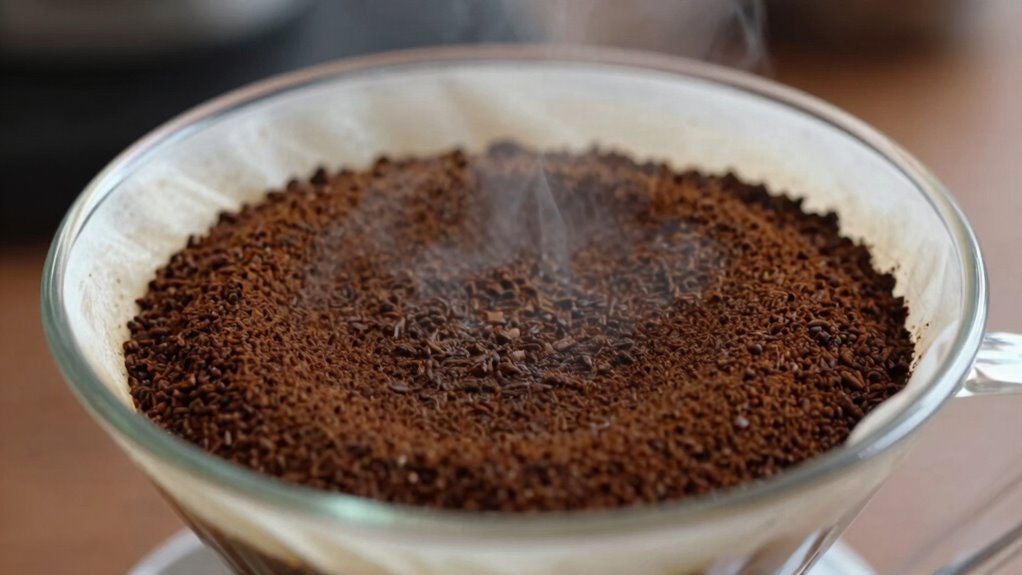

Flat coffee bed in pour-over brewing is vital because it guarantees even water flow across the grounds, leading to better extraction, clarity, and balanced flavors. When your bed is uneven, water can channel or clog, causing inconsistent results. Proper technique, grind consistency, and water temperature all help keep the bed flat. If you stay attentive to these details, you’ll release the full potential of your coffee, making each cup more delicious and perfect every time.

Get coffee and tea gear delivered free — and shop member deals
- Fast, free delivery on millions of items
- Access to Prime Big Deal Days deals on October 6–7
- Prime Video, Amazon Music and more included
Key Takeaways
- A flat coffee bed ensures even water flow, leading to consistent extraction and better flavor clarity.
- Flatness prevents channeling, which can cause uneven wetting and under- or over-extraction.
- Uniform bed flatness promotes balanced brewing, highlighting nuanced and bright flavor notes.
- Proper pouring technique and grind consistency help maintain bed flatness, improving overall brew quality.
- A flat bed results in a cleaner, more aesthetically pleasing cup with enhanced taste and aromatic profile.
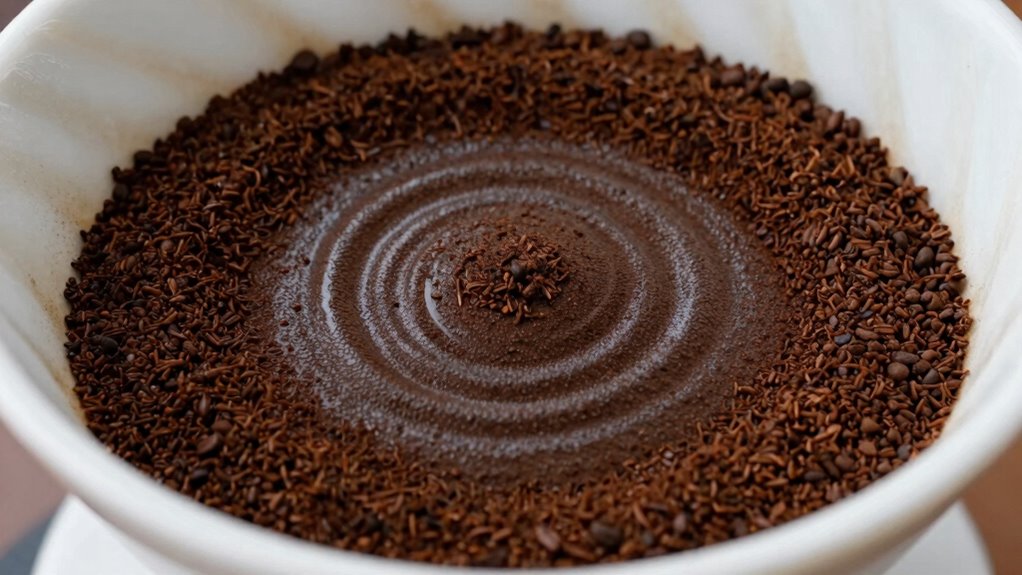
When it comes to pour-over brewing, ensuring your coffee bed is flat is more important than you might think. A flat coffee bed allows water to flow evenly through the grounds, which directly impacts extraction quality and flavor clarity. If the bed isn’t level, water may channel through the thicker areas, leading to under-extraction in some parts and over-extraction in others. This imbalance causes uneven flavors, dulling the brightness and losing the nuanced notes you’re aiming for in your cup. To achieve a flat bed, you need to pay attention to factors like grind consistency and water temperature, which work together to create an even extraction process.
First, grind consistency plays a crucial role. When your coffee grounds are uniform in size, the water encounters less resistance as it passes through, making it easier to maintain a flat, even bed. If your grind is inconsistent, larger particles can clog or slow down water flow, causing uneven wetting and channeling. On the other hand, overly fine grounds can create excessive resistance, leading to water pooling in certain areas. Regularly using a burr grinder helps produce a consistent grind size, ensuring the bed forms evenly. This consistency in grind size makes it easier to pour water smoothly and steadily, preventing the formation of uneven channels. Additionally, understanding the importance of grind consistency can help you troubleshoot and refine your brewing process more effectively. Moreover, paying attention to water flow techniques can further help maintain an even bed and optimize extraction. Proper tamping techniques can also contribute to a more level bed by evenly distributing the grounds before pouring. Recognizing how water distribution impacts the bed can lead to more consistent results and better flavor extraction.
Water temperature is another key aspect. If your water is too hot or too cold, it affects how evenly the coffee grounds extract. Optimal temperature—around 195°F to 205°F—ensures rapid and uniform extraction across the entire bed. When water temperature is off, some grounds may extract more quickly or slowly, disrupting the evenness of the bed. Too hot, and you risk over-extraction, which can cause bitterness; too cold, and you end up with under-extraction, resulting in a sour or flat taste. Maintaining the right temperature helps the water flow uniformly through the grounds, keeping the bed flat and promoting consistent extraction.
Finally, the pouring technique influences the flatness of your coffee bed. Pouring in a slow, circular motion from the center outward helps distribute water evenly across the grounds. This method, combined with using a consistent grind size and proper water temperature, ensures the bed remains level. When all these elements align, you’ll find that your pour-over coffee not only looks better but also tastes brighter, cleaner, and more balanced. Ultimately, a flat coffee bed is a simple yet powerful way to elevate your brewing game and unlock the full potential of your beans.
burr coffee grinder for pour over
As an affiliate, we earn on qualifying purchases.
As an affiliate, we earn on qualifying purchases.
Frequently Asked Questions
How Does Coffee Bed Flatness Affect Brewing Time?
If your coffee bed isn’t flat, brewing time can increase or become inconsistent. When the bed is uneven, water flows unevenly, disrupting brewing consistency and preventing proper flavor extraction. This can lead to over-extraction in some areas and under-extraction in others, affecting taste. To guarantee a steady brewing time and ideal flavor, keep the coffee bed flat, promoting uniform water flow and consistent flavor extraction throughout the process.
Can Uneven Bed Flatness Cause Over-Extraction?
Uneven bed flatness can indeed cause over-extraction, like a rocky path that forces your coffee to struggle through uneven terrain. When coffee compaction is inconsistent, bed distortion occurs, allowing water to flow too quickly in some areas and too slowly in others. This uneven flow pulls out bitter compounds, resulting in over-extraction. To avoid this, make sure your coffee bed is as flat and uniform as a calm lake surface.
What Tools Help Measure Coffee Bed Flatness Accurately?
You can use tools like a coffee bed measurement ruler or a flatness calibration device to accurately assess coffee bed flatness. These tools help you gauge the evenness of your coffee bed, ensuring consistent extraction. By regularly performing coffee bed measurement, you maintain ideal flatness calibration, which results in better flavor and extraction. Investing in these tools allows you to refine your pour-over technique and achieve more precise, high-quality brews.
Does Grind Size Influence Bed Flatness?
Your question about grind size’s influence on bed flatness is essential—it’s as necessary as the air you breathe. Yes, grind size affects bed flatness because inconsistent grind consistency creates uneven extraction, and brewing temperature can exacerbate this issue. A uniform grind promotes a flat coffee bed, ensuring even water flow and ideal flavor extraction. Adjust your grind size carefully to maintain bed flatness and elevate your pour-over experience.
How Often Should I Check My Coffee Bed Flatness?
You should check your coffee bed flatness before each brew to guarantee consistent results. Regularly inspecting helps maintain coffee bed stability and flatness consistency, which are essential for even extraction and ideal flavor. If you notice unevenness, adjust your pour technique or grind size. By making these checks a routine, you guarantee your pour over stays reliable, delivering a balanced and flavorful cup every time.
gooseneck kettle for pour over coffee
As an affiliate, we earn on qualifying purchases.
As an affiliate, we earn on qualifying purchases.
Conclusion
A flat coffee bed is like a steady heartbeat in your pour-over ritual—guiding water evenly, ensuring every note is heard. When the bed’s level, your brew flows in harmony, revealing the full symphony of flavors. But if it’s uneven, it’s like a broken rhythm, muffling the melody. Keep that bed flat, and let your coffee’s true song rise—balanced, vibrant, and beautifully complete. Your perfect cup awaits in the harmony of flatness.
As an affiliate, we earn on qualifying purchases.
As an affiliate, we earn on qualifying purchases.
Halloween Picks
halloween
As an affiliate, we earn on qualifying purchases.