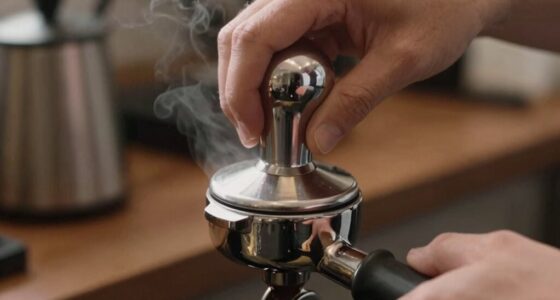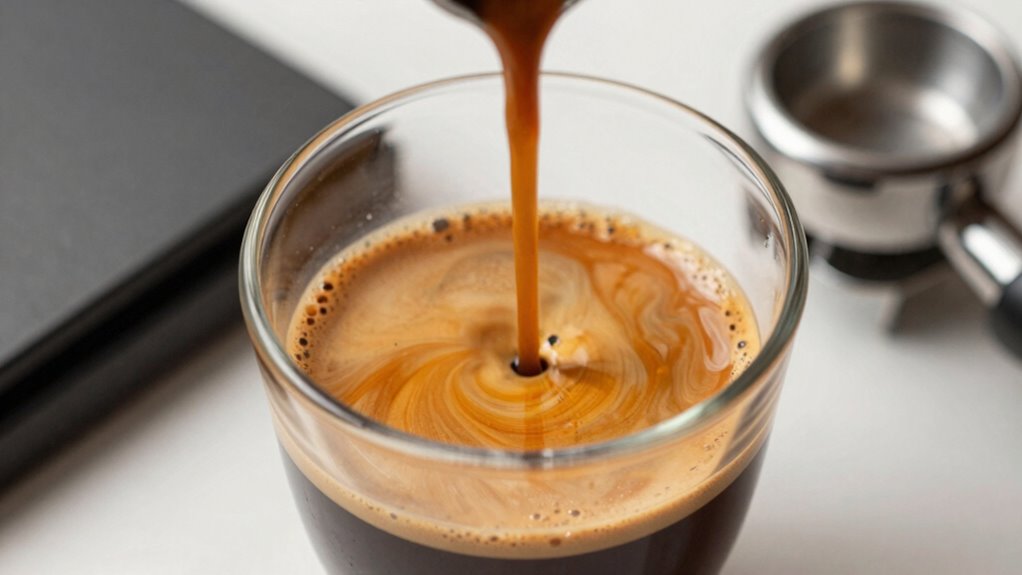

Before changing variables, focus on your espresso’s aroma, noting if it’s vibrant, fruity, or burnt. Savor the flavor to identify if it’s balanced or overly sour or bitter, which suggests under- or over-extraction. Pay attention to mouthfeel—full, smooth, or harsh. Recognizing these cues helps you understand the current brew’s strengths and weaknesses. Keep observing these details, and you’ll gain the insights needed to fine-tune your espresso while avoiding unnecessary adjustments.
Key Takeaways
- Smell the aroma first to assess roast level, freshness, and potential flavor direction.
- Taste the initial sip to identify balance, acidity, bitterness, and overall mouthfeel.
- Observe how flavors evolve from first sip to aftertaste for consistency and harmony.
- Detect sourness or bitterness as signs of under- or over-extraction before adjusting variables.
- Use flavor and mouthfeel cues to determine which variable (grind, time, temperature) may need modification.
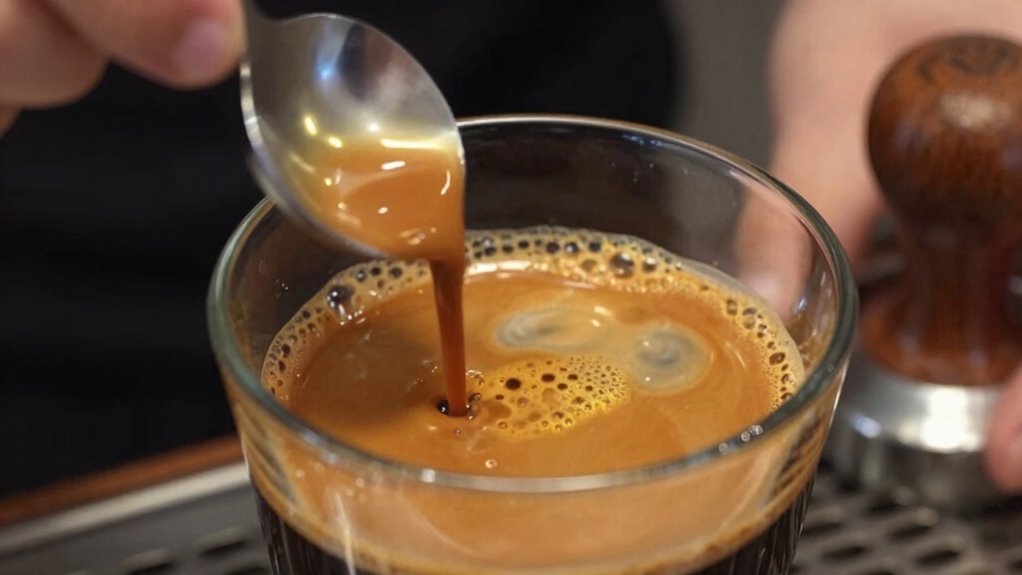
Understanding the taste of espresso can seem complex at first, but with a few key tips, you’ll learn to identify its unique flavors and qualities. When you take that first sip, pay close attention to the coffee aroma. Aromas are rich indicators of what’s happening during brewing and can give you clues about the roast level, freshness, and overall quality. A vibrant, fruity aroma suggests a well-extracted shot with bright, lively flavors, while a more subdued or burnt smell might point to over-roasting or extraction issues. Smelling your espresso before tasting helps set expectations and guides your palate. Recognizing the flavor profile of your espresso is essential for understanding how different variables influence taste. Next, focus on the extraction time. This is essential because it directly influences the flavor profile. Ideally, a proper extraction time for espresso falls around 25 to 30 seconds, but it can vary depending on grind size and machine calibration. If your shot pulls too quickly, say in less than 20 seconds, the coffee might be under-extracted, resulting in a sour, weak taste. Conversely, if it takes longer than 30 seconds, the shot could be over-extracted, leading to bitter, harsh flavors. By observing and adjusting extraction time, you begin to control the balance of flavors, helping you read the taste more accurately. When you taste your espresso, take note of the initial flavor, which can be influenced by the aroma and extraction. A well-extracted shot will have a harmonious balance—bitterness, acidity, and sweetness working together. If the taste is overly sour or bright, it might mean under-extraction, and you might need to grind finer or increase extraction time slightly. If the bitterness dominates, you probably over-extracted, so try a coarser grind or shorter extraction. As you continue tasting, consider the mouthfeel and aftertaste. A good espresso should feel full-bodied but smooth, leaving a clean, lingering finish. Pay attention to how the flavors evolve from the first sip to the aftertaste. Are they consistent or does the flavor change abruptly? This insight helps you understand how well your variables are working together. Additionally, paying attention to the variables affecting extraction can help you refine your process for a more balanced and flavorful espresso. Developing a deeper knowledge of extraction science can further enhance your ability to make precise adjustments.
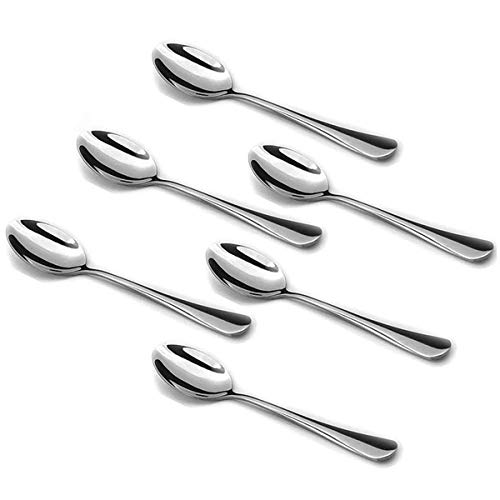
Wesdxc56 Demitasse Espresso Spoons, Mini Coffee Spoon, 4.7 Inches Stainless Steel Small Spoons for Dessert, Set of 6
★This spoon has expanded its usefulness to stir milk or cream into tea and after-dinner coffee.
As an affiliate, we earn on qualifying purchases.
As an affiliate, we earn on qualifying purchases.
Frequently Asked Questions
How Do I Develop My Palate for Espresso Tasting?
To develop your palate for espresso tasting, start with sensory training by tasting a variety of roasts and noting their flavor profiles. Focus on identifying key notes like acidity, bitterness, sweetness, and body. Practice regularly, and keep a tasting journal to track your impressions. Over time, this flavor profiling sharpens your senses, helping you distinguish subtle differences and build a more refined palate.
What Tools Are Best for Tasting Espresso Accurately?
To taste espresso accurately, you need the right tools for sensory analysis. Use a tasting spoon or small cup for precise sampling, a tasting glass to concentrate flavors, and a palate cleanser like water or bread. These tools help you identify flavor profiles and detect nuances. Focus on your senses, note the aroma, body, acidity, and aftertaste, refining your ability to analyze espresso’s complex sensory qualities effectively.
How Does Temperature Affect Espresso Flavor Perception?
When your espresso cools slightly, you notice a shift in flavor balance, often with increased aroma enhancement. Temperature directly affects flavor perception—hotter espresso emphasizes acidity and sweetness, while cooler shots reveal more subtle notes. For example, a barista might serve an espresso at different temperatures to find the most suitable balance, ensuring aroma and flavor are maximized. Adjusting temperature helps you fine-tune the sensory experience for perfect espresso tasting.
Can Tasting Techniques Vary Between Different Espresso Beans?
Yes, tasting techniques can vary between different espresso beans because of differences in bean origin, roast level, and flavor profile. You should focus on maintaining flavor consistency by adjusting your taste evaluation methods—like aroma, body, and aftertaste—based on the beans’ unique characteristics. Recognizing these differences helps you better understand each espresso’s nuances, ensuring you can fine-tune your brewing process for ideal flavor every time.
What Are Common Mistakes When Evaluating Espresso Taste?
Many mistake muddling aroma and flavor, making it tough to truly taste. You might overlook subtle signs, ignore the aroma’s influence, or rush the tasting, leading to skewed judgments. Be mindful of the coffee’s aroma, as it shapes flavor perception. Focus on flavor balance and avoid over-extracting or under-extracting, which can distort taste. Slow, deliberate tasting helps detect nuances, ensuring you accurately evaluate your espresso’s true character.

Homely Accents Coffee Taster's Flavor Wheel Metal Poster Vintage 12×16 Inches Rustic Tin Sign, Home Kitchen Decor for Coffee Lovers, Retro Cafe Bar Art
Unique Coffee Artwork: Features a witty and artistic Coffee Taster's Flavor Wheel design, adding a touch of humor…
As an affiliate, we earn on qualifying purchases.
As an affiliate, we earn on qualifying purchases.
Conclusion
By learning to read your espresso’s taste, you’ll become as skilled as a sommelier tasting wine, understanding what each note and nuance reveals. It’s like tuning a fine instrument—you adjust one string at a time until the sound is just right. With practice, you’ll notice subtle differences, guiding you to make precise changes. Before tweaking every variable, take a moment to savor and analyze—it’s the key to crafting your perfect shot.

Maestri House S2 Espresso Coffee Scale with Timer, USB-C Rechargeable 2kg/0.1g Precision Shot Scale, Digital Scale for Espresso Brewing(Black & Silver)
【Ultra Small, Yet Professional】The Espresso Scale is small enough to fit in your palm. It measures 4.13*4.13*0.78 inches…
As an affiliate, we earn on qualifying purchases.
As an affiliate, we earn on qualifying purchases.
Homely Accents Coffee Taster's Flavor Wheel Metal Poster Vintage 12×16 Inches Rustic Tin Sign, Home Kitchen Decor for Coffee Lovers, Retro Cafe Bar Art
Unique Coffee Artwork: Features a witty and artistic Coffee Taster's Flavor Wheel design, adding a touch of humor…
As an affiliate, we earn on qualifying purchases.
As an affiliate, we earn on qualifying purchases.