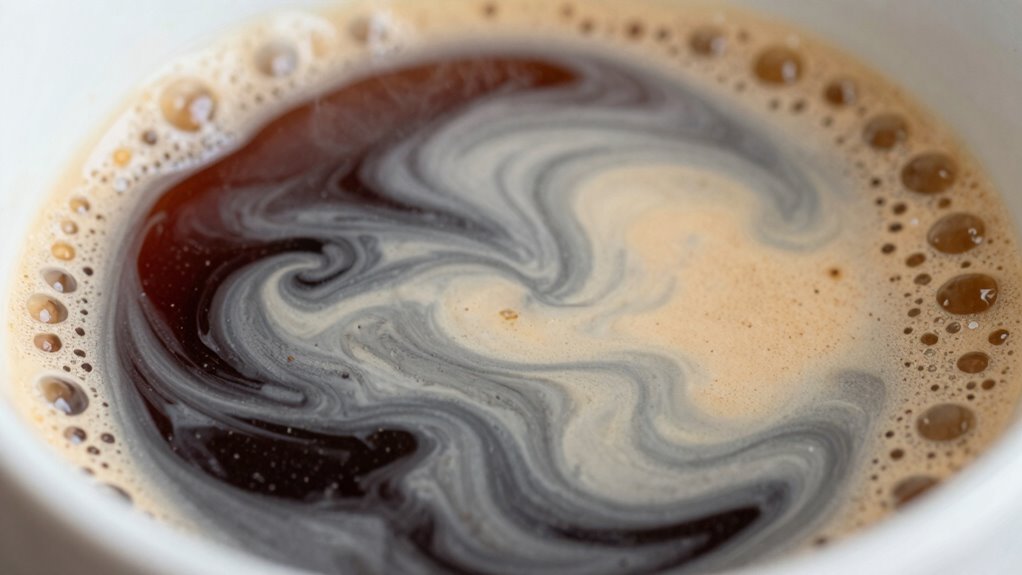

Oat milk reacts differently in coffee mainly because of its acidity, temperature, and composition. High acidity or sudden temperature changes can cause it to curdle or separate, especially if the oat milk is old or poorly stored. Hot coffee and high heat can break down its proteins, leading to clumping or foam instability. Using the right type of oat milk, warming it gradually, and controlling temperature can help prevent these issues. Keep exploring to learn more tips for perfect oat milk coffee.
Key Takeaways
- pH levels and acidity in oat milk influence its tendency to curdle when combined with coffee.
- Temperature differences between hot coffee and cold oat milk can cause separation or coagulation.
- Protein content and composition in oat milk affect its stability and frothing ability in coffee.
- Additives or preservatives may destabilize oat milk proteins, leading to different behaviors in coffee.
- Proper storage, gradual warming, and gentle mixing help prevent curdling and ensure smoother integration.

Califia Farms – Oat Barista Blend Oat Milk, 32 Oz (Pack of 6), Shelf Stable, Dairy Free, Plant Based, Vegan, Gluten Free, Non GMO, High Calcium, Milk Frother, Creamer, Oatmilk
- Froths and Steams for Lattes: Perfect for dairy-free lattes at home
- Plant-Based, Non-GMO Ingredients: Made with simple, vegan, and gluten-free ingredients
- Blends Smoothly into Coffee: Ideal for hot and iced coffee
As an affiliate, we earn on qualifying purchases.
As an affiliate, we earn on qualifying purchases.
Why Does Oat Milk Sometimes Curled or Separate in Coffee?

Oat milk sometimes curdles or separates in coffee because of differences in pH levels and temperature. Poor oat milk storage can make it more prone to curdling, especially if it’s been exposed to heat or light, which alter its acidity. When you add oat milk to hot coffee, the sudden temperature change can cause separation, especially if the milk isn’t fresh or has been stored improperly. Additionally, flavor variations in oat milk—like differences in brand or recipe—can influence how it reacts in coffee. Some oat milks naturally have a higher acidity, increasing the chance of curdling. To avoid these issues, store your oat milk properly and experiment with different brands or formulations to find one that blends smoothly with your coffee. Understanding the chemical composition of oat milk can also help you select options less likely to curdle, since the pH balance plays a crucial role in how well it combines with hot liquids. Recognizing the effect of temperature on oat milk’s stability can further improve your coffee experience. Additionally, paying attention to storage conditions can help maintain oat milk’s quality and reduce the risk of curdling when added to hot beverages. Properly monitoring storage temperature can also prevent unwanted reactions that lead to separation.

Pacific Foods Barista Series Original Oat Milk, Plant Based Milk, 32 oz Carton
- Product Size: 32 oz carton
- Type: Plant-based oat milk
- Designed For: Coffee and espresso
As an affiliate, we earn on qualifying purchases.
As an affiliate, we earn on qualifying purchases.
How Coffee’s Acidity and Temperature Affect Oat Milk

Have you ever noticed how the acidity and temperature of your coffee can influence how oat milk behaves? High acidity can cause oat milk to curdle or separate, affecting flavor pairing and overall taste. Warm coffee helps oat milk blend smoothly, but if it’s too hot, it can break down the proteins, leading to separation. Cooler coffee, however, preserves the milk’s texture. Choosing the right temperature and acidity level is key to enjoying your milk alternative without issues. Recognizing how coffee’s acidity interacts with oat milk can improve your brewing choices and overall experience. Additionally, understanding the protein stability in oat milk can help prevent unwanted separation during preparation. Here’s a quick guide:
| Coffee Level | Effect on Oat Milk | Ideal Use |
|---|---|---|
| High acidity | Causes separation | Use with lower acidity brews |
| Low acidity | Maintains stability | Great for all temperature |
| Hot coffee | Risk of curdling | Use with stable oat milk |
| Cold coffee | Preserves texture | Perfect for iced drinks |
Understanding these factors helps you optimize flavor pairing and enjoy your oat milk coffee.

KIDISLE 8 in 1 Nut Milk Maker Blender, 32oz Homemade Soy, Almond, Oat, Coconut, Plant Based and Non Dairy Beverages, Automatic Soybean Machine With Delay Start/Keep Warm/Boil Water, Cream
- Multi-Function Milk Maker: Makes plant-based milks, juice, porridge, and boils water
- One-Touch Smart Operation: Preset functions for easy, automatic nut milk making
- High-Speed Blending & Heating: Ensures smooth texture and rich flavor without soaking
As an affiliate, we earn on qualifying purchases.
As an affiliate, we earn on qualifying purchases.
What Causes Oat Milk to Curdle in Certain Conditions?
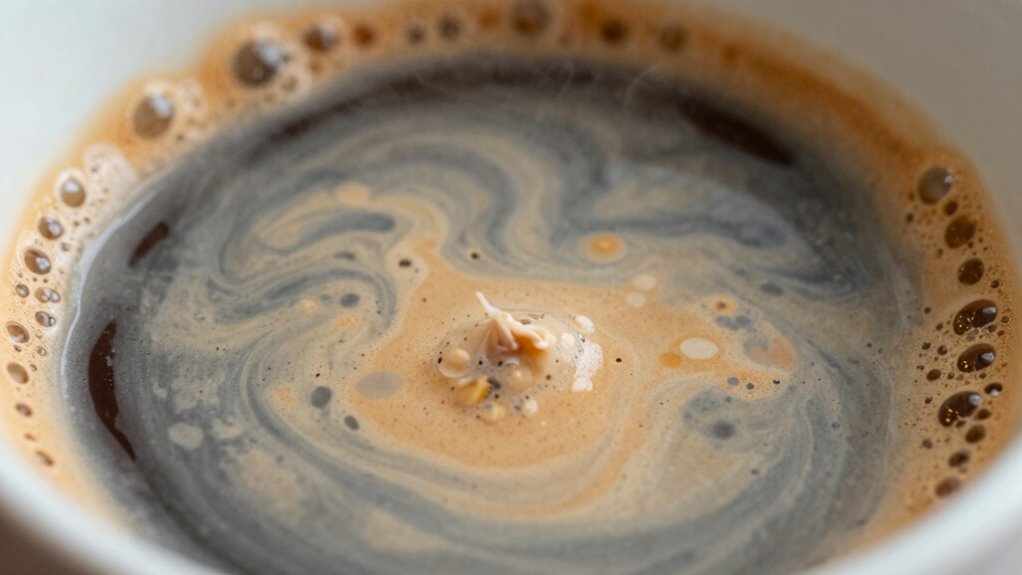
Curdling occurs when the proteins in oat milk react to certain conditions, causing them to coagulate and form curds. This often happens when the ingredient stability is compromised, such as with high acidity or extreme temperatures. When coffee’s acidity increases or the temperature is too hot, it can destabilize the proteins in oat milk, leading to curdling. The flavor profile also shifts, becoming less smooth and more grainy. To prevent this, choose oat milk brands with stable ingredients and avoid adding it to overly acidic or boiling coffee. Understanding these factors helps you maintain a consistent, pleasant flavor profile while ensuring the oat milk remains smooth and stable in your coffee. Proper handling preserves both taste and texture. Additionally, protein stability can be affected by the presence of additives or preservatives, so selecting a natural or minimally processed oat milk may help reduce curdling issues. Being mindful of the ingredient composition can also contribute to a better experience with oat milk in your coffee. Paying attention to storage conditions can further help maintain the oat milk’s stability and prevent unexpected curdling during preparation.

Syntic 2 Pack 32 Oz Glass Milk Bottles with Airtight Lids & 2 Caps
- Durable and Keeps Milk Cold: Glass bottles for durability and cold storage
- Leak-Proof Airtight Lids: Secure screw caps with silicone gaskets
- Includes Pour Spouts and Stickers: 2 pour spouts and 2 stickers included
As an affiliate, we earn on qualifying purchases.
As an affiliate, we earn on qualifying purchases.
How Oat Milk’s Composition Influences Frothing and Creaminess

The composition of oat milk plays an essential role in how well it froths and delivers a creamy texture in your coffee. Oat milk’s structure, especially its protein and carbohydrate content, directly impacts frothing stability. Proteins act as emulsifiers, trapping air bubbles and creating foam, while the natural starches contribute to a smooth, rich mouthfeel. A well-balanced oat milk with adequate proteins and moderate starches ensures better frothing stability, so the foam holds longer without collapsing. If the composition is off, the foam may be weak or short-lived, affecting the overall creaminess. Understanding how oat milk’s ingredients influence frothing helps you choose options that produce a luxurious, velvety coffee experience every time. The importance of composition in oat milk determines its performance in frothing and mouthfeel, making it a key factor in your coffee’s final texture. Additionally, selecting oat milk with the right ingredient balance can enhance your brewing results and overall satisfaction. The protein and carbohydrate content directly influences how well the milk whips up and maintains its texture during steaming. Proper formulation ensures that the milk’s natural starch and protein levels optimize both stability and creaminess during frothing. A good understanding of these key ingredients can help you troubleshoot and select the best oat milk for your preferred coffee experience.
Tips for Adding Oat Milk to Your Coffee Without Curdling

To prevent curdling, start by matching the temperature of your oat milk with your coffee. Opt for thicker oat milk varieties, which are less likely to curdle, and add it gradually, stirring gently as you go. These simple steps can help you enjoy a smooth, creamy coffee every time. Additionally, understanding how air fryers work can help you better store and prepare your oat milk to maintain its quality. Being aware of milk temperature and how it affects curdling can further improve your coffee experience. Maintaining proper storage conditions for your oat milk can also help preserve its freshness and prevent spoilage. Paying attention to climate resilience strategies in your storage environment can further support the longevity of your plant-based milk.
Temperature Compatibility Tips
Adding oat milk to your coffee at the right temperature can make all the difference in preventing curdling. To guarantee smooth blending, consider these tips:
- Warm the oat milk gradually before pouring—adding it directly from the fridge can shock the milk and cause curdling.
- Match the temperature of your coffee to the oat milk, ideally around 140-160°F (60-70°C). This helps preserve flavor pairing and prevents separation.
- Use eco-friendly packaging when steaming or warming oat milk, supporting sustainability while maintaining ideal temperature control.
Choose Thick Oat Milk
Ever wondered how to enjoy a creamy coffee experience without worrying about curdling? Choosing thick oat milk can make a big difference. Thicker varieties tend to have a richer texture that withstands the heat better, reducing the risk of curdling. Plus, they often boast more stable oat milk flavor profiles, so your coffee remains smooth and flavorful. When selecting oat milk, consider sustainability, as thicker options sometimes use less water and resources, making them eco-friendlier. Thick oat milk also provides a creamier mouthfeel, elevating your coffee ritual. Additionally, selecting minimalist oat milk options aligns with sustainable small-space living by reducing packaging waste. By opting for a denser version, you enhance your coffee experience while supporting sustainable choices. It’s a simple trick to enjoy your favorite brew without sacrificing texture or flavor stability.
Gradual Mixing Techniques
Once you’ve selected a thick oat milk for its stability and creaminess, the next step is to incorporate it smoothly into your coffee. Using gradual mixing techniques helps prevent curdling and preserves the oat milk flavor. First, warm the oat milk slightly to match the coffee’s temperature, reducing shock. Second, pour the oat milk slowly into the coffee while gently stirring or swirling, allowing the two to combine evenly. Third, consider adding the oat milk in small amounts, tasting as you go, to guarantee the flavor remains balanced. These steps help maintain the integrity of the brewing techniques and prevent curdling. Patience and careful addition are key to achieving a smooth, creamy coffee with well-preserved oat milk flavor. Understanding how oat milk behaves in different conditions can further improve your coffee experience. Additionally, maintaining proper indoor air quality during preparation can enhance the overall sensory experience of your coffee.
A good understanding of food chemistry can also help in troubleshooting any unexpected curdling issues.
Best Practices to Keep Oat Milk Smooth and Stable
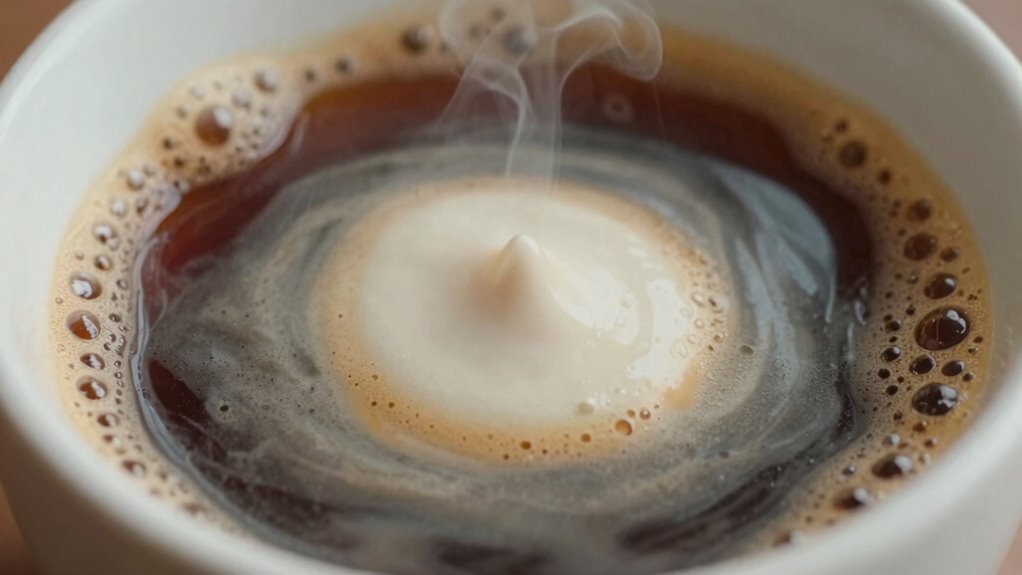
To keep oat milk smooth and stable in your coffee, it’s essential to handle it properly from the start. Use fresh, high-quality oat milk to reduce the risk of flavor variations that can occur with older or poorly stored products. Warm the milk gradually before adding it to your coffee; sudden temperature changes can cause separation. If you or someone else has oat milk allergies, check labels carefully to avoid reactions. Stir or gently froth the milk to incorporate it evenly, preventing separation and ensuring a creamy texture. Keep the milk refrigerated and avoid overheating, as excessive heat can cause it to curdle or become grainy. Proper handling preserves its smoothness and stability, making your coffee experience more enjoyable.
Choosing the Right Oat Milk Brand for Better Coffee Results

Choosing the right oat milk brand can considerably improve your coffee experience because not all brands perform equally when it comes to frothing, flavor, and texture. To find the best match, consider these factors:
Selecting the right oat milk enhances your coffee with better frothing, flavor, and texture.
- Oat milk flavor: Opt for brands with a clean, balanced taste that complements your coffee without overpowering it. A well-balanced flavor enhances the overall experience and can highlight the natural qualities of both the milk and the coffee.
- Nutritional benefits: Look for options fortified with vitamins, minerals, and minimal added sugars for added health perks. These enhancements can support your dietary needs while enjoying your favorite beverage.
- Frothing quality: Some brands produce creamier, more stable foam, enhancing your latte art and overall texture. Additionally, frosting stability can vary based on the formulation, impacting your coffee’s presentation. The formulation’s texture and composition play a significant role in how well the milk froths and holds its shape.
Troubleshooting Common Oat Milk and Coffee Compatibility Issues

Despite selecting a high-quality oat milk, you may still encounter compatibility issues with your coffee, such as curdling, separation, or thin foam. These problems often stem from differences in oat milk flavor or how it’s stored. If your oat milk has been in the refrigerator too long or improperly sealed, it can affect its ability to blend smoothly, leading to separation or curdling. To improve results, stir or shake the container well before use, ensuring the oat milk’s consistency is uniform. Also, check the oat milk flavor—some varieties are more stable in hot liquids than others. Proper container storage, like keeping it sealed tightly and stored cold, helps maintain freshness and prevents unwanted reactions when added to coffee.
How Heating and Brewing Methods Change Oat Milk’s Behavior

Heating and brewing methods profoundly influence how oat milk behaves when added to coffee. High temperatures can alter its oat milk flavor, making it taste more cooked or grainy, while gentle heating preserves its natural sweetness. The way you brew your coffee also impacts the nutritional content; for example, boiling or over-extracting can degrade certain nutrients. To optimize your oat milk experience, consider these factors:
Gentle heating preserves oat milk’s natural sweetness, while high temperatures can cause a cooked or grainy flavor.
- Temperature control: Keep the milk below boiling to maintain flavor and nutritional integrity.
- Brewing method: Espresso pulls at high pressure can cause curdling, whereas drip brewing typically preserves oat milk’s smoothness.
- Heating technique: Use gentle steam or warm water instead of direct heat, ensuring the milk remains creamy and flavorful without losing nutrients.
Simple Tips for a Creamy, Frothy Oat Milk Coffee Every Time
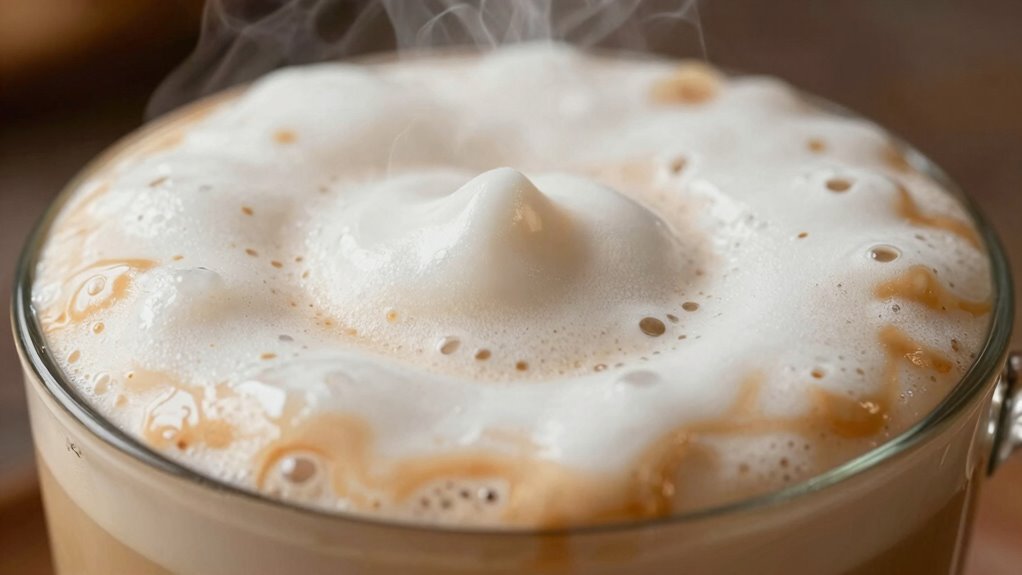
To get a creamy, frothy oat milk coffee, start with proper heating techniques—avoid boiling, and warm it gently to preserve texture. Choose oat milk labeled for barista use or with added fats for better frothiness. Use correct frothing methods, like steaming just below boiling point and creating a whirlpool, to achieve that perfect foam every time.
Proper Heating Techniques
Getting the perfect creamy and frothy oat milk coffee starts with proper heating techniques. To guarantee ideal flavor pairing and maintain packaging considerations, follow these tips:
- Heat the oat milk slowly over low to medium heat, avoiding boiling, which can break down proteins and alter texture.
- Use a thermometer to keep the temperature around 140°F (60°C); this preserves flavor and frothing ability.
- When steaming, incorporate gentle swirling to evenly heat and aerate the milk, resulting in a smooth, frothy texture.
Choosing the Right Oat Milk
Choosing the right oat milk is essential for achieving that creamy, frothy texture you want in your coffee. With so many oat milk varieties available, it’s important to select one that suits your taste and frothing needs. Some brands have a creamier consistency, which helps create a richer latte, while others may be thinner and less ideal for frothing. Pay attention to flavor profiles too—some oat milks are lightly sweetened or have added flavors, which can alter the taste of your coffee. For the best results, opt for unsweetened, barista-style oat milks designed for frothing. These typically have a balanced consistency and neutral flavor, making it easier to achieve that smooth, creamy finish every time.
Correct Frothing Methods
Ever wonder how to achieve that perfect, frothy top on your oat milk coffee? To get creamy, stable foam, follow these simple tips:
- Use barista-style oat milk with added fats for better frothing and to support the nutritional benefits while reducing the risk of oat milk allergies.
- Warm the oat milk gently to about 150°F (65°C); too hot, and it won’t foam well.
- Froth using a steam wand or frother until you see a thick, velvety foam with tiny bubbles.
This method ensures your coffee stays smooth and flavorful, highlighting oat milk’s nutritional benefits. Proper frothing also minimizes the chance of allergic reactions in sensitive individuals. Practice these steps for consistent, café-quality foam every time.
Frequently Asked Questions
Does the Type of Coffee Bean Affect Oat Milk’s Behavior?
Yes, the type of coffee bean affects oat milk’s behavior. Coffee bean chemistry, including acidity and oil content, influences how oat milk blends and foams. Bean roasting profiles also matter; darker roasts tend to produce stronger, bolder flavors that can interact differently with oat milk’s proteins and fats. So, selecting a different coffee bean or roast profile changes the way oat milk behaves, affecting texture, flavor, and foam stability.
Can Adding Sweeteners Impact Oat Milk’s Stability in Coffee?
Adding sweeteners can impact oat milk’s stability in coffee, as sweetener interactions may cause the milk to curdle or separate. They can also influence flavor stability, sometimes making the drink taste overly sweet or altering its texture. To avoid these issues, add sweeteners gradually and stir well. Experiment with different types, like honey or syrup, to find the best balance that maintains oat milk’s smooth texture and flavor integrity in your coffee.
How Does the Age of Oat Milk Influence Its Performance in Coffee?
The age of oat milk considerably impacts its performance in coffee. As it approaches its shelf life, the milk’s texture can thin out, and it may curdle more easily. Proper storage conditions, like keeping it refrigerated and sealed, help maintain its stability longer. Fresh oat milk usually froths better and blends smoothly, so always check the date before using to guarantee ideal taste and consistency in your coffee.
Are There Specific Brewing Methods That Prevent Curdling?
You can prevent curdling by choosing brewing methods that maintain texture consistency and flavor harmony. Opt for lower brewing temperatures or cold brew techniques, which reduce acidity and minimize curdling risks. Using freshly opened oat milk also helps. Steaming or heating the milk gently before adding it to coffee preserves its smooth texture. These methods keep your coffee creamy and well-balanced, avoiding that undesirable curdled appearance.
Does the Water Quality Used in Coffee Affect Oat Milk’s Stability?
Yes, water quality can affect oat milk’s stability in coffee. Water chemistry, especially pH balance, influences how oat milk interacts with coffee. If the water is too acidic or alkaline, it can cause curdling or separation. Using water with a balanced pH and good mineral content helps maintain oat milk’s smooth texture, preventing unwanted reactions. So, paying attention to your water’s pH and mineral levels makes a noticeable difference.
Conclusion
In the dance between oat milk and coffee, understanding their quirks helps you craft that perfect sip. Think of oat milk as a delicate artist, responding to temperature, acidity, and your touch—sometimes blending seamlessly, other times revealing its true colors. By choosing the right brand, tweaking your brewing methods, and handling it with care, you’ll turn each cup into a creamy masterpiece. Embrace these tips, and let your coffee journey be as smooth as a perfectly frothy pour.